
















Missile forces form the backbone of modern military deterrence in Asia.
India, China, and Pakistan have all invested heavily in ballistic and cruise missile programs designed to ensure strategic deterrence and battlefield dominance.
While China possesses the largest missile inventory in Asia, India has steadily expanded its missile capabilities to maintain credible deterrence across two potential conflict theaters.
Pakistan, meanwhile, relies heavily on missile forces to offset conventional military asymmetry with India.
This comparison provides a high-level overview of missile capabilities across the three countries.
Strategic Ballistic Missiles Comparison
Country |
Key Missile Systems |
Estimated Range |
|---|---|---|
India |
Agni I–V |
700 – 5,500 km |
China |
DF-21, DF-26, DF-31 |
1,500 – 12,000 km |
Pakistan |
Shaheen I–III |
750 – 2,750 km |
China’s missile program, developed under the People’s Liberation Army Rocket Force, remains the largest and most technologically advanced in the region.
However, India’s Agni series provides credible reach into key Chinese strategic centers.
Cruise Missile Comparison
Country |
Cruise Missile |
Range |
|---|---|---|
India |
BrahMos |
~450 km |
China |
CJ-10 |
~1,500 km |
Pakistan |
Babur |
~700 km |
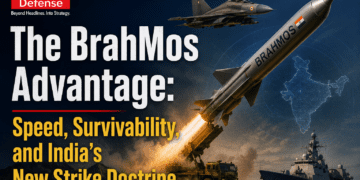
The BrahMos remains one of the fastest operational cruise missiles in the world.
Its speed provides significant advantages against naval targets and heavily defended infrastructure.
Nuclear Delivery Systems
Country |
Nuclear Delivery Methods |
|---|---|
India |
Land, air, sea (nuclear triad) |
China |
Land, air, sea |
Pakistan |
Land, air (developing sea capability) |
India’s nuclear triad includes submarine-based missiles deployed aboard nuclear submarines like INS Arihant.
Pakistan is working toward similar capabilities through submarine-launched cruise missiles.
Hypersonic Weapons Development
Hypersonic missiles are the next frontier in strategic weapons.
China currently leads in operational hypersonic systems.
India is developing these technologies through the Hypersonic Technology Demonstrator Vehicle program.
Pakistan is believed to be in earlier stages of hypersonic development.
Strategic Balance in Asia
The missile balance in Asia reflects differing strategic priorities.
China focuses on global reach and anti-access systems.
India emphasizes regional deterrence and survivable second-strike capability.
Pakistan prioritizes battlefield nuclear deterrence and rapid escalation capability.
This triangular missile competition will continue shaping Asian security dynamics for decades.
————————————————————————————————————————–
Frequently Asked Questions (FAQ)
Which country has the most powerful missile arsenal in Asia?
Among India, China, and Pakistan, China currently possesses the largest and most technologically advanced missile arsenal. The missile forces of the People’s Liberation Army Rocket Force include a wide range of short-range, medium-range, intermediate-range, and intercontinental ballistic missiles.
China also leads the region in the deployment of hypersonic glide vehicles and anti-ship ballistic missiles, giving it significant strategic reach across the Indo-Pacific.
How does India’s missile arsenal compare to China’s?
India maintains a smaller but steadily modernizing missile force focused on regional deterrence. Systems such as the Agni missile series provide long-range strike capability, while the BrahMos offers high-speed precision strike options.
China’s missile inventory is larger and includes more long-range systems, but India has developed credible deterrence capabilities designed specifically for regional security challenges.
How does Pakistan’s missile arsenal compare with India’s?
Pakistan relies heavily on missile forces to balance India’s larger conventional military.
Missiles such as the Shaheen missile series and the Babur cruise missile form the backbone of Pakistan’s strategic deterrent.
While Pakistan’s missile ranges are generally shorter than India’s longest-range systems, they are designed primarily for regional deterrence against India.
Does India have a nuclear missile triad like China?
Yes. India maintains a nuclear triad, meaning it can deliver nuclear weapons through land, air, and sea-based platforms.
Sea-based deterrence is supported by submarine-launched ballistic missiles carried by nuclear submarines such as INS Arihant.
China also maintains a nuclear triad, while Pakistan is still developing its sea-based nuclear capability.
Which country has hypersonic missiles in Asia?
China currently leads Asia in operational hypersonic missile capabilities, including systems equipped with hypersonic glide vehicles.
India is actively developing hypersonic technologies through programs such as the Hypersonic Technology Demonstrator Vehicle, which could eventually enable hypersonic cruise missiles.
Pakistan is believed to be in earlier stages of hypersonic weapons development.
Which missile is the fastest among India, China, and Pakistan?
Ballistic missiles are generally the fastest weapons in the arsenals of all three countries. During flight, these missiles can reach speeds above Mach 20.
Among cruise missiles, the BrahMos is one of the fastest operational systems in the world, traveling at nearly Mach 3.
Why are missile arsenals important for regional deterrence?
Missile forces provide countries with the ability to strike distant targets quickly and maintain credible deterrence.
For India, China, and Pakistan, missile systems play a central role in:
-
Nuclear deterrence
-
Strategic balance of power
-
Precision strike capability
-
Military escalation control.
As missile technologies evolve, they continue to shape the strategic stability of Asia and the Indo-Pacific region.

