































Cyber operations rarely unfold with the visibility of missile tests or naval deployments.
There are no parades, no launch footage, no immediate spectacle. Yet in strategic terms, cyber capabilities increasingly shape deterrence, coercion, and crisis stability.
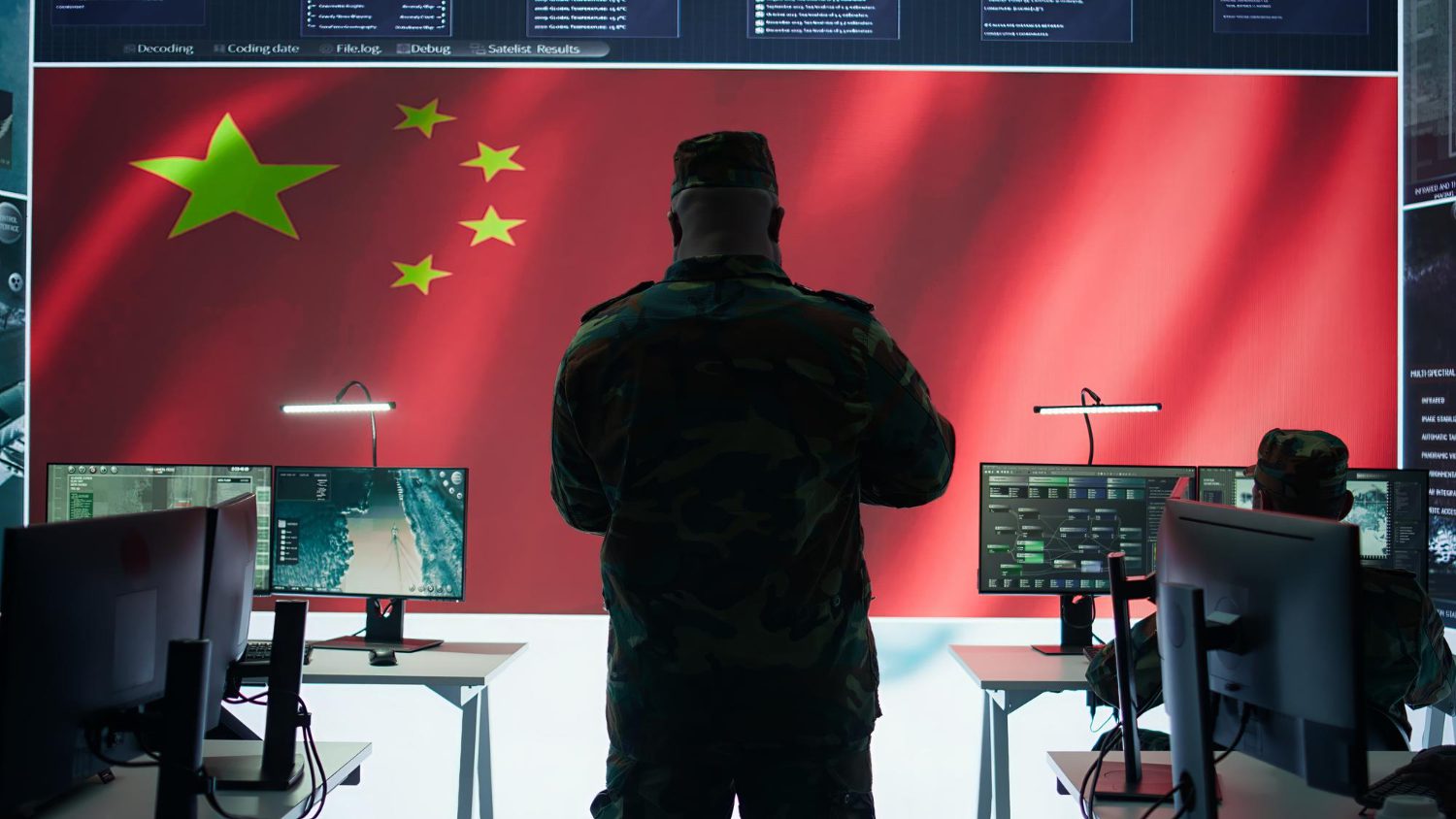
In the India–China context, attention has steadily shifted toward the role of the People’s Liberation Army’s cyber units and the potential vulnerabilities within India’s critical infrastructure ecosystem.
A measured discussion requires distinguishing between capability, intent, and opportunity.
Cyber power is not simply about possessing sophisticated tools. It is about integration, timing, and the ability to operate below the threshold of open conflict.
The Institutional Backbone of PLA (People’s Liberation Army) Cyber Operations
China reorganized much of its information warfare capability under the People’s Liberation Army Strategic Support Force.
This entity consolidates space, electronic warfare, and cyber capabilities, reflecting Beijing’s understanding that modern warfare is deeply networked.
Cyber operations are not treated as auxiliary tools but as integral components of joint operations.
Open-source assessments often reference PLA-linked cyber groups associated with persistent intrusion campaigns.
While attribution in cyberspace is inherently complex, patterns of activity suggest long-term reconnaissance efforts rather than one-off attacks.
The emphasis appears to be on mapping networks, identifying vulnerabilities, and maintaining latent access.
This approach aligns with a doctrine of informationized warfare, where control over data flows, communications, and decision systems becomes as consequential as control over physical terrain.
Why Critical Infrastructure Is Strategically Relevant
Critical infrastructure is attractive in cyber strategy because it sits at the intersection of civilian life and national security.
Power grids, telecommunications networks, transportation systems, financial clearing mechanisms, and healthcare databases are all essential to societal stability.
Targeting such systems during peacetime would carry enormous escalation risks.
However, pre-positioning within these networks during peacetime—through reconnaissance or dormant malware – can provide leverage in crisis scenarios.
The strategic logic is subtle.
Disruption need not be permanent or catastrophic. Even temporary degradation can generate uncertainty, economic loss, or political pressure.
For India, the scale and digitalization of infrastructure have expanded rapidly.
Smart grids, digital banking ecosystems, and integrated logistics platforms have increased efficiency but also widened the attack surface.
Cyber resilience becomes not only a technical matter but a national security priority.
Patterns of Activity and Persistent Intrusion
Over the past decade, cybersecurity firms and government advisories have pointed to campaigns attributed to Chinese state-linked actors targeting sectors in South Asia.
These incidents have included attempts to access energy utilities, telecommunications providers, and research institutions.
It is important to avoid overstating the case.
Not every intrusion attempt translates into operational disruption. Many incidents represent espionage rather than sabotage.
Yet persistent access to infrastructure networks provides optionality. In a crisis, access can potentially be weaponized.
The strategic significance lies less in demonstrated disruption and more in latent positioning. Cyber operations allow adversaries to shape the battlefield before any conventional exchange occurs.
India’s Defensive Posture
India’s cyber defense architecture has evolved significantly over the past decade.
The establishment of dedicated cyber agencies within the armed forces and the role of institutions such as the Indian Computer Emergency Response Team reflect growing institutionalization of cyber resilience.
Sector-specific guidelines for critical infrastructure operators have also been strengthened.
However, cyber defense is inherently asymmetric. Attackers require only one successful penetration, while defenders must secure expansive, heterogeneous networks.
India’s infrastructure spans public and private ownership models, creating coordination challenges.
Legacy systems coexist with modern digital platforms, sometimes complicating patch management and real-time monitoring.
Another structural challenge is supply-chain security.
Hardware and software components sourced globally can introduce hidden vulnerabilities.
Securing infrastructure, therefore, extends beyond firewalls and intrusion detection systems to procurement oversight and continuous auditing.
Escalation Dynamics in the Cyber Domain
Cyber operations blur the line between peace and conflict. Unlike missile strikes, cyber intrusions often operate below public visibility.
This creates ambiguity in attribution and response.
A disruption in a power grid during a political crisis, for example, may not immediately be classified as an act of war.
That ambiguity can both stabilize and destabilize. It reduces the pressure for immediate kinetic retaliation but increases the risk of misinterpretation.
If a cyber incident coincides with military tensions, decision-makers may attribute intent where none was conclusively established.
For India, ensuring redundancy and rapid recovery capability may be as important as preventing intrusion. In cyber strategy, resilience often outweighs perfect defense.
The Larger Strategic Picture
China’s integration of cyber operations into its broader military doctrine reflects a recognition that modern conflict is multi-domain.
Cyber units are not isolated actors but components of a system that includes electronic warfare, space-based surveillance, and conventional forces.
India, meanwhile, is strengthening its digital infrastructure while simultaneously expanding its cyber defense capacity.
The interplay between offense and defense in cyberspace is continuous rather than episodic.
There is no clear beginning or end to competition in this domain.
The critical issue is not whether cyber targeting of infrastructure is possible. It clearly is.
The more relevant question is whether institutions can adapt quickly enough to reduce vulnerability and manage escalation risks. In that sense, cyber competition between India and China mirrors other strategic domains.
It is a contest of integration, coordination, and long-term institutional learning rather than a single decisive confrontation.
Cyber power rarely produces dramatic moments. Instead, it accumulates quietly in the background, shaping options and influencing crisis behavior.
Understanding that subtlety is essential to assessing both PLA cyber capabilities and the resilience of India’s critical infrastructure.

