












IndoAsia Defense
  • Home
  • Air
    • All
    • Air Defence
    • Drones
    • Fighters
    • ISR & Mobility
    Ghatak UCAV stealth, autonomy, integration

    Inside India’s Ghatak UCAV Program: Stealth, Autonomy, and the Integration Gap

    The F414 engine co-production agreement between Hindustan Aeronautics Limited and GE Aerospace

    India-US F414 Engine Deal Explained: Technology Transfer, Tejas Mk2, and AMCA

    What is the Su-57M1 India deal

    Su-57M1 for India: A Fifth-Generation Shortcut or a Strategic Dependency Trap?

    India indigenous long range surveillance radar with X-band drone detection capability

    450km Eyes, Machine-Speed Decisions: How India’s Indigenous Long Range Surveillance Radar Is Rewriting Air Defence

    Why Software Defined Radios Are the IAF’s Most Consequential Upgrade

    IAF Signs BEL Deal for Software Defined Radios: Rewiring India’s Air Combat Network

    How the Ghatak UCAV Stealth Design Redefines India’s Drone Warfare Doctrine

    Ghatak UCAV: India’s Carbon Composite Stealth Strategy Dissected

    Ballistic Missile Defense system intercepting incoming missile during midcourse phase

    How Ballistic Missile Defense Works: Inside Modern Missile Interception Systems

    Swarm logistics drones delivering military supplies in high-altitude Himalayan terrain with Indian Army presence

    Swarm Logistics Drones in Himalayan Warfare: Can India Close the Supply Gap with China?

    India’s 6th-Gen Fighter Strategy FCAS vs GCAP Explained

    India’s 6th-Gen Fighter Strategy: FCAS vs GCAP Explained

  • Land
    • All
    • Armour & Artillery
    • China Front
    • Future Combat
    • Pakistan Front
    The Indo-Pacific Is Fragmenting, Not Uniting Against China

    Why the Indo-Pacific Will Not Unite Against China

    The India-South Korea defence deal

    The India-South Korea Defence Deal Through China’s Operational Lens

    Railways as War Arteries Can India Match China’s Military Mobility Before the Next Crisis

    Railways as War Arteries: Can India Match China’s Military Mobility Before the Next Crisis?

    China maritime front in Indian Ocean

    What If China Opens a Maritime Front in the Indian Ocean During a LAC Conflict?

    What is Indian military modernization strategy in 2026?

    Indian Military Modernization: Systems, Doctrine, and Capability Architecture (2026-27)

    Tank launching loitering munition in battle

    From Smoke to Strike: India’s Indigenous Loitering Munitions for T-72, T-90, and Arjun Tanks

    How China Mobilizes Forces Along the LAC Speed, Systems, and Strategic Control

    How China Mobilizes Forces Along the LAC: Systems, Speed, and Strategic Signaling

    Ballistic Missile Defense system intercepting incoming missile during midcourse phase

    How Ballistic Missile Defense Works: Inside Modern Missile Interception Systems

    Swarm logistics drones delivering military supplies in high-altitude Himalayan terrain with Indian Army presence

    Swarm Logistics Drones in Himalayan Warfare: Can India Close the Supply Gap with China?

  • Navy
    • All
    • Fleet Expansion
    • Indian Ocean
    • Maritime Security
    • Submarines
    Mogami-class frigate deal overview

    Japan’s Mogami-Class Frigate Offer to India: What the Transfer Terms Reveal About Tokyo’s Indo-Pacific Calculus

    China maritime front in Indian Ocean

    What If China Opens a Maritime Front in the Indian Ocean During a LAC Conflict?

    The Strait of Hormuz Crisis

    India’s Oil Artery Under Threat: Strategic Implications of a Hormuz Crisis

    India’s VL-Shtil Missile Deal with Russia

    India’s VL-Shtil Missile Deal with Russia: Strengthening Naval Air Defense in the Indo-Pacific

    Andaman & Nicobar Command Sleeping Giant of India’s Maritime Strategy

    Andaman & Nicobar Command: Sleeping Giant of India’s Maritime Strategy

    Maritime Surveillance 2.0: Why EO/IR Modernisation Matters for India’s Ocean Security

    Maritime Surveillance 2.0: Why EO/IR Modernisation Matters for India’s Ocean Security

    2030 Will Decide the India ASEAN Maritime Equation

    2030 Will Decide the India ASEAN Maritime Equation

    India Military Transformation Series — Part 3: Maritime Power and the Indian Ocean Imperative

    India Military Transformation Series — Part 3: Maritime Power and the Indian Ocean Imperative

    Indian Navy TEDBF PPP Model: China Factor and 2030–2040 Carrier Strategy

    Indian Navy TEDBF PPP Model: China Factor and 2030–2040 Carrier Strategy

  • Indo-Pacific
    • All
    • 2035 Outlook
    • China Strategy
    • India Strategy
    • Pakistan Outlook
    DRDO-developed Guided Pinaka

    At ₹70 Lakh Per Rocket, DRDO-developed Guided Pinaka May Represent India’s Shift Toward Scalable Precision Warfare

    The Indo-Pacific Is Fragmenting, Not Uniting Against China

    Why the Indo-Pacific Will Not Unite Against China

    Mogami-class frigate deal overview

    Japan’s Mogami-Class Frigate Offer to India: What the Transfer Terms Reveal About Tokyo’s Indo-Pacific Calculus

    The India-South Korea defence deal

    The India-South Korea Defence Deal Through China’s Operational Lens

    Railways as War Arteries Can India Match China’s Military Mobility Before the Next Crisis

    Railways as War Arteries: Can India Match China’s Military Mobility Before the Next Crisis?

    india military integration gap

    Is India Building Military Power Faster Than It Can Integrate It?

    China maritime front in Indian Ocean

    What If China Opens a Maritime Front in the Indian Ocean During a LAC Conflict?

    Can India Fight Beyond 30 Days? Inside India’s War Sustainment Reality

    Can India Fight Beyond 30 Days? Inside India’s War Sustainment Reality

    What is Indian military modernization strategy in 2026?

    Indian Military Modernization: Systems, Doctrine, and Capability Architecture (2026-27)

  • Joint
    • All
    • Integrated Ops
    • Procurement Reform
    • Theater Commands
    India's strategic challenge sustainability first

    India Can Strike in 22 Minutes. Can It Sustain for 22 Weeks?

    Ballistic Missile Defense system intercepting incoming missile during midcourse phase

    How Ballistic Missile Defense Works: Inside Modern Missile Interception Systems

    India defence proposals Rs 2.38 trillion showing S-400 system, strike drones, fighter jets and military architecture shift

    India Defence Proposals Rs 2.38 Trillion: Why This Approval Changes How India Will Fight, Not Just What It Buys

    DAP 2026 India’s Quiet Revolution in Defence Procurement

    DAP 2026: India’s Quiet Revolution in Defence Procurement

    Integrated Battle Groups vs China’s Western Theater Command

    Integrated Battle Groups vs China’s Western Theater Command: Can Doctrine Survive the Himalayan Reality?

    Andaman & Nicobar Command Sleeping Giant of India’s Maritime Strategy

    Andaman & Nicobar Command: Sleeping Giant of India’s Maritime Strategy

    India Military Transformation Series — Part 2: The Theatre Command Reckoning

    India Military Transformation Series — Part 2: The Theatre Command Reckoning

    India AI C4ISR modernization

    India Military Transformation Series — Part 1: India AI C4ISR Modernization

    India’s Two-Front Theatre Command: Preparing for Simultaneous Conflict

    India’s Two-Front Theatre Command: Preparing for Simultaneous Conflict

  • Tech
    • All
    • AI & Autonomous Systems
    • Cyber
    • Electronic Warfare
    • Space
    Why Software Defined Radios Are the IAF’s Most Consequential Upgrade

    IAF Signs BEL Deal for Software Defined Radios: Rewiring India’s Air Combat Network

    Source Code or ICD India’s Source Code Negotiation Explained

    Source Code or ICD: India’s Source Code Negotiation Explained

    Supply Chain Weaponization

    Supply Chain Weaponization: Strategic Autonomy Meets Semiconductor Reality

    AI-driven battlefield in India's military

    The Algorithm of Borders: What India’s Military AI Push Actually Looks Like on the Ground

    India AI C4ISR modernization

    India Military Transformation Series — Part 1: India AI C4ISR Modernization

    PRAHAR Explained India Counter Terror Policy Prahaar

    PRAHAAR Explained: Why ‘PRAHAAR’ India’s National Counter-terrorism Doctrine, Signals the End of Traditional Warfare

    The Weapons Making the AMCA Unbeatable

    The Weapons Making the AMCA Unbeatable

    India’s Aerospace Ecosystem After Rafale: The 2026–2030 Industrial Test

    India’s Aerospace Ecosystem After Rafale: The 2026–2030 Industrial Test

    PLA’s Cyber Warfare Units and the Question of Indian Critical Infrastructure Resilience

    PLA’s Cyber Warfare Units and the Question of Indian Critical Infrastructure Resilience

  • Industry
    • All
    • Budget
    • Exports
    • Make in India
    • Supply Chains
    India's strategic challenge sustainability first

    India Can Strike in 22 Minutes. Can It Sustain for 22 Weeks?

    India-UAE defence pact and Gulf strategy

    India-UAE Defence Pact: Why Abu Dhabi Is Becoming India’s Western Strategic Depth

    Ghatak UCAV stealth, autonomy, integration

    Inside India’s Ghatak UCAV Program: Stealth, Autonomy, and the Integration Gap

    The India-South Korea defence deal

    The India-South Korea Defence Deal Through China’s Operational Lens

    The F414 engine co-production agreement between Hindustan Aeronautics Limited and GE Aerospace

    India-US F414 Engine Deal Explained: Technology Transfer, Tejas Mk2, and AMCA

    Why Software Defined Radios Are the IAF’s Most Consequential Upgrade

    IAF Signs BEL Deal for Software Defined Radios: Rewiring India’s Air Combat Network

    How the Ghatak UCAV Stealth Design Redefines India’s Drone Warfare Doctrine

    Ghatak UCAV: India’s Carbon Composite Stealth Strategy Dissected

    Swarm logistics drones delivering military supplies in high-altitude Himalayan terrain with Indian Army presence

    Swarm Logistics Drones in Himalayan Warfare: Can India Close the Supply Gap with China?

    India defence proposals Rs 2.38 trillion showing S-400 system, strike drones, fighter jets and military architecture shift

    India Defence Proposals Rs 2.38 Trillion: Why This Approval Changes How India Will Fight, Not Just What It Buys

  • Global
    • All
    • China-Pak
    • Emerging Tech
    • Middle Eeast
    • Regional Trends
    • US-India
    • US-Israel
    India-UAE defence pact and Gulf strategy

    India-UAE Defence Pact: Why Abu Dhabi Is Becoming India’s Western Strategic Depth

    The Indo-Pacific Is Fragmenting, Not Uniting Against China

    Why the Indo-Pacific Will Not Unite Against China

    Ghatak UCAV stealth, autonomy, integration

    Inside India’s Ghatak UCAV Program: Stealth, Autonomy, and the Integration Gap

    The F414 engine co-production agreement between Hindustan Aeronautics Limited and GE Aerospace

    India-US F414 Engine Deal Explained: Technology Transfer, Tejas Mk2, and AMCA

    india military integration gap

    Is India Building Military Power Faster Than It Can Integrate It?

    India indigenous long range surveillance radar with X-band drone detection capability

    450km Eyes, Machine-Speed Decisions: How India’s Indigenous Long Range Surveillance Radar Is Rewriting Air Defence

    What is Indian military modernization strategy in 2026?

    Indian Military Modernization: Systems, Doctrine, and Capability Architecture (2026-27)

    India defence proposals Rs 2.38 trillion showing S-400 system, strike drones, fighter jets and military architecture shift

    India Defence Proposals Rs 2.38 Trillion: Why This Approval Changes How India Will Fight, Not Just What It Buys

    India’s 6th-Gen Fighter Strategy FCAS vs GCAP Explained

    India’s 6th-Gen Fighter Strategy: FCAS vs GCAP Explained

  • Resources
    • India Military Capability Index
    • India vs China Military Balance
    • China Western Theater Command Guide
    • Pakistan Military Tracker 2026-27
    • India’s Military Doctrine Library
    • India vs China vs Pakistan Missile Arsenal Comparison
    • India’s Missile List
    • India Missile Range Map
    • Indo-Pacific Military Power Map
    • Indo-Pacific Defense Timeline
    • Global Military Balance Dashboard
    • Global Weapons Systems Database
    • Global Missile Systems Database
  • What If
    • China India Naval Conflict
No Result
View All Result
  • Home
  • Air
    • All
    • Air Defence
    • Drones
    • Fighters
    • ISR & Mobility
    Ghatak UCAV stealth, autonomy, integration

    Inside India’s Ghatak UCAV Program: Stealth, Autonomy, and the Integration Gap

    The F414 engine co-production agreement between Hindustan Aeronautics Limited and GE Aerospace

    India-US F414 Engine Deal Explained: Technology Transfer, Tejas Mk2, and AMCA

    What is the Su-57M1 India deal

    Su-57M1 for India: A Fifth-Generation Shortcut or a Strategic Dependency Trap?

    India indigenous long range surveillance radar with X-band drone detection capability

    450km Eyes, Machine-Speed Decisions: How India’s Indigenous Long Range Surveillance Radar Is Rewriting Air Defence

    Why Software Defined Radios Are the IAF’s Most Consequential Upgrade

    IAF Signs BEL Deal for Software Defined Radios: Rewiring India’s Air Combat Network

    How the Ghatak UCAV Stealth Design Redefines India’s Drone Warfare Doctrine

    Ghatak UCAV: India’s Carbon Composite Stealth Strategy Dissected

    Ballistic Missile Defense system intercepting incoming missile during midcourse phase

    How Ballistic Missile Defense Works: Inside Modern Missile Interception Systems

    Swarm logistics drones delivering military supplies in high-altitude Himalayan terrain with Indian Army presence

    Swarm Logistics Drones in Himalayan Warfare: Can India Close the Supply Gap with China?

    India’s 6th-Gen Fighter Strategy FCAS vs GCAP Explained

    India’s 6th-Gen Fighter Strategy: FCAS vs GCAP Explained

  • Land
    • All
    • Armour & Artillery
    • China Front
    • Future Combat
    • Pakistan Front
    The Indo-Pacific Is Fragmenting, Not Uniting Against China

    Why the Indo-Pacific Will Not Unite Against China

    The India-South Korea defence deal

    The India-South Korea Defence Deal Through China’s Operational Lens

    Railways as War Arteries Can India Match China’s Military Mobility Before the Next Crisis

    Railways as War Arteries: Can India Match China’s Military Mobility Before the Next Crisis?

    China maritime front in Indian Ocean

    What If China Opens a Maritime Front in the Indian Ocean During a LAC Conflict?

    What is Indian military modernization strategy in 2026?

    Indian Military Modernization: Systems, Doctrine, and Capability Architecture (2026-27)

    Tank launching loitering munition in battle

    From Smoke to Strike: India’s Indigenous Loitering Munitions for T-72, T-90, and Arjun Tanks

    How China Mobilizes Forces Along the LAC Speed, Systems, and Strategic Control

    How China Mobilizes Forces Along the LAC: Systems, Speed, and Strategic Signaling

    Ballistic Missile Defense system intercepting incoming missile during midcourse phase

    How Ballistic Missile Defense Works: Inside Modern Missile Interception Systems

    Swarm logistics drones delivering military supplies in high-altitude Himalayan terrain with Indian Army presence

    Swarm Logistics Drones in Himalayan Warfare: Can India Close the Supply Gap with China?

  • Navy
    • All
    • Fleet Expansion
    • Indian Ocean
    • Maritime Security
    • Submarines
    Mogami-class frigate deal overview

    Japan’s Mogami-Class Frigate Offer to India: What the Transfer Terms Reveal About Tokyo’s Indo-Pacific Calculus

    China maritime front in Indian Ocean

    What If China Opens a Maritime Front in the Indian Ocean During a LAC Conflict?

    The Strait of Hormuz Crisis

    India’s Oil Artery Under Threat: Strategic Implications of a Hormuz Crisis

    India’s VL-Shtil Missile Deal with Russia

    India’s VL-Shtil Missile Deal with Russia: Strengthening Naval Air Defense in the Indo-Pacific

    Andaman & Nicobar Command Sleeping Giant of India’s Maritime Strategy

    Andaman & Nicobar Command: Sleeping Giant of India’s Maritime Strategy

    Maritime Surveillance 2.0: Why EO/IR Modernisation Matters for India’s Ocean Security

    Maritime Surveillance 2.0: Why EO/IR Modernisation Matters for India’s Ocean Security

    2030 Will Decide the India ASEAN Maritime Equation

    2030 Will Decide the India ASEAN Maritime Equation

    India Military Transformation Series — Part 3: Maritime Power and the Indian Ocean Imperative

    India Military Transformation Series — Part 3: Maritime Power and the Indian Ocean Imperative

    Indian Navy TEDBF PPP Model: China Factor and 2030–2040 Carrier Strategy

    Indian Navy TEDBF PPP Model: China Factor and 2030–2040 Carrier Strategy

  • Indo-Pacific
    • All
    • 2035 Outlook
    • China Strategy
    • India Strategy
    • Pakistan Outlook
    DRDO-developed Guided Pinaka

    At ₹70 Lakh Per Rocket, DRDO-developed Guided Pinaka May Represent India’s Shift Toward Scalable Precision Warfare

    The Indo-Pacific Is Fragmenting, Not Uniting Against China

    Why the Indo-Pacific Will Not Unite Against China

    Mogami-class frigate deal overview

    Japan’s Mogami-Class Frigate Offer to India: What the Transfer Terms Reveal About Tokyo’s Indo-Pacific Calculus

    The India-South Korea defence deal

    The India-South Korea Defence Deal Through China’s Operational Lens

    Railways as War Arteries Can India Match China’s Military Mobility Before the Next Crisis

    Railways as War Arteries: Can India Match China’s Military Mobility Before the Next Crisis?

    india military integration gap

    Is India Building Military Power Faster Than It Can Integrate It?

    China maritime front in Indian Ocean

    What If China Opens a Maritime Front in the Indian Ocean During a LAC Conflict?

    Can India Fight Beyond 30 Days? Inside India’s War Sustainment Reality

    Can India Fight Beyond 30 Days? Inside India’s War Sustainment Reality

    What is Indian military modernization strategy in 2026?

    Indian Military Modernization: Systems, Doctrine, and Capability Architecture (2026-27)

  • Joint
    • All
    • Integrated Ops
    • Procurement Reform
    • Theater Commands
    India's strategic challenge sustainability first

    India Can Strike in 22 Minutes. Can It Sustain for 22 Weeks?

    Ballistic Missile Defense system intercepting incoming missile during midcourse phase

    How Ballistic Missile Defense Works: Inside Modern Missile Interception Systems

    India defence proposals Rs 2.38 trillion showing S-400 system, strike drones, fighter jets and military architecture shift

    India Defence Proposals Rs 2.38 Trillion: Why This Approval Changes How India Will Fight, Not Just What It Buys

    DAP 2026 India’s Quiet Revolution in Defence Procurement

    DAP 2026: India’s Quiet Revolution in Defence Procurement

    Integrated Battle Groups vs China’s Western Theater Command

    Integrated Battle Groups vs China’s Western Theater Command: Can Doctrine Survive the Himalayan Reality?

    Andaman & Nicobar Command Sleeping Giant of India’s Maritime Strategy

    Andaman & Nicobar Command: Sleeping Giant of India’s Maritime Strategy

    India Military Transformation Series — Part 2: The Theatre Command Reckoning

    India Military Transformation Series — Part 2: The Theatre Command Reckoning

    India AI C4ISR modernization

    India Military Transformation Series — Part 1: India AI C4ISR Modernization

    India’s Two-Front Theatre Command: Preparing for Simultaneous Conflict

    India’s Two-Front Theatre Command: Preparing for Simultaneous Conflict

  • Tech
    • All
    • AI & Autonomous Systems
    • Cyber
    • Electronic Warfare
    • Space
    Why Software Defined Radios Are the IAF’s Most Consequential Upgrade

    IAF Signs BEL Deal for Software Defined Radios: Rewiring India’s Air Combat Network

    Source Code or ICD India’s Source Code Negotiation Explained

    Source Code or ICD: India’s Source Code Negotiation Explained

    Supply Chain Weaponization

    Supply Chain Weaponization: Strategic Autonomy Meets Semiconductor Reality

    AI-driven battlefield in India's military

    The Algorithm of Borders: What India’s Military AI Push Actually Looks Like on the Ground

    India AI C4ISR modernization

    India Military Transformation Series — Part 1: India AI C4ISR Modernization

    PRAHAR Explained India Counter Terror Policy Prahaar

    PRAHAAR Explained: Why ‘PRAHAAR’ India’s National Counter-terrorism Doctrine, Signals the End of Traditional Warfare

    The Weapons Making the AMCA Unbeatable

    The Weapons Making the AMCA Unbeatable

    India’s Aerospace Ecosystem After Rafale: The 2026–2030 Industrial Test

    India’s Aerospace Ecosystem After Rafale: The 2026–2030 Industrial Test

    PLA’s Cyber Warfare Units and the Question of Indian Critical Infrastructure Resilience

    PLA’s Cyber Warfare Units and the Question of Indian Critical Infrastructure Resilience

  • Industry
    • All
    • Budget
    • Exports
    • Make in India
    • Supply Chains
    India's strategic challenge sustainability first

    India Can Strike in 22 Minutes. Can It Sustain for 22 Weeks?

    India-UAE defence pact and Gulf strategy

    India-UAE Defence Pact: Why Abu Dhabi Is Becoming India’s Western Strategic Depth

    Ghatak UCAV stealth, autonomy, integration

    Inside India’s Ghatak UCAV Program: Stealth, Autonomy, and the Integration Gap

    The India-South Korea defence deal

    The India-South Korea Defence Deal Through China’s Operational Lens

    The F414 engine co-production agreement between Hindustan Aeronautics Limited and GE Aerospace

    India-US F414 Engine Deal Explained: Technology Transfer, Tejas Mk2, and AMCA

    Why Software Defined Radios Are the IAF’s Most Consequential Upgrade

    IAF Signs BEL Deal for Software Defined Radios: Rewiring India’s Air Combat Network

    How the Ghatak UCAV Stealth Design Redefines India’s Drone Warfare Doctrine

    Ghatak UCAV: India’s Carbon Composite Stealth Strategy Dissected

    Swarm logistics drones delivering military supplies in high-altitude Himalayan terrain with Indian Army presence

    Swarm Logistics Drones in Himalayan Warfare: Can India Close the Supply Gap with China?

    India defence proposals Rs 2.38 trillion showing S-400 system, strike drones, fighter jets and military architecture shift

    India Defence Proposals Rs 2.38 Trillion: Why This Approval Changes How India Will Fight, Not Just What It Buys

  • Global
    • All
    • China-Pak
    • Emerging Tech
    • Middle Eeast
    • Regional Trends
    • US-India
    • US-Israel
    India-UAE defence pact and Gulf strategy

    India-UAE Defence Pact: Why Abu Dhabi Is Becoming India’s Western Strategic Depth

    The Indo-Pacific Is Fragmenting, Not Uniting Against China

    Why the Indo-Pacific Will Not Unite Against China

    Ghatak UCAV stealth, autonomy, integration

    Inside India’s Ghatak UCAV Program: Stealth, Autonomy, and the Integration Gap

    The F414 engine co-production agreement between Hindustan Aeronautics Limited and GE Aerospace

    India-US F414 Engine Deal Explained: Technology Transfer, Tejas Mk2, and AMCA

    india military integration gap

    Is India Building Military Power Faster Than It Can Integrate It?

    India indigenous long range surveillance radar with X-band drone detection capability

    450km Eyes, Machine-Speed Decisions: How India’s Indigenous Long Range Surveillance Radar Is Rewriting Air Defence

    What is Indian military modernization strategy in 2026?

    Indian Military Modernization: Systems, Doctrine, and Capability Architecture (2026-27)

    India defence proposals Rs 2.38 trillion showing S-400 system, strike drones, fighter jets and military architecture shift

    India Defence Proposals Rs 2.38 Trillion: Why This Approval Changes How India Will Fight, Not Just What It Buys

    India’s 6th-Gen Fighter Strategy FCAS vs GCAP Explained

    India’s 6th-Gen Fighter Strategy: FCAS vs GCAP Explained

  • Resources
    • India Military Capability Index
    • India vs China Military Balance
    • China Western Theater Command Guide
    • Pakistan Military Tracker 2026-27
    • India’s Military Doctrine Library
    • India vs China vs Pakistan Missile Arsenal Comparison
    • India’s Missile List
    • India Missile Range Map
    • Indo-Pacific Military Power Map
    • Indo-Pacific Defense Timeline
    • Global Military Balance Dashboard
    • Global Weapons Systems Database
    • Global Missile Systems Database
  • What If
    • China India Naval Conflict
No Result
View All Result
IndoAsia Defense
No Result
View All Result
Home Land China Front

Integrated Battle Groups vs China’s Western Theater Command: Can Doctrine Survive the Himalayan Reality?

India’s Integrated Battle Groups promise faster mobilization along the Himalayan frontier. Yet China’s Western Theater Command operates within a vastly stronger logistics and surveillance architecture. This analysis examines whether IBG doctrine can withstand plateau warfare, precision strike systems, and drone-dominated battlefields shaping the future of India-China military competition.

IndoAsia Defense by IndoAsia Defense
April 8, 2026
in China Front, China Strategy, Future Combat, India Strategy, Theater Commands
0
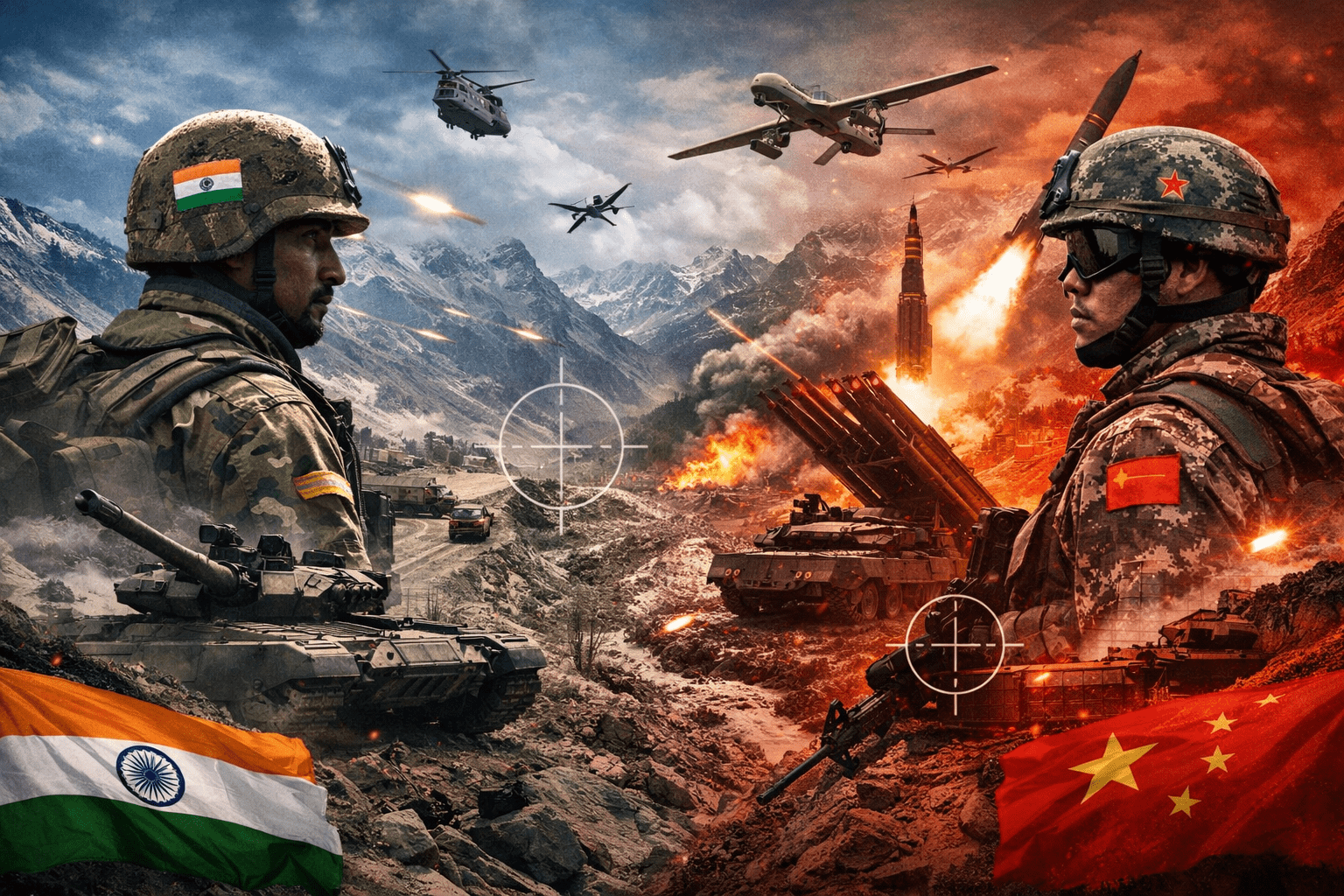
Integrated Battle Groups vs China’s Western Theater Command
0
SHARES
12
VIEWS
Share on LinkedinShare on FacebookShare on Twitter

The Seduction of Speed in Modern Land Warfare

Modern militaries increasingly organize around speed. They shorten decision cycles, compress mobilization timelines, and seek formations that can deploy faster than an adversary expects. India’s Integrated Battle Group concept emerged from this same strategic impulse.

The idea appears straightforward. Instead of waiting weeks to mobilize large corps formations, the army structures smaller combined-arms packages that already integrate infantry, armor, artillery, air defence, engineers, logistics, and surveillance elements.

Once mobilized, these formations can theoretically move rapidly into contested sectors and begin operations without the cumbersome build-up associated with traditional corps warfare.

Initially, the IBG concept was designed with Pakistan in mind. Western plains warfare rewards maneuver and rapid concentration of force. Road networks are dense. Armor can move freely. Artillery logistics remain manageable.

However, when the same doctrine moves north toward the Himalayas, the assumptions behind speed begin to erode.

Terrain becomes strategy. Logistics becomes survival. And maneuver warfare often gives way to positional endurance.

This is where the debate over Integrated Battle Groups becomes strategically interesting. The question is not whether IBGs are innovative. The real question is whether they are structurally suited for a confrontation with China’s Western Theater Command.

Because the Himalayan battlefield rejects many of the operational assumptions embedded in rapid maneuver doctrines.

The Structural Asymmetry of the Western Theater Command

China’s Western Theater Command controls an enormous geographic zone stretching from Xinjiang to Tibet and along the entire frontier with India. It commands the People’s Liberation Army ground forces, air assets, and logistical networks across the Tibetan plateau.

More importantly, the Western Theater Command has spent nearly two decades building the infrastructure needed to sustain military operations at altitude.

Railways now reach deep into Tibet through the Qinghai-Tibet rail network. The expanding Sichuan-Tibet railway will eventually provide another logistics artery linking the plateau with China’s industrial heartland. Strategic highways such as the G219 run parallel to the Line of Actual Control, enabling lateral troop movement across vast distances.

In parallel, China has expanded high-altitude airbases across Ngari, Shigatse, and Hotan. These bases support rapid reinforcement through airlift, fighter deployments, and long-range surveillance.

Taken together, these developments create a strategic advantage that is rarely discussed in simple troop comparisons. China enjoys interior logistical lines across the plateau. Reinforcements and supplies can move across relatively stable infrastructure networks.

India’s geography imposes the opposite condition. Forces deployed along the Himalayan frontier depend on narrow road corridors climbing through mountain passes. Even small disruptions can slow the flow of fuel, ammunition, and winter supplies.

Therefore, before discussing battlefield maneuver, one must first acknowledge the structural logistics asymmetry that defines the theater.

In that environment, the sustainability of any forward-deployed combat formation becomes the central strategic question.

IBGs and PLA Combined Arms Brigades: A Structural Comparison

The IBG concept often draws comparisons with the Chinese Combined Arms Brigade structure. At first glance the two appear similar. Both formations emphasize modularity, integrated firepower, and operational flexibility.

However, the resemblance begins to fade once one examines their doctrinal context.

PLA Combined Arms Brigades are designed as self-contained maneuver units within a networked battlefield architecture. Each brigade integrates reconnaissance elements, mechanized infantry, artillery battalions, air defense, and logistical components.

Crucially, these brigades operate inside a dense surveillance environment supported by satellites, drones, and electronic warfare assets.

Indian IBGs aim for similar modularity, yet they still draw heavily from traditional brigade structures. Their logistics architecture remains tied to existing corps frameworks, and their battlefield networking capabilities are still evolving.

This difference matters because modern warfare increasingly revolves around reconnaissance-strike complexes. The unit that detects first and strikes fastest often dictates the tempo of battle.

China’s brigades operate within such networks.

India’s IBGs are still transitioning toward that model.

Thus, the comparison between IBGs and PLA brigades reveals not just structural similarities but also the technological and doctrinal gap that continues to shape the Himalayan balance.

The Logistics Tyranny of Plateau Warfare

If doctrine shapes how armies intend to fight, logistics determines whether they can fight at all.

The Himalayan theater magnifies logistical challenges in ways few modern battlefields do. High altitude reduces engine efficiency in vehicles and helicopters.

Extreme cold affects fuel behavior and mechanical reliability. Soldiers require extended acclimatization cycles before deployment. Medical evacuation becomes slower and more dangerous.

Even basic sustainment becomes complex.

Fuel consumption rises dramatically as vehicles climb steep terrain. Artillery ammunition must move through fragile road networks vulnerable to landslides, weather disruptions, and potential enemy targeting.

India has improved its border infrastructure significantly since the Ladakh crisis of 2020. Roads such as the Darbuk-Shyok-DBO axis have strengthened connectivity in key sectors. Strategic tunnels such as Sela and Nechiphu will reduce winter bottlenecks.

Yet despite these improvements, the logistics equation remains delicate.

If multiple IBGs were deployed forward in Ladakh during a prolonged crisis, the supply chain would face enormous strain. Ammunition flows, winter clothing, fuel reserves, and spare parts would all compete for limited transportation bandwidth.

Consequently, IBGs may reach the battlefield quickly. The more difficult question is how long they could remain combat effective.

In mountain warfare, endurance often matters more than maneuver.

The Surveillance Battlefield: Drones and ISR Networks

Another transformation shaping the Himalayan theater receives surprisingly little attention in IBG discussions. The battlefield is becoming saturated with sensors.

China has invested heavily in unmanned surveillance platforms capable of operating at high altitude. Systems such as the WZ-7 high altitude drone provide persistent monitoring across wide sectors of the plateau. Tactical UAV swarms extend surveillance down to the valley level.

These systems feed targeting data into long-range artillery and missile systems.

As a result, large troop movements along mountain roads can quickly become visible. Even temporary logistics nodes can be detected through aerial surveillance.

This development creates a profound challenge for formations like IBGs.

Combined-arms units moving through narrow valleys risk becoming highly visible targets within a sensor-rich environment. Once detected, they can be engaged through long-range rocket artillery or precision strikes.

Therefore, the IBG concept cannot rely purely on mobility. It must operate under conditions where visibility itself becomes a vulnerability.

The Himalayan battlefield increasingly resembles a surveillance-dominated environment in which concealment and electronic warfare play decisive roles.

Precision Fires and the PLA Approach to Plateau Warfare

Chinese military doctrine does not necessarily emphasize large-scale territorial offensives across the Himalayas. Instead, the People’s Liberation Army has developed a strategy focused on precision strike dominance.

Rocket artillery systems such as the PHL-03 and PCL-191 allow long-range fires capable of striking logistics hubs deep inside Indian rear areas. Conventional ballistic missiles extend this reach even further.

This approach aims to paralyze an opponent’s logistics rather than defeat front-line troops through maneuver alone.

If supply routes collapse, forward formations gradually lose operational capacity.

In such a scenario, the role of IBGs becomes complicated. A forward-deployed formation may possess impressive combined-arms capability. Yet if its logistics backbone is disrupted by precision fires, its effectiveness declines rapidly.

Thus, the central battlefield contest may not involve maneuver between opposing ground formations. Instead, it may revolve around which side can sustain its supply network under long-range strike pressure.

The Command Structure Gap

China’s military reforms during the past decade created integrated theater commands designed to coordinate land, air, missile, and cyber capabilities under unified operational leadership.

The Western Theater Command embodies this model. Ground forces operate in coordination with air force assets and rocket force units, all linked through centralized command networks.

India’s military command structure remains in transition. Efforts to create joint theater commands are underway but not yet fully implemented.

This creates a structural challenge for IBG deployment.

Rapid maneuver units require tight coordination with air support, surveillance platforms, and long-range fires. Without integrated command architecture, coordination delays may emerge during high-intensity operations.

Therefore, the IBG concept cannot be evaluated in isolation. Its effectiveness depends heavily on the broader command integration framework that supports it.

Winter War: The Seasonal Constraint

Perhaps the most overlooked dimension of Himalayan warfare is the seasonal cycle.

For nearly half the year, extreme winter conditions shape operational possibilities. Temperatures plunge far below freezing. Snowfall disrupts transportation routes. Equipment maintenance becomes significantly more difficult.

India already maintains extensive winter stocking operations for tens of thousands of troops deployed along the frontier. Sustaining forward formations during winter requires months of logistical preparation.

Now imagine sustaining multiple IBGs in such an environment.

The seasonal logistics burden becomes immense. Ammunition, fuel, food supplies, and medical resources must all be pre-positioned before winter sets in.

Consequently, the operational flexibility promised by rapid deployment doctrines becomes constrained by seasonal logistics realities.

The Himalayan battlefield does not operate on the timeline of military planning cycles. It operates on the timeline of weather.

Lessons Emerging from Ukraine

Recent conflicts elsewhere also offer relevant insights.

The war in Ukraine has demonstrated how modern surveillance networks combined with drone-guided artillery can neutralize large maneuver formations. Units that concentrate along predictable routes quickly become targets for precision fires.

Although the Himalayan terrain differs significantly from Eastern Europe, the underlying lesson remains relevant.

Formations operating in the open without strong electronic warfare protection and counter-drone capabilities risk rapid attrition.

Therefore, IBGs must integrate electronic warfare systems, mobile air defense, and counter-drone capabilities if they are to survive within a sensor-saturated battlespace.

Without such protection, maneuver units may struggle to reach engagement zones intact.

The Indo-Pacific Spillover

Although IBGs focus primarily on the land border, their implications extend beyond the Himalayas.

India’s broader strategic posture across the Indo-Pacific depends heavily on how much military attention remains tied to the northern frontier.

If sustained troop deployments along the Himalayan border consume large portions of the defense budget and manpower pool, naval modernization could slow.

Conversely, if land front stability improves, India gains greater freedom to project maritime power across the Indian Ocean.

Therefore, the IBG concept carries indirect consequences for the maritime balance of the Indo-Pacific.

Stability along the land border allows India to focus more resources on naval expansion, submarine fleets, and maritime surveillance networks that shape competition with China across the wider region.

A Hypothetical Ladakh Crisis Scenario

Consider a hypothetical crisis scenario in the early 2030s.

Tensions escalate along the Line of Actual Control following a border incident.

China begins deploying additional forces into forward staging areas across the Tibetan plateau. Satellite imagery reveals rocket artillery units moving into firing positions.

Within hours, long-range precision strikes target Indian logistics hubs supporting forward deployments in Ladakh.

India responds by deploying an Integrated Battle Group toward the threatened sector. The formation moves quickly along the available road corridors, bringing artillery and armored vehicles into the region.

However, surveillance drones detect the movement. Rocket artillery strikes disrupt supply convoys behind the advancing formation.

At this point the contest becomes a race between maneuver and sustainment.

If supply routes remain functional, the IBG can reinforce defensive positions and stabilize the front. If logistics flows collapse under sustained precision strikes, the formation risks losing operational capability despite reaching the battlefield.

This scenario illustrates the central dilemma facing the IBG concept.

Rapid deployment is valuable. Yet sustainment determines strategic outcomes.

The Strategic Experiment Underway

The Integrated Battle Group initiative represents one of the most significant structural experiments undertaken by the Indian Army in decades.

It signals recognition that future conflicts along contested borders may unfold rapidly and require modular force packages capable of immediate deployment.

However, doctrine alone cannot overcome structural constraints.

Infrastructure, logistics networks, surveillance systems, electronic warfare capabilities, and joint command structures must evolve in parallel.

Without those supporting layers, IBGs risk becoming impressive organizational innovations that struggle to deliver sustained operational advantage.

The Quiet Truth Behind the IBG Debate

Military innovation often begins with elegant ideas.

Reality eventually subjects those ideas to geography, logistics, and adversary behavior.

India’s Integrated Battle Groups embody a serious attempt to adapt land warfare doctrine to faster crisis cycles along contested borders. Against Pakistan’s plains battlefield, the concept retains clear operational logic.

Against China’s Western Theater Command, the environment becomes far less forgiving.

The Himalayan frontier imposes conditions where infrastructure dictates maneuver, logistics shapes strategy, and sustainment often decides victory.

Under those circumstances, the ultimate test of the IBG concept will not be how quickly these formations deploy.

It will be how long they can fight once they arrive.

Tags: In Focus
Previous Post

India’s Oil Artery Under Threat: Strategic Implications of a Hormuz Crisis

Next Post

Chips, Rare Earths, and Telecom: India’s Industrial Counter to China’s Supply Chain Leverage

IndoAsia Defense

IndoAsia Defense

IndoAsia Defense Team is a specialist research and analysis group focused on India’s military modernization and Indo-Pacific strategic dynamics. The platform delivers structured, data-driven insights on doctrine, force posture, defense technology, and regional power balance.

Next Post
Chips, Rare Earths, and Telecom India’s Industrial Counter to China’s Supply Chain Leverage

Chips, Rare Earths, and Telecom: India’s Industrial Counter to China’s Supply Chain Leverage

Leave a Reply Cancel reply

Login with your Social ID

Your email address will not be published. Required fields are marked *

Category

  • Air
  • Global
  • Indo-Pacific
  • Industry
  • Joint
  • Land
  • Navy
  • Tech

Defence Capabilities

  • Air Defence
  • Drones
  • Fighters
  • ISR & Mobility
  • China Military
  • Emerging Tech
  • Regional Trends
  • U.S. Posture

Strategy

  • 2035 Outlook
  • China Strategy
  • India Strategy
  • Pakistan Outlook
  • Budget
  • Exports
  • Make in India
  • Supply Chains

Operations

  • Integrated Ops
  • Procurement Reform
  • Theater Commands
  • Armour & Artillery
  • China Front
  • Future Combat
  • Pakistan Front
  • Fleet Expansion

Resources

  • India vs China Military Balance
  • Indo-Pacific Military Power Map
  • Global Military Balance Dashboard
  • Global Weapons Systems Database
  • Global Missile Systems Database
  • Indo-Pacific Defense Timeline
  • India Military Capability Index
  • About
  • Contact
  • Privacy & Policy
  • Editorial Policy
  • Cookie Policy
  • Disclaimer
  • Terms And Conditions
Facebook Linkedin X-twitter
© 2026 IndoAsia Defense. All Rights Reserved.
No Result
View All Result
  • Home
  • Air
    • Air Defence
    • Drones
    • Fighters
    • ISR & Mobility
  • Land
    • Armour & Artillery
    • China Front
    • Future Combat
    • Pakistan Front
  • Navy
    • Fleet Expansion
    • Indian Ocean
    • Maritime Security
    • Submarines
  • Indo-Pacific
    • 2035 Outlook
    • China Strategy
    • India Strategy
    • Pakistan Outlook
  • Joint
    • Integrated Ops
    • Procurement Reform
    • Theater Commands
  • Tech
    • AI & Autonomous Systems
    • Cyber
    • Electronic Warfare
    • Space
  • Industry
    • Budget
    • Exports
    • Make in India
    • Supply Chains
  • Global
    • China-Pak
    • Emerging Tech
    • Regional Trends
    • US-India