











IndoAsia Defense
  • Home
  • Air
    • All
    • Air Defence
    • Drones
    • Fighters
    • ISR & Mobility
    Ghatak UCAV stealth, autonomy, integration

    Inside India’s Ghatak UCAV Program: Stealth, Autonomy, and the Integration Gap

    The F414 engine co-production agreement between Hindustan Aeronautics Limited and GE Aerospace

    India-US F414 Engine Deal Explained: Technology Transfer, Tejas Mk2, and AMCA

    What is the Su-57M1 India deal

    Su-57M1 for India: A Fifth-Generation Shortcut or a Strategic Dependency Trap?

    India indigenous long range surveillance radar with X-band drone detection capability

    450km Eyes, Machine-Speed Decisions: How India’s Indigenous Long Range Surveillance Radar Is Rewriting Air Defence

    Why Software Defined Radios Are the IAF’s Most Consequential Upgrade

    IAF Signs BEL Deal for Software Defined Radios: Rewiring India’s Air Combat Network

    How the Ghatak UCAV Stealth Design Redefines India’s Drone Warfare Doctrine

    Ghatak UCAV: India’s Carbon Composite Stealth Strategy Dissected

    Ballistic Missile Defense system intercepting incoming missile during midcourse phase

    How Ballistic Missile Defense Works: Inside Modern Missile Interception Systems

    Swarm logistics drones delivering military supplies in high-altitude Himalayan terrain with Indian Army presence

    Swarm Logistics Drones in Himalayan Warfare: Can India Close the Supply Gap with China?

    India’s 6th-Gen Fighter Strategy FCAS vs GCAP Explained

    India’s 6th-Gen Fighter Strategy: FCAS vs GCAP Explained

  • Land
    • All
    • Armour & Artillery
    • China Front
    • Future Combat
    • Pakistan Front
    The India-South Korea defence deal

    The India-South Korea Defence Deal Through China’s Operational Lens

    Railways as War Arteries Can India Match China’s Military Mobility Before the Next Crisis

    Railways as War Arteries: Can India Match China’s Military Mobility Before the Next Crisis?

    China maritime front in Indian Ocean

    What If China Opens a Maritime Front in the Indian Ocean During a LAC Conflict?

    What is Indian military modernization strategy in 2026?

    Indian Military Modernization: Systems, Doctrine, and Capability Architecture (2026-27)

    Tank launching loitering munition in battle

    From Smoke to Strike: India’s Indigenous Loitering Munitions for T-72, T-90, and Arjun Tanks

    How China Mobilizes Forces Along the LAC Speed, Systems, and Strategic Control

    How China Mobilizes Forces Along the LAC: Systems, Speed, and Strategic Signaling

    Ballistic Missile Defense system intercepting incoming missile during midcourse phase

    How Ballistic Missile Defense Works: Inside Modern Missile Interception Systems

    Swarm logistics drones delivering military supplies in high-altitude Himalayan terrain with Indian Army presence

    Swarm Logistics Drones in Himalayan Warfare: Can India Close the Supply Gap with China?

    India defence proposals Rs 2.38 trillion showing S-400 system, strike drones, fighter jets and military architecture shift

    India Defence Proposals Rs 2.38 Trillion: Why This Approval Changes How India Will Fight, Not Just What It Buys

  • Navy
    • All
    • Fleet Expansion
    • Indian Ocean
    • Maritime Security
    • Submarines
    China maritime front in Indian Ocean

    What If China Opens a Maritime Front in the Indian Ocean During a LAC Conflict?

    The Strait of Hormuz Crisis

    India’s Oil Artery Under Threat: Strategic Implications of a Hormuz Crisis

    India’s VL-Shtil Missile Deal with Russia

    India’s VL-Shtil Missile Deal with Russia: Strengthening Naval Air Defense in the Indo-Pacific

    Andaman & Nicobar Command Sleeping Giant of India’s Maritime Strategy

    Andaman & Nicobar Command: Sleeping Giant of India’s Maritime Strategy

    Maritime Surveillance 2.0: Why EO/IR Modernisation Matters for India’s Ocean Security

    Maritime Surveillance 2.0: Why EO/IR Modernisation Matters for India’s Ocean Security

    2030 Will Decide the India ASEAN Maritime Equation

    2030 Will Decide the India ASEAN Maritime Equation

    India Military Transformation Series — Part 3: Maritime Power and the Indian Ocean Imperative

    India Military Transformation Series — Part 3: Maritime Power and the Indian Ocean Imperative

    Indian Navy TEDBF PPP Model: China Factor and 2030–2040 Carrier Strategy

    Indian Navy TEDBF PPP Model: China Factor and 2030–2040 Carrier Strategy

    India’s Maritime Strategy: India’s Blue-Water Ambition in a Contested Indo-Pacific

    India’s Maritime Strategy: India’s Blue-Water Ambition in a Contested Indo-Pacific

  • Indo-Pacific
    • All
    • 2035 Outlook
    • China Strategy
    • India Strategy
    • Pakistan Outlook
    The India-South Korea defence deal

    The India-South Korea Defence Deal Through China’s Operational Lens

    Railways as War Arteries Can India Match China’s Military Mobility Before the Next Crisis

    Railways as War Arteries: Can India Match China’s Military Mobility Before the Next Crisis?

    india military integration gap

    Is India Building Military Power Faster Than It Can Integrate It?

    China maritime front in Indian Ocean

    What If China Opens a Maritime Front in the Indian Ocean During a LAC Conflict?

    Can India Fight Beyond 30 Days? Inside India’s War Sustainment Reality

    Can India Fight Beyond 30 Days? Inside India’s War Sustainment Reality

    What is Indian military modernization strategy in 2026?

    Indian Military Modernization: Systems, Doctrine, and Capability Architecture (2026-27)

    The end of Naxalism in India

    End of Naxalism in India: Inside the Fall of the Red Corridor

    Ballistic Missile Defense system intercepting incoming missile during midcourse phase

    How Ballistic Missile Defense Works: Inside Modern Missile Interception Systems

    Swarm logistics drones delivering military supplies in high-altitude Himalayan terrain with Indian Army presence

    Swarm Logistics Drones in Himalayan Warfare: Can India Close the Supply Gap with China?

  • Joint
    • All
    • Integrated Ops
    • Procurement Reform
    • Theater Commands
    Ballistic Missile Defense system intercepting incoming missile during midcourse phase

    How Ballistic Missile Defense Works: Inside Modern Missile Interception Systems

    India defence proposals Rs 2.38 trillion showing S-400 system, strike drones, fighter jets and military architecture shift

    India Defence Proposals Rs 2.38 Trillion: Why This Approval Changes How India Will Fight, Not Just What It Buys

    DAP 2026 India’s Quiet Revolution in Defence Procurement

    DAP 2026: India’s Quiet Revolution in Defence Procurement

    Integrated Battle Groups vs China’s Western Theater Command

    Integrated Battle Groups vs China’s Western Theater Command: Can Doctrine Survive the Himalayan Reality?

    Andaman & Nicobar Command Sleeping Giant of India’s Maritime Strategy

    Andaman & Nicobar Command: Sleeping Giant of India’s Maritime Strategy

    India Military Transformation Series — Part 2: The Theatre Command Reckoning

    India Military Transformation Series — Part 2: The Theatre Command Reckoning

    India AI C4ISR modernization

    India Military Transformation Series — Part 1: India AI C4ISR Modernization

    India’s Two-Front Theatre Command: Preparing for Simultaneous Conflict

    India’s Two-Front Theatre Command: Preparing for Simultaneous Conflict

    The Networked Force: India’s Transition to Integrated Warfare Systems

    The Networked Force: India’s Transition to Integrated Warfare Systems

  • Tech
    • All
    • AI & Autonomous Systems
    • Cyber
    • Electronic Warfare
    • Space
    Why Software Defined Radios Are the IAF’s Most Consequential Upgrade

    IAF Signs BEL Deal for Software Defined Radios: Rewiring India’s Air Combat Network

    Source Code or ICD India’s Source Code Negotiation Explained

    Source Code or ICD: India’s Source Code Negotiation Explained

    Supply Chain Weaponization

    Supply Chain Weaponization: Strategic Autonomy Meets Semiconductor Reality

    AI-driven battlefield in India's military

    The Algorithm of Borders: What India’s Military AI Push Actually Looks Like on the Ground

    India AI C4ISR modernization

    India Military Transformation Series — Part 1: India AI C4ISR Modernization

    PRAHAR Explained India Counter Terror Policy Prahaar

    PRAHAAR Explained: Why ‘PRAHAAR’ India’s National Counter-terrorism Doctrine, Signals the End of Traditional Warfare

    The Weapons Making the AMCA Unbeatable

    The Weapons Making the AMCA Unbeatable

    India’s Aerospace Ecosystem After Rafale: The 2026–2030 Industrial Test

    India’s Aerospace Ecosystem After Rafale: The 2026–2030 Industrial Test

    PLA’s Cyber Warfare Units and the Question of Indian Critical Infrastructure Resilience

    PLA’s Cyber Warfare Units and the Question of Indian Critical Infrastructure Resilience

  • Industry
    • All
    • Budget
    • Exports
    • Make in India
    • Supply Chains
    Ghatak UCAV stealth, autonomy, integration

    Inside India’s Ghatak UCAV Program: Stealth, Autonomy, and the Integration Gap

    The India-South Korea defence deal

    The India-South Korea Defence Deal Through China’s Operational Lens

    The F414 engine co-production agreement between Hindustan Aeronautics Limited and GE Aerospace

    India-US F414 Engine Deal Explained: Technology Transfer, Tejas Mk2, and AMCA

    Why Software Defined Radios Are the IAF’s Most Consequential Upgrade

    IAF Signs BEL Deal for Software Defined Radios: Rewiring India’s Air Combat Network

    How the Ghatak UCAV Stealth Design Redefines India’s Drone Warfare Doctrine

    Ghatak UCAV: India’s Carbon Composite Stealth Strategy Dissected

    Swarm logistics drones delivering military supplies in high-altitude Himalayan terrain with Indian Army presence

    Swarm Logistics Drones in Himalayan Warfare: Can India Close the Supply Gap with China?

    India defence proposals Rs 2.38 trillion showing S-400 system, strike drones, fighter jets and military architecture shift

    India Defence Proposals Rs 2.38 Trillion: Why This Approval Changes How India Will Fight, Not Just What It Buys

    Helicopter-Mounted Counter-Drone Systems

    Helicopter-Mounted Counter-Drone Systems: The Indian Army’s Answer to Kamikaze Drone Warfare

    India vs China Defence Industrial Base Explained

    India vs China Defence Industrial Base: Scale vs Strategic Depth

  • Global
    • All
    • China-Pak
    • Emerging Tech
    • Middle Eeast
    • Regional Trends
    • US-India
    • US-Israel
    Ghatak UCAV stealth, autonomy, integration

    Inside India’s Ghatak UCAV Program: Stealth, Autonomy, and the Integration Gap

    The F414 engine co-production agreement between Hindustan Aeronautics Limited and GE Aerospace

    India-US F414 Engine Deal Explained: Technology Transfer, Tejas Mk2, and AMCA

    india military integration gap

    Is India Building Military Power Faster Than It Can Integrate It?

    India indigenous long range surveillance radar with X-band drone detection capability

    450km Eyes, Machine-Speed Decisions: How India’s Indigenous Long Range Surveillance Radar Is Rewriting Air Defence

    What is Indian military modernization strategy in 2026?

    Indian Military Modernization: Systems, Doctrine, and Capability Architecture (2026-27)

    India defence proposals Rs 2.38 trillion showing S-400 system, strike drones, fighter jets and military architecture shift

    India Defence Proposals Rs 2.38 Trillion: Why This Approval Changes How India Will Fight, Not Just What It Buys

    India’s 6th-Gen Fighter Strategy FCAS vs GCAP Explained

    India’s 6th-Gen Fighter Strategy: FCAS vs GCAP Explained

    India’s Two-Front War Doctrine When and Why It Emerged

    When India’s Two-Front War Doctrine Emerged

    From Non-Alignment to Multi-Alignment India’s New Strategy

    Is India Quietly Shifting from Non-Alignment to Multi-Alignment 2.0?

  • Resources
    • India Military Capability Index
    • India vs China Military Balance
    • China Western Theater Command Guide
    • Pakistan Military Tracker 2026-27
    • India’s Military Doctrine Library
    • India vs China vs Pakistan Missile Arsenal Comparison
    • India’s Missile List
    • India Missile Range Map
    • Indo-Pacific Military Power Map
    • Indo-Pacific Defense Timeline
    • Global Military Balance Dashboard
    • Global Weapons Systems Database
    • Global Missile Systems Database
  • What If
    • China India Naval Conflict
No Result
View All Result
  • Home
  • Air
    • All
    • Air Defence
    • Drones
    • Fighters
    • ISR & Mobility
    Ghatak UCAV stealth, autonomy, integration

    Inside India’s Ghatak UCAV Program: Stealth, Autonomy, and the Integration Gap

    The F414 engine co-production agreement between Hindustan Aeronautics Limited and GE Aerospace

    India-US F414 Engine Deal Explained: Technology Transfer, Tejas Mk2, and AMCA

    What is the Su-57M1 India deal

    Su-57M1 for India: A Fifth-Generation Shortcut or a Strategic Dependency Trap?

    India indigenous long range surveillance radar with X-band drone detection capability

    450km Eyes, Machine-Speed Decisions: How India’s Indigenous Long Range Surveillance Radar Is Rewriting Air Defence

    Why Software Defined Radios Are the IAF’s Most Consequential Upgrade

    IAF Signs BEL Deal for Software Defined Radios: Rewiring India’s Air Combat Network

    How the Ghatak UCAV Stealth Design Redefines India’s Drone Warfare Doctrine

    Ghatak UCAV: India’s Carbon Composite Stealth Strategy Dissected

    Ballistic Missile Defense system intercepting incoming missile during midcourse phase

    How Ballistic Missile Defense Works: Inside Modern Missile Interception Systems

    Swarm logistics drones delivering military supplies in high-altitude Himalayan terrain with Indian Army presence

    Swarm Logistics Drones in Himalayan Warfare: Can India Close the Supply Gap with China?

    India’s 6th-Gen Fighter Strategy FCAS vs GCAP Explained

    India’s 6th-Gen Fighter Strategy: FCAS vs GCAP Explained

  • Land
    • All
    • Armour & Artillery
    • China Front
    • Future Combat
    • Pakistan Front
    The India-South Korea defence deal

    The India-South Korea Defence Deal Through China’s Operational Lens

    Railways as War Arteries Can India Match China’s Military Mobility Before the Next Crisis

    Railways as War Arteries: Can India Match China’s Military Mobility Before the Next Crisis?

    China maritime front in Indian Ocean

    What If China Opens a Maritime Front in the Indian Ocean During a LAC Conflict?

    What is Indian military modernization strategy in 2026?

    Indian Military Modernization: Systems, Doctrine, and Capability Architecture (2026-27)

    Tank launching loitering munition in battle

    From Smoke to Strike: India’s Indigenous Loitering Munitions for T-72, T-90, and Arjun Tanks

    How China Mobilizes Forces Along the LAC Speed, Systems, and Strategic Control

    How China Mobilizes Forces Along the LAC: Systems, Speed, and Strategic Signaling

    Ballistic Missile Defense system intercepting incoming missile during midcourse phase

    How Ballistic Missile Defense Works: Inside Modern Missile Interception Systems

    Swarm logistics drones delivering military supplies in high-altitude Himalayan terrain with Indian Army presence

    Swarm Logistics Drones in Himalayan Warfare: Can India Close the Supply Gap with China?

    India defence proposals Rs 2.38 trillion showing S-400 system, strike drones, fighter jets and military architecture shift

    India Defence Proposals Rs 2.38 Trillion: Why This Approval Changes How India Will Fight, Not Just What It Buys

  • Navy
    • All
    • Fleet Expansion
    • Indian Ocean
    • Maritime Security
    • Submarines
    China maritime front in Indian Ocean

    What If China Opens a Maritime Front in the Indian Ocean During a LAC Conflict?

    The Strait of Hormuz Crisis

    India’s Oil Artery Under Threat: Strategic Implications of a Hormuz Crisis

    India’s VL-Shtil Missile Deal with Russia

    India’s VL-Shtil Missile Deal with Russia: Strengthening Naval Air Defense in the Indo-Pacific

    Andaman & Nicobar Command Sleeping Giant of India’s Maritime Strategy

    Andaman & Nicobar Command: Sleeping Giant of India’s Maritime Strategy

    Maritime Surveillance 2.0: Why EO/IR Modernisation Matters for India’s Ocean Security

    Maritime Surveillance 2.0: Why EO/IR Modernisation Matters for India’s Ocean Security

    2030 Will Decide the India ASEAN Maritime Equation

    2030 Will Decide the India ASEAN Maritime Equation

    India Military Transformation Series — Part 3: Maritime Power and the Indian Ocean Imperative

    India Military Transformation Series — Part 3: Maritime Power and the Indian Ocean Imperative

    Indian Navy TEDBF PPP Model: China Factor and 2030–2040 Carrier Strategy

    Indian Navy TEDBF PPP Model: China Factor and 2030–2040 Carrier Strategy

    India’s Maritime Strategy: India’s Blue-Water Ambition in a Contested Indo-Pacific

    India’s Maritime Strategy: India’s Blue-Water Ambition in a Contested Indo-Pacific

  • Indo-Pacific
    • All
    • 2035 Outlook
    • China Strategy
    • India Strategy
    • Pakistan Outlook
    The India-South Korea defence deal

    The India-South Korea Defence Deal Through China’s Operational Lens

    Railways as War Arteries Can India Match China’s Military Mobility Before the Next Crisis

    Railways as War Arteries: Can India Match China’s Military Mobility Before the Next Crisis?

    india military integration gap

    Is India Building Military Power Faster Than It Can Integrate It?

    China maritime front in Indian Ocean

    What If China Opens a Maritime Front in the Indian Ocean During a LAC Conflict?

    Can India Fight Beyond 30 Days? Inside India’s War Sustainment Reality

    Can India Fight Beyond 30 Days? Inside India’s War Sustainment Reality

    What is Indian military modernization strategy in 2026?

    Indian Military Modernization: Systems, Doctrine, and Capability Architecture (2026-27)

    The end of Naxalism in India

    End of Naxalism in India: Inside the Fall of the Red Corridor

    Ballistic Missile Defense system intercepting incoming missile during midcourse phase

    How Ballistic Missile Defense Works: Inside Modern Missile Interception Systems

    Swarm logistics drones delivering military supplies in high-altitude Himalayan terrain with Indian Army presence

    Swarm Logistics Drones in Himalayan Warfare: Can India Close the Supply Gap with China?

  • Joint
    • All
    • Integrated Ops
    • Procurement Reform
    • Theater Commands
    Ballistic Missile Defense system intercepting incoming missile during midcourse phase

    How Ballistic Missile Defense Works: Inside Modern Missile Interception Systems

    India defence proposals Rs 2.38 trillion showing S-400 system, strike drones, fighter jets and military architecture shift

    India Defence Proposals Rs 2.38 Trillion: Why This Approval Changes How India Will Fight, Not Just What It Buys

    DAP 2026 India’s Quiet Revolution in Defence Procurement

    DAP 2026: India’s Quiet Revolution in Defence Procurement

    Integrated Battle Groups vs China’s Western Theater Command

    Integrated Battle Groups vs China’s Western Theater Command: Can Doctrine Survive the Himalayan Reality?

    Andaman & Nicobar Command Sleeping Giant of India’s Maritime Strategy

    Andaman & Nicobar Command: Sleeping Giant of India’s Maritime Strategy

    India Military Transformation Series — Part 2: The Theatre Command Reckoning

    India Military Transformation Series — Part 2: The Theatre Command Reckoning

    India AI C4ISR modernization

    India Military Transformation Series — Part 1: India AI C4ISR Modernization

    India’s Two-Front Theatre Command: Preparing for Simultaneous Conflict

    India’s Two-Front Theatre Command: Preparing for Simultaneous Conflict

    The Networked Force: India’s Transition to Integrated Warfare Systems

    The Networked Force: India’s Transition to Integrated Warfare Systems

  • Tech
    • All
    • AI & Autonomous Systems
    • Cyber
    • Electronic Warfare
    • Space
    Why Software Defined Radios Are the IAF’s Most Consequential Upgrade

    IAF Signs BEL Deal for Software Defined Radios: Rewiring India’s Air Combat Network

    Source Code or ICD India’s Source Code Negotiation Explained

    Source Code or ICD: India’s Source Code Negotiation Explained

    Supply Chain Weaponization

    Supply Chain Weaponization: Strategic Autonomy Meets Semiconductor Reality

    AI-driven battlefield in India's military

    The Algorithm of Borders: What India’s Military AI Push Actually Looks Like on the Ground

    India AI C4ISR modernization

    India Military Transformation Series — Part 1: India AI C4ISR Modernization

    PRAHAR Explained India Counter Terror Policy Prahaar

    PRAHAAR Explained: Why ‘PRAHAAR’ India’s National Counter-terrorism Doctrine, Signals the End of Traditional Warfare

    The Weapons Making the AMCA Unbeatable

    The Weapons Making the AMCA Unbeatable

    India’s Aerospace Ecosystem After Rafale: The 2026–2030 Industrial Test

    India’s Aerospace Ecosystem After Rafale: The 2026–2030 Industrial Test

    PLA’s Cyber Warfare Units and the Question of Indian Critical Infrastructure Resilience

    PLA’s Cyber Warfare Units and the Question of Indian Critical Infrastructure Resilience

  • Industry
    • All
    • Budget
    • Exports
    • Make in India
    • Supply Chains
    Ghatak UCAV stealth, autonomy, integration

    Inside India’s Ghatak UCAV Program: Stealth, Autonomy, and the Integration Gap

    The India-South Korea defence deal

    The India-South Korea Defence Deal Through China’s Operational Lens

    The F414 engine co-production agreement between Hindustan Aeronautics Limited and GE Aerospace

    India-US F414 Engine Deal Explained: Technology Transfer, Tejas Mk2, and AMCA

    Why Software Defined Radios Are the IAF’s Most Consequential Upgrade

    IAF Signs BEL Deal for Software Defined Radios: Rewiring India’s Air Combat Network

    How the Ghatak UCAV Stealth Design Redefines India’s Drone Warfare Doctrine

    Ghatak UCAV: India’s Carbon Composite Stealth Strategy Dissected

    Swarm logistics drones delivering military supplies in high-altitude Himalayan terrain with Indian Army presence

    Swarm Logistics Drones in Himalayan Warfare: Can India Close the Supply Gap with China?

    India defence proposals Rs 2.38 trillion showing S-400 system, strike drones, fighter jets and military architecture shift

    India Defence Proposals Rs 2.38 Trillion: Why This Approval Changes How India Will Fight, Not Just What It Buys

    Helicopter-Mounted Counter-Drone Systems

    Helicopter-Mounted Counter-Drone Systems: The Indian Army’s Answer to Kamikaze Drone Warfare

    India vs China Defence Industrial Base Explained

    India vs China Defence Industrial Base: Scale vs Strategic Depth

  • Global
    • All
    • China-Pak
    • Emerging Tech
    • Middle Eeast
    • Regional Trends
    • US-India
    • US-Israel
    Ghatak UCAV stealth, autonomy, integration

    Inside India’s Ghatak UCAV Program: Stealth, Autonomy, and the Integration Gap

    The F414 engine co-production agreement between Hindustan Aeronautics Limited and GE Aerospace

    India-US F414 Engine Deal Explained: Technology Transfer, Tejas Mk2, and AMCA

    india military integration gap

    Is India Building Military Power Faster Than It Can Integrate It?

    India indigenous long range surveillance radar with X-band drone detection capability

    450km Eyes, Machine-Speed Decisions: How India’s Indigenous Long Range Surveillance Radar Is Rewriting Air Defence

    What is Indian military modernization strategy in 2026?

    Indian Military Modernization: Systems, Doctrine, and Capability Architecture (2026-27)

    India defence proposals Rs 2.38 trillion showing S-400 system, strike drones, fighter jets and military architecture shift

    India Defence Proposals Rs 2.38 Trillion: Why This Approval Changes How India Will Fight, Not Just What It Buys

    India’s 6th-Gen Fighter Strategy FCAS vs GCAP Explained

    India’s 6th-Gen Fighter Strategy: FCAS vs GCAP Explained

    India’s Two-Front War Doctrine When and Why It Emerged

    When India’s Two-Front War Doctrine Emerged

    From Non-Alignment to Multi-Alignment India’s New Strategy

    Is India Quietly Shifting from Non-Alignment to Multi-Alignment 2.0?

  • Resources
    • India Military Capability Index
    • India vs China Military Balance
    • China Western Theater Command Guide
    • Pakistan Military Tracker 2026-27
    • India’s Military Doctrine Library
    • India vs China vs Pakistan Missile Arsenal Comparison
    • India’s Missile List
    • India Missile Range Map
    • Indo-Pacific Military Power Map
    • Indo-Pacific Defense Timeline
    • Global Military Balance Dashboard
    • Global Weapons Systems Database
    • Global Missile Systems Database
  • What If
    • China India Naval Conflict
No Result
View All Result
IndoAsia Defense
No Result
View All Result
Home Land China Front

The Northern Front: Mapping India’s Critical Gaps in Border Infrastructure

The northern frontier is no longer defined by road absence. It is defined by the ability to absorb disruption without degrading operational tempo. The transition required now is from construction-driven expansion to systems-engineered resilience.

IndoAsia Defense by IndoAsia Defense
February 26, 2026
in China Front, China Strategy, China-Pak, Global, India Strategy, Land, Regional Trends
0
The Northern Front: Mapping India’s Critical Gaps in Border Infrastructure
0
SHARES
10
VIEWS
Share on LinkedinShare on FacebookShare on Twitter

India’s northern frontier — spanning Ladakh, Uttarakhand, Himachal Pradesh and Sikkim — is no longer a peripheral geography. It is a high-altitude logistics theatre where deterrence credibility is directly tied to infrastructure survivability.

Altitudes range from 9,000 to over 18,000 feet. Construction windows compress to 4–6 months annually. Freeze–thaw cycles fracture pavement. Glacial melt redefines river morphology. Monsoon destabilization in the central Himalayas generates recurring landslides. Infrastructure here is not developmental — it is operational.

Under the India–China Border Roads (ICBR) framework, largely executed by the Border Roads Organisation, India has accelerated construction since 2020. Yet the frontier’s next phase is no longer about access. It is about redundancy, throughput, and survivability under disruption.

Sectoral Overview

Eastern Ladakh: Linear Strength, Limited Redundancy
https://www.drishtiias.com/images/uploads/1591610368_image2.jpg
https://upload.wikimedia.org/wikipedia/commons/b/b0/View_of_Saling_Bridge_over_Shyok_River%2C_Khaplu.jpg
https://meil.in/sites/default/files/2025-01/zojila.jpg
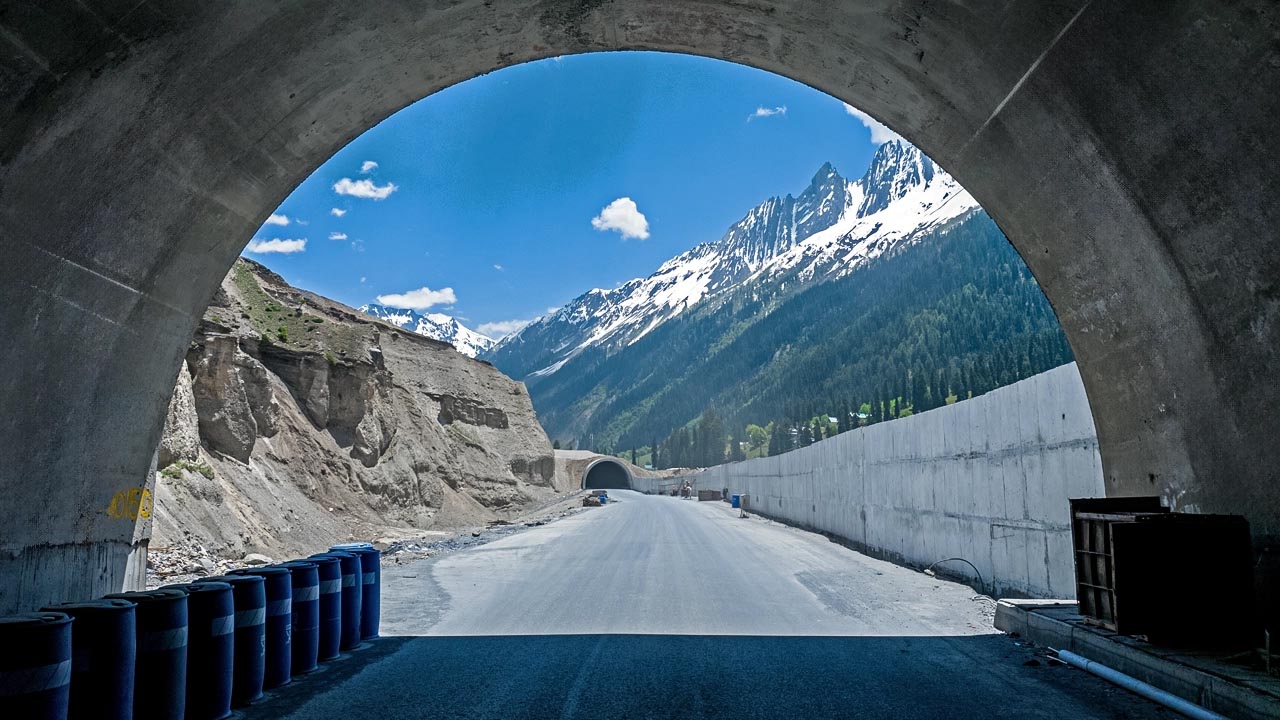
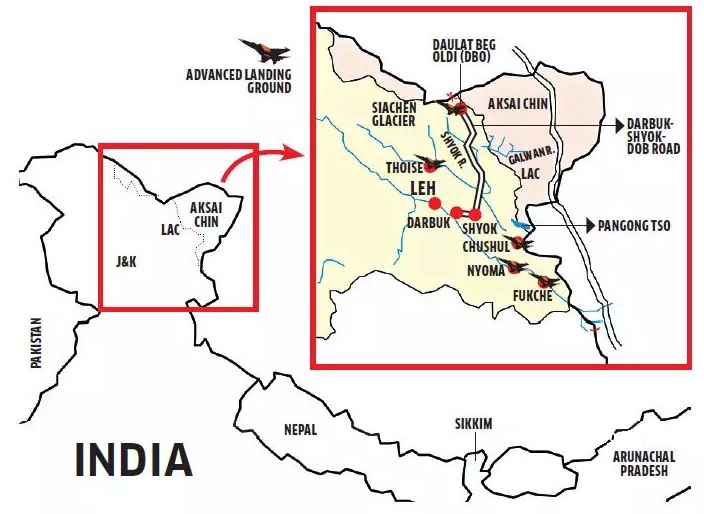
The Darbuk–Shyok–DBO (DS-DBO) road fundamentally altered access to Daulat Beg Oldie. Post-2020 bridge reinforcement and black-topping significantly improved reliability. The Zoji La Tunnel will reduce winter isolation and compress mobilization timelines from weeks to days.

Yet Ladakh remains structurally linear:

  • Long stretches of the DS-DBO alignment run parallel to the Shyok River.

  • Lateral east–west connectors remain limited.

  • Airlift remains concentrated at a few critical nodes.

Mobility exists. Redundancy does not yet scale proportionally.

Uttarakhand Axis: Connectivity Under Geological Stress

https://media.assettype.com/nationalherald%2F2020-05%2F2d593743-93a2-4da4-b17f-0d59c376e62a%2Fd22b4f84355a825de6f0abb2c4c4e0be.jpg
https://upload.wikimedia.org/wikipedia/commons/1/18/Mana_Village%2C_Badrinath%2C_Uttarakhand%2C_India.jpeg
https://pbs.twimg.com/media/E4NrbCxWUAAO0Yw.jpg

Unlike Ladakh’s cold desert plateau, Uttarakhand sits in young fold mountains with high rainfall.

Key constraints:

  • Landslide recurrence cycles reduce annual availability days.

  • Bridge load classifications vary; sustained heavy armor mobility remains constrained in segments.

  • Valley geometry restricts logistics node depth.

Here, the limiting variable is durability, not access.

Sikkim & Nathu La: Narrow Corridor Dynamics
https://www.flamingotravels.net/_next/image?q=90&url=https%3A%2F%2Fimgcdn.flamingotravels.co.in%2FImages%2FPlacesOfInterest%2FNathula-Pass-Gangtok-3.jpg&w=828
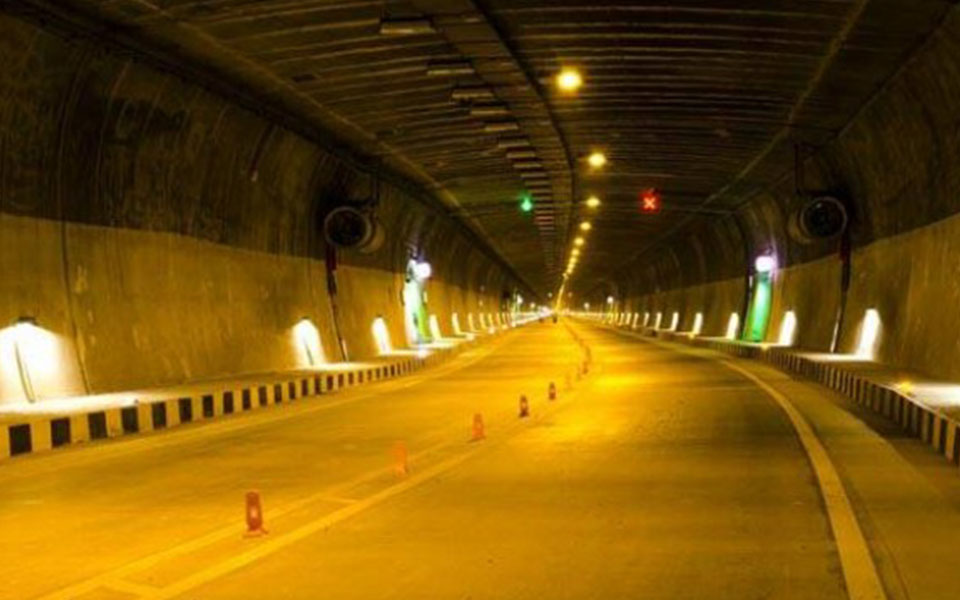
https://english.varthabharati.in/storage/uploads/india/tunnel-jk-exclusive_vb_20.jpeg
https://hblimg.mmtcdn.com/content/hubble/img/gangtok/mmt/activities/m_activities_Gangtok_Nathu%20La%20Pass_l_373_496.jpg

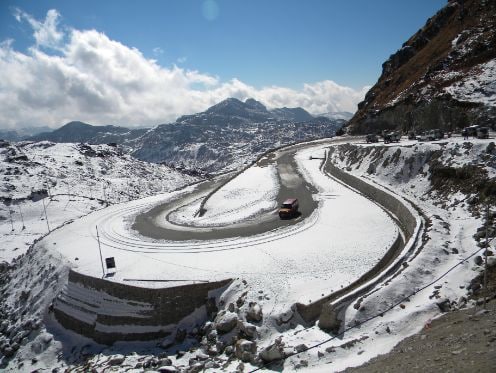
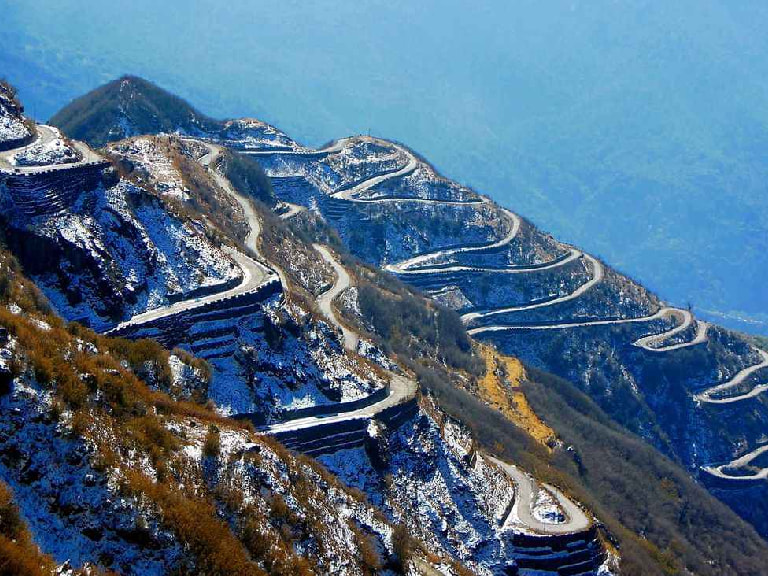
The Nathu La Pass axis remains a historically active corridor. The Theng Tunnel improves localized reliability, but broader corridor redundancy remains limited.

Disruption along the Gangtok–Nathu La route has immediate operational impact due to limited parallel alignments.

Quantified Infrastructure Scoring Model (0–5 Weighted)

To move beyond qualitative assessment, the following weighted scoring model evaluates infrastructure maturity across sectors.

Parameters & Weights

Parameter

Weight

Primary Access Quality
15%
Redundancy (Parallel Routes)
20%
Lateral Connectivity
15%
Tunnelization & All-Weather Reliability
15%
Heavy-Lift Bridge Capacity
10%
Airfield/ALG Dispersal
10%
Logistics Node Depth
10%
Energy & Digital Resilience
5%

Score Scale:
0 = Absent
1 = Minimal
2 = Limited
3 = Functional
4 = Strong
5 = Layered & Redundant

Sectoral Weighted Scores (Indian Side)

Sector

Weighted Score (0–5)

Eastern Ladakh

3.1

Uttarakhand Axis

2.6

Sikkim / Nathu La

2.9

Interpretation

  • Ladakh scores highest due to post-2020 acceleration but remains constrained by redundancy deficit.

  • Uttarakhand is connectivity-rich but resilience-poor under monsoon stress.

  • Sikkim benefits from historical connectivity yet remains corridor-dependent.

The central systemic weakness across all sectors: parallel alignments and distributed logistics depth.

72-Hour Mobilization Scenario Modelling

To assess operational elasticity, consider a 72-hour limited escalation scenario requiring:

  • Rapid reinforcement of forward brigades

  • Movement of heavy platforms

  • Fuel and ammunition surge

  • Casualty evacuation redundancy

Eastern Ladakh (Indian Side)

Strengths:

  • Functional DS-DBO spine.

  • ALG availability.

Constraints:

  • Single-axis congestion risk.

  • Limited east–west diversion options.

  • Throughput bottleneck if a key bridge is disrupted.

Assessment: Initial reinforcement achievable. Sustained high-volume throughput vulnerable to targeted disruption.

Uttarakhand Axis

Strengths:

  • Recent road expansion.

  • Proximity to central plains.

Constraints:

  • Landslide vulnerability during monsoon.

  • Bridge load variability.

  • Limited forward storage depth.

Assessment: Reinforcement feasible but seasonal unpredictability introduces risk into tempo planning.

Sikkim Axis

Strengths:

  • Established corridor.

  • Eastern air support from rear bases.

Constraints:

  • Linear approach.

  • Limited alternate alignments.

Assessment: Rapid early mobilization possible; corridor disruption rapidly degrades tempo.

Calibrated China Comparison

Infrastructure asymmetry must be assessed structurally, not rhetorically.

On the Chinese side of the LAC:

  • Plateau topography enables multi-lane highway grids.

  • Rail connectivity reaches deep into Tibet.

  • Greater dispersal of airbases.

  • Larger staging areas.

  • Extensive tunnelling and hardened facilities.

This yields higher logistics elasticity and redundancy depth.

Sector-Specific Micro-Analysis

Depsang (India) vs Aksai Chin (China)
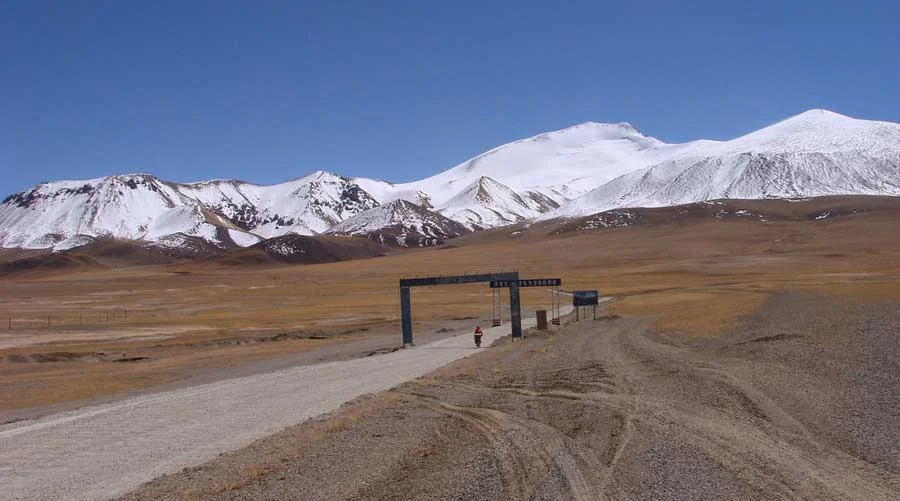
https://www.tribuneindia.com/sortd-service/imaginary/v22-01/jpg/large/high?url=dGhldHJpYnVuZS1zb3J0ZC1wcm8tcHJvZC1zb3J0ZC9tZWRpYTMzMmI4NTcwLWFiMjMtMTFlZi1hNjI2LWQ5ZDRhZTViZWQ1Ni5qcGc%3D
https://images.squarespace-cdn.com/content/v1/5ab61c67ec4eb7ab7a2f40f2/1533118992753-QY08LMAT2OSXU5SCM1SN/aksai-chin.jpg
https://www.dangerousroads.org/images/thumbs/546x/9/g2191-3ff95e36.jpg

Indian Side – Depsang Plains

  • Dependent on DS-DBO alignment.

  • High-altitude ALG at Daulat Beg Oldie.

  • Limited lateral connectors across sub-sectors.

Chinese Side – Aksai Chin

  • G219 highway provides all-weather plateau connectivity.

  • Multiple feeder roads branching toward forward positions.

  • Greater horizontal mobility due to terrain flatness.

Structural Difference:
China’s plateau grid offers route multiplicity. India’s access, while improved, remains corridor-centric.

Nathu La (India) vs Chumbi Valley (China)

https://upload.wikimedia.org/wikipedia/commons/thumb/8/88/Nathula_Pass_Border_trade_road_-_panoramio.jpg/330px-Nathula_Pass_Border_trade_road_-_panoramio.jpg
https://upload.wikimedia.org/wikipedia/commons/0/07/1923_SoI_map_of_lower_Chumbi_Valley.jpg
https://upload.wikimedia.org/wikipedia/commons/f/f1/Location_of_Yadong_within_Xizang_%28China%29.png

Indian Side – Nathu La

  • Single principal axis from Gangtok.

  • Tunnel mitigation improving winter resilience.

  • Narrow approach geometry favors defensive depth.

Chinese Side – Chumbi Valley

  • Road network descending from plateau into valley.

  • Broader staging area near Yadong.

  • Plateau-connected logistics backbone.

Structural Difference:
China enjoys depth and staging space; India benefits from defensive elevation and choke-point control.

Updated Comparative Scoring (Broad Estimate)

Side

Estimated Infrastructure Depth Score (0–5)

India (Aggregate Northern Sectors)

2.9

China (Opposite LAC Sectors)

4.2

This does not imply operational superiority in all scenarios. It indicates infrastructure redundancy and bulk-lift elasticity advantage.

Structural Conclusions

The infrastructure competition across the Himalayas now operates on three axes:

  1. Redundancy depth

  2. Throughput sustainability

  3. Survivability under disruption

India has substantially reduced its historical access deficit. It has narrowed — but not eliminated — the redundancy and bulk-mobility gap.

The next phase must prioritize:

  • Parallel alignments

  • Rail feasibility into Ladakh

  • Hardened air infrastructure

  • Distributed logistics nodes

  • Layered communications and energy micro-grids

  • Tunnel network scaling

The northern frontier is no longer defined by road absence. It is defined by the ability to absorb disruption without degrading operational tempo.

The transition required now is from construction-driven expansion to systems-engineered resilience.

Tags: Explainer
Previous Post

India’s Maritime Strategy: India’s Blue-Water Ambition in a Contested Indo-Pacific

Next Post

The PLA Monitor: How China’s Military Posture is Shaping India’s 2026 Calculus

IndoAsia Defense

IndoAsia Defense

IndoAsia Defense Team is a specialist research and analysis group focused on India’s military modernization and Indo-Pacific strategic dynamics. The platform delivers structured, data-driven insights on doctrine, force posture, defense technology, and regional power balance.

Next Post
The PLA Monitor: How China’s Military Posture is Shaping India’s 2026 Calculus

The PLA Monitor: How China’s Military Posture is Shaping India’s 2026 Calculus

Leave a Reply Cancel reply

Login with your Social ID

Your email address will not be published. Required fields are marked *

Category

  • Air
  • Global
  • Indo-Pacific
  • Industry
  • Joint
  • Land
  • Navy
  • Tech

Defence Capabilities

  • Air Defence
  • Drones
  • Fighters
  • ISR & Mobility
  • China Military
  • Emerging Tech
  • Regional Trends
  • U.S. Posture

Strategy

  • 2035 Outlook
  • China Strategy
  • India Strategy
  • Pakistan Outlook
  • Budget
  • Exports
  • Make in India
  • Supply Chains

Operations

  • Integrated Ops
  • Procurement Reform
  • Theater Commands
  • Armour & Artillery
  • China Front
  • Future Combat
  • Pakistan Front
  • Fleet Expansion

Resources

  • India vs China Military Balance
  • Indo-Pacific Military Power Map
  • Global Military Balance Dashboard
  • Global Weapons Systems Database
  • Global Missile Systems Database
  • Indo-Pacific Defense Timeline
  • India Military Capability Index
  • About
  • Contact
  • Privacy & Policy
  • Editorial Policy
  • Cookie Policy
  • Disclaimer
  • Terms And Conditions
Facebook Linkedin X-twitter
© 2026 IndoAsia Defense. All Rights Reserved.
No Result
View All Result
  • Home
  • Air
    • Air Defence
    • Drones
    • Fighters
    • ISR & Mobility
  • Land
    • Armour & Artillery
    • China Front
    • Future Combat
    • Pakistan Front
  • Navy
    • Fleet Expansion
    • Indian Ocean
    • Maritime Security
    • Submarines
  • Indo-Pacific
    • 2035 Outlook
    • China Strategy
    • India Strategy
    • Pakistan Outlook
  • Joint
    • Integrated Ops
    • Procurement Reform
    • Theater Commands
  • Tech
    • AI & Autonomous Systems
    • Cyber
    • Electronic Warfare
    • Space
  • Industry
    • Budget
    • Exports
    • Make in India
    • Supply Chains
  • Global
    • China-Pak
    • Emerging Tech
    • Regional Trends
    • US-India