














Strategic and Blue-Water Fleet Expansion: India’s Maritime Calculus in a Contested Indian Ocean
India’s maritime planning is no longer framed in isolation. Every new destroyer launch, every submarine induction, every debate about a third aircraft carrier now unfolds against a backdrop of expanding Chinese naval activity in the Indian Ocean.
The conversation about fleet expansion is therefore not abstract. It is reactive, strategic, and increasingly shaped by undersea competition.
Long-term roadmaps speak of a new aircraft carrier, up to ten next-generation destroyers and frigates, advanced amphibious platforms, nuclear propulsion for future surface combatants, and Compact Autonomous Surface Craft (CASC) for anti-submarine warfare. But the pace and prioritisation of these ambitions are being shaped by a hard maritime reality: persistent Chinese submarine deployments in India’s near waters.
Chinese Submarine Deployments: The Strategic Trigger
Over the past decade, the People’s Liberation Army Navy has normalised submarine patrols in the Indian Ocean Region. What began as occasional “anti-piracy” task group rotations has evolved into more structured deployments.
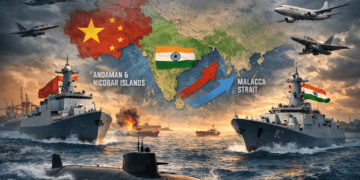
Both conventional and nuclear-powered submarines have entered the Indian Ocean through the Malacca Strait. Chinese submarines have docked in regional ports, including Colombo and Karachi. The justification has ranged from replenishment to goodwill visits, but the operational implication is unmistakable: sustained presence.
These deployments serve multiple objectives. They familiarise crews with distant waters, map acoustic signatures, test logistics chains, and signal strategic reach. Nuclear-powered attack submarines extend endurance dramatically, allowing weeks—sometimes months—of submerged operation.
For India, this alters the calculus. Sea control in the Arabian Sea and Bay of Bengal can no longer be assumed. Undersea awareness becomes the defining variable.
Submarine Expansion: Arguably the Immediate Priority
Within India’s defence establishment, there is growing agreement that submarine expansion may deserve higher urgency than a third aircraft carrier.
The conventional fleet strengthened under Project-75 has improved capability, while follow-on plans aim to introduce air-independent propulsion and enhanced endurance. Meanwhile, nuclear submarine development continues to underpin strategic deterrence.
The reasoning is pragmatic. Chinese submarines operating in the Indian Ocean introduce asymmetry. Carriers are visible, powerful, and diplomatically potent. Submarines are silent and strategically disruptive.
Naval planners are pushing for accelerated undersea acquisition cycles. Competing priorities include aircraft carrier construction and surface fleet expansion. Budget allocations will determine pace. But if Chinese submarine deployments intensify, the argument for prioritising undersea capability strengthens further.
In practical terms, the submarine question is no longer theoretical. It is operational.
The Third Aircraft Carrier: Power Projection vs Undersea Competition
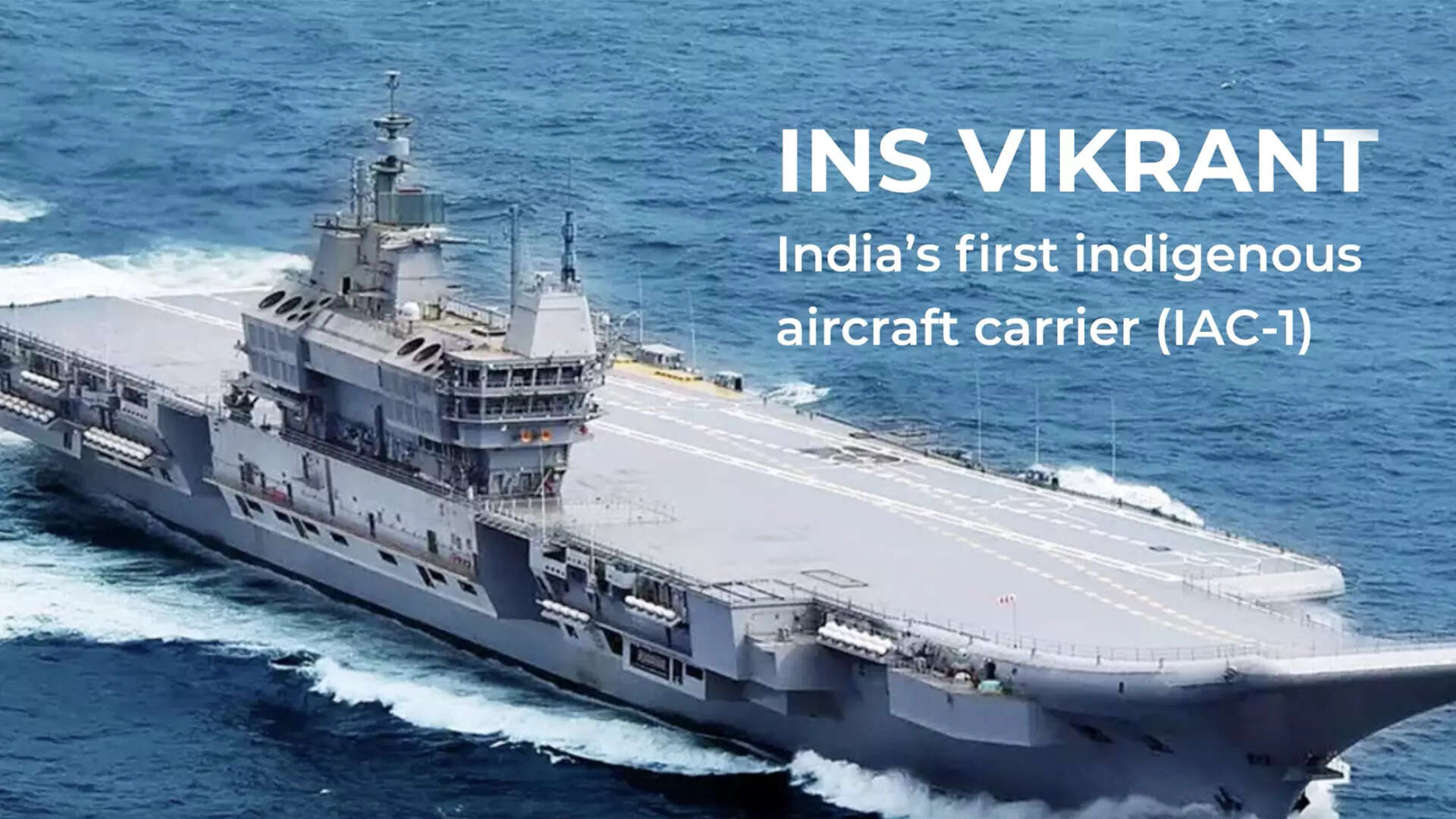
India currently operates INS Vikramaditya and INS Vikrant. These platforms ensure dual-carrier availability under normal maintenance cycles and provide credible air dominance within regional theatres.
The proposed third carrier—often described as IAC-2—remains under evaluation. Discussions include displacement, propulsion, and air wing composition. Nuclear propulsion has been mentioned in strategic discourse, but no formal approval exists.
The internal debate is direct. Carrier advocates argue that blue-water credibility demands three operational carriers to guarantee availability across both seaboards. Submarine advocates counter that deterrence against Chinese deployments requires enhanced sea denial capability.
Budget allocations will determine pace. The third carrier remains a debated roadmap element, not an approved procurement.
In an era of expanding Chinese submarine patrols, the undersea-versus-carrier prioritisation question has sharpened considerably.
Destroyers and Frigates: Steady, Approved Progress
Surface combatant expansion remains one of the more stable components of India’s maritime planning.
The Visakhapatnam-class destroyer program has delivered advanced guided-missile destroyers equipped with modern air defence systems and integrated combat suites. Follow-on designs aim to incorporate greater automation and enhanced sensor fusion.
Similarly, the Nilgiri-class frigate program reflects a generational shift toward stealth shaping and digital shipbuilding techniques.
These are approved programs. They are progressing. But even here, the strategic lens is evolving. Surface ships increasingly operate not just as strike platforms, but as nodes in a layered anti-submarine and air-defence network.
Chinese submarine deployments reinforce the need for robust escort vessels capable of protecting carrier groups and securing sea lanes.
Compact Autonomous Surface Craft (CASC): Anti-Submarine Multipliers
Under evaluation are Compact Autonomous Surface Craft designed to enhance anti-submarine warfare coverage. These unmanned surface platforms could extend sonar grids and operate as distributed sensor nodes.
The attraction lies in cost efficiency. Rather than deploying high-value destroyers for every patrol, autonomous craft could create persistent surveillance corridors, especially in choke points such as the Andaman Sea.
This concept aligns directly with the challenge posed by Chinese submarine activity. Persistent underwater monitoring becomes the decisive variable in contested waters.
CASC remains in evaluation stages, but the operational logic grows stronger with each reported foreign submarine transit.
Amphibious Platforms and Strategic Mobility
Advanced amphibious platforms continue to feature in long-term planning. Their utility extends beyond combat—humanitarian response, island reinforcement, and regional stabilisation missions all require lift capacity.
However, fiscal prioritisation pressures are evident. In budget sequencing, submarines and frontline combatants often outrank amphibious acquisition.
The roadmap exists, but it is paced carefully.
Nuclear Propulsion for Surface Combatants: Conceptual Territory
Nuclear propulsion for surface combatants remains conceptual. The technological foundation exists in the submarine program, but scaling it to destroyers or cruisers would require substantial investment.
Given present fiscal realities and competing maritime priorities, this element resides on the strategic horizon rather than the immediate procurement list.
Fiscal Realities and Strategic Trade-offs
India’s defence budget must accommodate air force modernisation, land force restructuring, cyber capabilities, and space-based assets.
competes within this framework.
Budget allocations will determine pace. Multi-year naval programs require predictable funding streams. Delays ripple across shipyards and supplier ecosystems.
The internal debate within India’s defence establishment reflects this balancing act. Strategic ambition is clear. Sequencing is contested.
Chinese submarine deployments sharpen the urgency of certain decisions. They do not eliminate fiscal constraints.
Blue-Water Ambition in a Contested Ocean
India’s aspiration for a blue-water navy remains intact. Sea lanes through the Indian Ocean carry critical energy flows and trade. Regional influence increasingly hinges on sustained maritime presence.
But blue-water capability in the current environment means more than aircraft carriers and destroyers. It means underwater awareness, acoustic intelligence, logistics depth, and distributed surveillance networks.
Chinese submarine patrols have quietly shifted the centre of gravity of India’s maritime planning. Surface power still matters. Undersea dominance may matter more.
Approved Programs vs Conceptual Roadmaps
To distinguish clearly:
Approved and progressing programs include ongoing destroyer and frigate construction, continued submarine fleet expansion, and operationalisation of existing carrier assets.
Under evaluation or conceptual elements include the third aircraft carrier, nuclear propulsion for surface combatants, expanded amphibious procurement beyond current commitments, and scaled deployment of autonomous surface craft.
Fiscal prioritisation pressures will determine which roadmap elements transition into sanctioned acquisition.
Conclusion: Strategy Under Pressure
India’s naval expansion is neither stalled nor unchecked. It is being recalibrated in response to an evolving maritime environment defined in part by Chinese submarine deployments.
The debate is not about ambition. It is about sequencing.
Carrier advocates and submarine proponents represent different interpretations of maritime risk. Budget allocations will determine pace. The outcome will define whether India’s blue-water expansion is surface-led, subsurface-driven, or balanced across both domains.
What is clear is this: the Indian Ocean is no longer a quiet strategic space. Fleet expansion now unfolds under watchful acoustic conditions.

