






IndoAsia Defense
  • Home
  • Air
    • All
    • Air Defence
    • Drones
    • Fighters
    • ISR & Mobility
    Ghatak UCAV stealth, autonomy, integration

    Inside India’s Ghatak UCAV Program: Stealth, Autonomy, and the Integration Gap

    The F414 engine co-production agreement between Hindustan Aeronautics Limited and GE Aerospace

    India-US F414 Engine Deal Explained: Technology Transfer, Tejas Mk2, and AMCA

    What is the Su-57M1 India deal

    Su-57M1 for India: A Fifth-Generation Shortcut or a Strategic Dependency Trap?

    India indigenous long range surveillance radar with X-band drone detection capability

    450km Eyes, Machine-Speed Decisions: How India’s Indigenous Long Range Surveillance Radar Is Rewriting Air Defence

    Why Software Defined Radios Are the IAF’s Most Consequential Upgrade

    IAF Signs BEL Deal for Software Defined Radios: Rewiring India’s Air Combat Network

    How the Ghatak UCAV Stealth Design Redefines India’s Drone Warfare Doctrine

    Ghatak UCAV: India’s Carbon Composite Stealth Strategy Dissected

    Ballistic Missile Defense system intercepting incoming missile during midcourse phase

    How Ballistic Missile Defense Works: Inside Modern Missile Interception Systems

    Swarm logistics drones delivering military supplies in high-altitude Himalayan terrain with Indian Army presence

    Swarm Logistics Drones in Himalayan Warfare: Can India Close the Supply Gap with China?

    India’s 6th-Gen Fighter Strategy FCAS vs GCAP Explained

    India’s 6th-Gen Fighter Strategy: FCAS vs GCAP Explained

  • Land
    • All
    • Armour & Artillery
    • China Front
    • Future Combat
    • Pakistan Front
    The India-South Korea defence deal

    The India-South Korea Defence Deal Through China’s Operational Lens

    Railways as War Arteries Can India Match China’s Military Mobility Before the Next Crisis

    Railways as War Arteries: Can India Match China’s Military Mobility Before the Next Crisis?

    China maritime front in Indian Ocean

    What If China Opens a Maritime Front in the Indian Ocean During a LAC Conflict?

    What is Indian military modernization strategy in 2026?

    Indian Military Modernization: Systems, Doctrine, and Capability Architecture (2026-27)

    Tank launching loitering munition in battle

    From Smoke to Strike: India’s Indigenous Loitering Munitions for T-72, T-90, and Arjun Tanks

    How China Mobilizes Forces Along the LAC Speed, Systems, and Strategic Control

    How China Mobilizes Forces Along the LAC: Systems, Speed, and Strategic Signaling

    Ballistic Missile Defense system intercepting incoming missile during midcourse phase

    How Ballistic Missile Defense Works: Inside Modern Missile Interception Systems

    Swarm logistics drones delivering military supplies in high-altitude Himalayan terrain with Indian Army presence

    Swarm Logistics Drones in Himalayan Warfare: Can India Close the Supply Gap with China?

    India defence proposals Rs 2.38 trillion showing S-400 system, strike drones, fighter jets and military architecture shift

    India Defence Proposals Rs 2.38 Trillion: Why This Approval Changes How India Will Fight, Not Just What It Buys

  • Navy
    • All
    • Fleet Expansion
    • Indian Ocean
    • Maritime Security
    • Submarines
    China maritime front in Indian Ocean

    What If China Opens a Maritime Front in the Indian Ocean During a LAC Conflict?

    The Strait of Hormuz Crisis

    India’s Oil Artery Under Threat: Strategic Implications of a Hormuz Crisis

    India’s VL-Shtil Missile Deal with Russia

    India’s VL-Shtil Missile Deal with Russia: Strengthening Naval Air Defense in the Indo-Pacific

    Andaman & Nicobar Command Sleeping Giant of India’s Maritime Strategy

    Andaman & Nicobar Command: Sleeping Giant of India’s Maritime Strategy

    Maritime Surveillance 2.0: Why EO/IR Modernisation Matters for India’s Ocean Security

    Maritime Surveillance 2.0: Why EO/IR Modernisation Matters for India’s Ocean Security

    2030 Will Decide the India ASEAN Maritime Equation

    2030 Will Decide the India ASEAN Maritime Equation

    India Military Transformation Series — Part 3: Maritime Power and the Indian Ocean Imperative

    India Military Transformation Series — Part 3: Maritime Power and the Indian Ocean Imperative

    Indian Navy TEDBF PPP Model: China Factor and 2030–2040 Carrier Strategy

    Indian Navy TEDBF PPP Model: China Factor and 2030–2040 Carrier Strategy

    India’s Maritime Strategy: India’s Blue-Water Ambition in a Contested Indo-Pacific

    India’s Maritime Strategy: India’s Blue-Water Ambition in a Contested Indo-Pacific

  • Indo-Pacific
    • All
    • 2035 Outlook
    • China Strategy
    • India Strategy
    • Pakistan Outlook
    The India-South Korea defence deal

    The India-South Korea Defence Deal Through China’s Operational Lens

    Railways as War Arteries Can India Match China’s Military Mobility Before the Next Crisis

    Railways as War Arteries: Can India Match China’s Military Mobility Before the Next Crisis?

    india military integration gap

    Is India Building Military Power Faster Than It Can Integrate It?

    China maritime front in Indian Ocean

    What If China Opens a Maritime Front in the Indian Ocean During a LAC Conflict?

    Can India Fight Beyond 30 Days? Inside India’s War Sustainment Reality

    Can India Fight Beyond 30 Days? Inside India’s War Sustainment Reality

    What is Indian military modernization strategy in 2026?

    Indian Military Modernization: Systems, Doctrine, and Capability Architecture (2026-27)

    The end of Naxalism in India

    End of Naxalism in India: Inside the Fall of the Red Corridor

    Ballistic Missile Defense system intercepting incoming missile during midcourse phase

    How Ballistic Missile Defense Works: Inside Modern Missile Interception Systems

    Swarm logistics drones delivering military supplies in high-altitude Himalayan terrain with Indian Army presence

    Swarm Logistics Drones in Himalayan Warfare: Can India Close the Supply Gap with China?

  • Joint
    • All
    • Integrated Ops
    • Procurement Reform
    • Theater Commands
    Ballistic Missile Defense system intercepting incoming missile during midcourse phase

    How Ballistic Missile Defense Works: Inside Modern Missile Interception Systems

    India defence proposals Rs 2.38 trillion showing S-400 system, strike drones, fighter jets and military architecture shift

    India Defence Proposals Rs 2.38 Trillion: Why This Approval Changes How India Will Fight, Not Just What It Buys

    DAP 2026 India’s Quiet Revolution in Defence Procurement

    DAP 2026: India’s Quiet Revolution in Defence Procurement

    Integrated Battle Groups vs China’s Western Theater Command

    Integrated Battle Groups vs China’s Western Theater Command: Can Doctrine Survive the Himalayan Reality?

    Andaman & Nicobar Command Sleeping Giant of India’s Maritime Strategy

    Andaman & Nicobar Command: Sleeping Giant of India’s Maritime Strategy

    India Military Transformation Series — Part 2: The Theatre Command Reckoning

    India Military Transformation Series — Part 2: The Theatre Command Reckoning

    India AI C4ISR modernization

    India Military Transformation Series — Part 1: India AI C4ISR Modernization

    India’s Two-Front Theatre Command: Preparing for Simultaneous Conflict

    India’s Two-Front Theatre Command: Preparing for Simultaneous Conflict

    The Networked Force: India’s Transition to Integrated Warfare Systems

    The Networked Force: India’s Transition to Integrated Warfare Systems

  • Tech
    • All
    • AI & Autonomous Systems
    • Cyber
    • Electronic Warfare
    • Space
    Why Software Defined Radios Are the IAF’s Most Consequential Upgrade

    IAF Signs BEL Deal for Software Defined Radios: Rewiring India’s Air Combat Network

    Source Code or ICD India’s Source Code Negotiation Explained

    Source Code or ICD: India’s Source Code Negotiation Explained

    Supply Chain Weaponization

    Supply Chain Weaponization: Strategic Autonomy Meets Semiconductor Reality

    AI-driven battlefield in India's military

    The Algorithm of Borders: What India’s Military AI Push Actually Looks Like on the Ground

    India AI C4ISR modernization

    India Military Transformation Series — Part 1: India AI C4ISR Modernization

    PRAHAR Explained India Counter Terror Policy Prahaar

    PRAHAAR Explained: Why ‘PRAHAAR’ India’s National Counter-terrorism Doctrine, Signals the End of Traditional Warfare

    The Weapons Making the AMCA Unbeatable

    The Weapons Making the AMCA Unbeatable

    India’s Aerospace Ecosystem After Rafale: The 2026–2030 Industrial Test

    India’s Aerospace Ecosystem After Rafale: The 2026–2030 Industrial Test

    PLA’s Cyber Warfare Units and the Question of Indian Critical Infrastructure Resilience

    PLA’s Cyber Warfare Units and the Question of Indian Critical Infrastructure Resilience

  • Industry
    • All
    • Budget
    • Exports
    • Make in India
    • Supply Chains
    Ghatak UCAV stealth, autonomy, integration

    Inside India’s Ghatak UCAV Program: Stealth, Autonomy, and the Integration Gap

    The India-South Korea defence deal

    The India-South Korea Defence Deal Through China’s Operational Lens

    The F414 engine co-production agreement between Hindustan Aeronautics Limited and GE Aerospace

    India-US F414 Engine Deal Explained: Technology Transfer, Tejas Mk2, and AMCA

    Why Software Defined Radios Are the IAF’s Most Consequential Upgrade

    IAF Signs BEL Deal for Software Defined Radios: Rewiring India’s Air Combat Network

    How the Ghatak UCAV Stealth Design Redefines India’s Drone Warfare Doctrine

    Ghatak UCAV: India’s Carbon Composite Stealth Strategy Dissected

    Swarm logistics drones delivering military supplies in high-altitude Himalayan terrain with Indian Army presence

    Swarm Logistics Drones in Himalayan Warfare: Can India Close the Supply Gap with China?

    India defence proposals Rs 2.38 trillion showing S-400 system, strike drones, fighter jets and military architecture shift

    India Defence Proposals Rs 2.38 Trillion: Why This Approval Changes How India Will Fight, Not Just What It Buys

    Helicopter-Mounted Counter-Drone Systems

    Helicopter-Mounted Counter-Drone Systems: The Indian Army’s Answer to Kamikaze Drone Warfare

    India vs China Defence Industrial Base Explained

    India vs China Defence Industrial Base: Scale vs Strategic Depth

  • Global
    • All
    • China-Pak
    • Emerging Tech
    • Middle Eeast
    • Regional Trends
    • US-India
    • US-Israel
    Ghatak UCAV stealth, autonomy, integration

    Inside India’s Ghatak UCAV Program: Stealth, Autonomy, and the Integration Gap

    The F414 engine co-production agreement between Hindustan Aeronautics Limited and GE Aerospace

    India-US F414 Engine Deal Explained: Technology Transfer, Tejas Mk2, and AMCA

    india military integration gap

    Is India Building Military Power Faster Than It Can Integrate It?

    India indigenous long range surveillance radar with X-band drone detection capability

    450km Eyes, Machine-Speed Decisions: How India’s Indigenous Long Range Surveillance Radar Is Rewriting Air Defence

    What is Indian military modernization strategy in 2026?

    Indian Military Modernization: Systems, Doctrine, and Capability Architecture (2026-27)

    India defence proposals Rs 2.38 trillion showing S-400 system, strike drones, fighter jets and military architecture shift

    India Defence Proposals Rs 2.38 Trillion: Why This Approval Changes How India Will Fight, Not Just What It Buys

    India’s 6th-Gen Fighter Strategy FCAS vs GCAP Explained

    India’s 6th-Gen Fighter Strategy: FCAS vs GCAP Explained

    India’s Two-Front War Doctrine When and Why It Emerged

    When India’s Two-Front War Doctrine Emerged

    From Non-Alignment to Multi-Alignment India’s New Strategy

    Is India Quietly Shifting from Non-Alignment to Multi-Alignment 2.0?

  • Resources
    • India Military Capability Index
    • India vs China Military Balance
    • China Western Theater Command Guide
    • Pakistan Military Tracker 2026-27
    • India’s Military Doctrine Library
    • India vs China vs Pakistan Missile Arsenal Comparison
    • India’s Missile List
    • India Missile Range Map
    • Indo-Pacific Military Power Map
    • Indo-Pacific Defense Timeline
    • Global Military Balance Dashboard
    • Global Weapons Systems Database
    • Global Missile Systems Database
  • What If
    • China India Naval Conflict
No Result
View All Result
  • Home
  • Air
    • All
    • Air Defence
    • Drones
    • Fighters
    • ISR & Mobility
    Ghatak UCAV stealth, autonomy, integration

    Inside India’s Ghatak UCAV Program: Stealth, Autonomy, and the Integration Gap

    The F414 engine co-production agreement between Hindustan Aeronautics Limited and GE Aerospace

    India-US F414 Engine Deal Explained: Technology Transfer, Tejas Mk2, and AMCA

    What is the Su-57M1 India deal

    Su-57M1 for India: A Fifth-Generation Shortcut or a Strategic Dependency Trap?

    India indigenous long range surveillance radar with X-band drone detection capability

    450km Eyes, Machine-Speed Decisions: How India’s Indigenous Long Range Surveillance Radar Is Rewriting Air Defence

    Why Software Defined Radios Are the IAF’s Most Consequential Upgrade

    IAF Signs BEL Deal for Software Defined Radios: Rewiring India’s Air Combat Network

    How the Ghatak UCAV Stealth Design Redefines India’s Drone Warfare Doctrine

    Ghatak UCAV: India’s Carbon Composite Stealth Strategy Dissected

    Ballistic Missile Defense system intercepting incoming missile during midcourse phase

    How Ballistic Missile Defense Works: Inside Modern Missile Interception Systems

    Swarm logistics drones delivering military supplies in high-altitude Himalayan terrain with Indian Army presence

    Swarm Logistics Drones in Himalayan Warfare: Can India Close the Supply Gap with China?

    India’s 6th-Gen Fighter Strategy FCAS vs GCAP Explained

    India’s 6th-Gen Fighter Strategy: FCAS vs GCAP Explained

  • Land
    • All
    • Armour & Artillery
    • China Front
    • Future Combat
    • Pakistan Front
    The India-South Korea defence deal

    The India-South Korea Defence Deal Through China’s Operational Lens

    Railways as War Arteries Can India Match China’s Military Mobility Before the Next Crisis

    Railways as War Arteries: Can India Match China’s Military Mobility Before the Next Crisis?

    China maritime front in Indian Ocean

    What If China Opens a Maritime Front in the Indian Ocean During a LAC Conflict?

    What is Indian military modernization strategy in 2026?

    Indian Military Modernization: Systems, Doctrine, and Capability Architecture (2026-27)

    Tank launching loitering munition in battle

    From Smoke to Strike: India’s Indigenous Loitering Munitions for T-72, T-90, and Arjun Tanks

    How China Mobilizes Forces Along the LAC Speed, Systems, and Strategic Control

    How China Mobilizes Forces Along the LAC: Systems, Speed, and Strategic Signaling

    Ballistic Missile Defense system intercepting incoming missile during midcourse phase

    How Ballistic Missile Defense Works: Inside Modern Missile Interception Systems

    Swarm logistics drones delivering military supplies in high-altitude Himalayan terrain with Indian Army presence

    Swarm Logistics Drones in Himalayan Warfare: Can India Close the Supply Gap with China?

    India defence proposals Rs 2.38 trillion showing S-400 system, strike drones, fighter jets and military architecture shift

    India Defence Proposals Rs 2.38 Trillion: Why This Approval Changes How India Will Fight, Not Just What It Buys

  • Navy
    • All
    • Fleet Expansion
    • Indian Ocean
    • Maritime Security
    • Submarines
    China maritime front in Indian Ocean

    What If China Opens a Maritime Front in the Indian Ocean During a LAC Conflict?

    The Strait of Hormuz Crisis

    India’s Oil Artery Under Threat: Strategic Implications of a Hormuz Crisis

    India’s VL-Shtil Missile Deal with Russia

    India’s VL-Shtil Missile Deal with Russia: Strengthening Naval Air Defense in the Indo-Pacific

    Andaman & Nicobar Command Sleeping Giant of India’s Maritime Strategy

    Andaman & Nicobar Command: Sleeping Giant of India’s Maritime Strategy

    Maritime Surveillance 2.0: Why EO/IR Modernisation Matters for India’s Ocean Security

    Maritime Surveillance 2.0: Why EO/IR Modernisation Matters for India’s Ocean Security

    2030 Will Decide the India ASEAN Maritime Equation

    2030 Will Decide the India ASEAN Maritime Equation

    India Military Transformation Series — Part 3: Maritime Power and the Indian Ocean Imperative

    India Military Transformation Series — Part 3: Maritime Power and the Indian Ocean Imperative

    Indian Navy TEDBF PPP Model: China Factor and 2030–2040 Carrier Strategy

    Indian Navy TEDBF PPP Model: China Factor and 2030–2040 Carrier Strategy

    India’s Maritime Strategy: India’s Blue-Water Ambition in a Contested Indo-Pacific

    India’s Maritime Strategy: India’s Blue-Water Ambition in a Contested Indo-Pacific

  • Indo-Pacific
    • All
    • 2035 Outlook
    • China Strategy
    • India Strategy
    • Pakistan Outlook
    The India-South Korea defence deal

    The India-South Korea Defence Deal Through China’s Operational Lens

    Railways as War Arteries Can India Match China’s Military Mobility Before the Next Crisis

    Railways as War Arteries: Can India Match China’s Military Mobility Before the Next Crisis?

    india military integration gap

    Is India Building Military Power Faster Than It Can Integrate It?

    China maritime front in Indian Ocean

    What If China Opens a Maritime Front in the Indian Ocean During a LAC Conflict?

    Can India Fight Beyond 30 Days? Inside India’s War Sustainment Reality

    Can India Fight Beyond 30 Days? Inside India’s War Sustainment Reality

    What is Indian military modernization strategy in 2026?

    Indian Military Modernization: Systems, Doctrine, and Capability Architecture (2026-27)

    The end of Naxalism in India

    End of Naxalism in India: Inside the Fall of the Red Corridor

    Ballistic Missile Defense system intercepting incoming missile during midcourse phase

    How Ballistic Missile Defense Works: Inside Modern Missile Interception Systems

    Swarm logistics drones delivering military supplies in high-altitude Himalayan terrain with Indian Army presence

    Swarm Logistics Drones in Himalayan Warfare: Can India Close the Supply Gap with China?

  • Joint
    • All
    • Integrated Ops
    • Procurement Reform
    • Theater Commands
    Ballistic Missile Defense system intercepting incoming missile during midcourse phase

    How Ballistic Missile Defense Works: Inside Modern Missile Interception Systems

    India defence proposals Rs 2.38 trillion showing S-400 system, strike drones, fighter jets and military architecture shift

    India Defence Proposals Rs 2.38 Trillion: Why This Approval Changes How India Will Fight, Not Just What It Buys

    DAP 2026 India’s Quiet Revolution in Defence Procurement

    DAP 2026: India’s Quiet Revolution in Defence Procurement

    Integrated Battle Groups vs China’s Western Theater Command

    Integrated Battle Groups vs China’s Western Theater Command: Can Doctrine Survive the Himalayan Reality?

    Andaman & Nicobar Command Sleeping Giant of India’s Maritime Strategy

    Andaman & Nicobar Command: Sleeping Giant of India’s Maritime Strategy

    India Military Transformation Series — Part 2: The Theatre Command Reckoning

    India Military Transformation Series — Part 2: The Theatre Command Reckoning

    India AI C4ISR modernization

    India Military Transformation Series — Part 1: India AI C4ISR Modernization

    India’s Two-Front Theatre Command: Preparing for Simultaneous Conflict

    India’s Two-Front Theatre Command: Preparing for Simultaneous Conflict

    The Networked Force: India’s Transition to Integrated Warfare Systems

    The Networked Force: India’s Transition to Integrated Warfare Systems

  • Tech
    • All
    • AI & Autonomous Systems
    • Cyber
    • Electronic Warfare
    • Space
    Why Software Defined Radios Are the IAF’s Most Consequential Upgrade

    IAF Signs BEL Deal for Software Defined Radios: Rewiring India’s Air Combat Network

    Source Code or ICD India’s Source Code Negotiation Explained

    Source Code or ICD: India’s Source Code Negotiation Explained

    Supply Chain Weaponization

    Supply Chain Weaponization: Strategic Autonomy Meets Semiconductor Reality

    AI-driven battlefield in India's military

    The Algorithm of Borders: What India’s Military AI Push Actually Looks Like on the Ground

    India AI C4ISR modernization

    India Military Transformation Series — Part 1: India AI C4ISR Modernization

    PRAHAR Explained India Counter Terror Policy Prahaar

    PRAHAAR Explained: Why ‘PRAHAAR’ India’s National Counter-terrorism Doctrine, Signals the End of Traditional Warfare

    The Weapons Making the AMCA Unbeatable

    The Weapons Making the AMCA Unbeatable

    India’s Aerospace Ecosystem After Rafale: The 2026–2030 Industrial Test

    India’s Aerospace Ecosystem After Rafale: The 2026–2030 Industrial Test

    PLA’s Cyber Warfare Units and the Question of Indian Critical Infrastructure Resilience

    PLA’s Cyber Warfare Units and the Question of Indian Critical Infrastructure Resilience

  • Industry
    • All
    • Budget
    • Exports
    • Make in India
    • Supply Chains
    Ghatak UCAV stealth, autonomy, integration

    Inside India’s Ghatak UCAV Program: Stealth, Autonomy, and the Integration Gap

    The India-South Korea defence deal

    The India-South Korea Defence Deal Through China’s Operational Lens

    The F414 engine co-production agreement between Hindustan Aeronautics Limited and GE Aerospace

    India-US F414 Engine Deal Explained: Technology Transfer, Tejas Mk2, and AMCA

    Why Software Defined Radios Are the IAF’s Most Consequential Upgrade

    IAF Signs BEL Deal for Software Defined Radios: Rewiring India’s Air Combat Network

    How the Ghatak UCAV Stealth Design Redefines India’s Drone Warfare Doctrine

    Ghatak UCAV: India’s Carbon Composite Stealth Strategy Dissected

    Swarm logistics drones delivering military supplies in high-altitude Himalayan terrain with Indian Army presence

    Swarm Logistics Drones in Himalayan Warfare: Can India Close the Supply Gap with China?

    India defence proposals Rs 2.38 trillion showing S-400 system, strike drones, fighter jets and military architecture shift

    India Defence Proposals Rs 2.38 Trillion: Why This Approval Changes How India Will Fight, Not Just What It Buys

    Helicopter-Mounted Counter-Drone Systems

    Helicopter-Mounted Counter-Drone Systems: The Indian Army’s Answer to Kamikaze Drone Warfare

    India vs China Defence Industrial Base Explained

    India vs China Defence Industrial Base: Scale vs Strategic Depth

  • Global
    • All
    • China-Pak
    • Emerging Tech
    • Middle Eeast
    • Regional Trends
    • US-India
    • US-Israel
    Ghatak UCAV stealth, autonomy, integration

    Inside India’s Ghatak UCAV Program: Stealth, Autonomy, and the Integration Gap

    The F414 engine co-production agreement between Hindustan Aeronautics Limited and GE Aerospace

    India-US F414 Engine Deal Explained: Technology Transfer, Tejas Mk2, and AMCA

    india military integration gap

    Is India Building Military Power Faster Than It Can Integrate It?

    India indigenous long range surveillance radar with X-band drone detection capability

    450km Eyes, Machine-Speed Decisions: How India’s Indigenous Long Range Surveillance Radar Is Rewriting Air Defence

    What is Indian military modernization strategy in 2026?

    Indian Military Modernization: Systems, Doctrine, and Capability Architecture (2026-27)

    India defence proposals Rs 2.38 trillion showing S-400 system, strike drones, fighter jets and military architecture shift

    India Defence Proposals Rs 2.38 Trillion: Why This Approval Changes How India Will Fight, Not Just What It Buys

    India’s 6th-Gen Fighter Strategy FCAS vs GCAP Explained

    India’s 6th-Gen Fighter Strategy: FCAS vs GCAP Explained

    India’s Two-Front War Doctrine When and Why It Emerged

    When India’s Two-Front War Doctrine Emerged

    From Non-Alignment to Multi-Alignment India’s New Strategy

    Is India Quietly Shifting from Non-Alignment to Multi-Alignment 2.0?

  • Resources
    • India Military Capability Index
    • India vs China Military Balance
    • China Western Theater Command Guide
    • Pakistan Military Tracker 2026-27
    • India’s Military Doctrine Library
    • India vs China vs Pakistan Missile Arsenal Comparison
    • India’s Missile List
    • India Missile Range Map
    • Indo-Pacific Military Power Map
    • Indo-Pacific Defense Timeline
    • Global Military Balance Dashboard
    • Global Weapons Systems Database
    • Global Missile Systems Database
  • What If
    • China India Naval Conflict
No Result
View All Result
IndoAsia Defense
No Result
View All Result
Home Indo-Pacific 2035 Outlook

Sea Control vs Sea Expansion: Vikrant, Liaoning, and the Indo-Pacific Contest

By 2035, the conversation will no longer be about which carrier carried more aircraft. It will be about which maritime architecture proved more sustainable in a region defined by chokepoints, alliances, energy dependence, and escalating technological disruption.

IndoAsia Defense by IndoAsia Defense
April 19, 2026
in 2035 Outlook, China Strategy, Fleet Expansion, India Strategy, Indian Ocean, Indo-Pacific, Make in India, Maritime Security, Navy, Submarines
0
Sea Control vs Sea Expansion: Vikrant, Liaoning, and the Indo-Pacific Contest
0
SHARES
10
VIEWS
Share on LinkedinShare on FacebookShare on Twitter

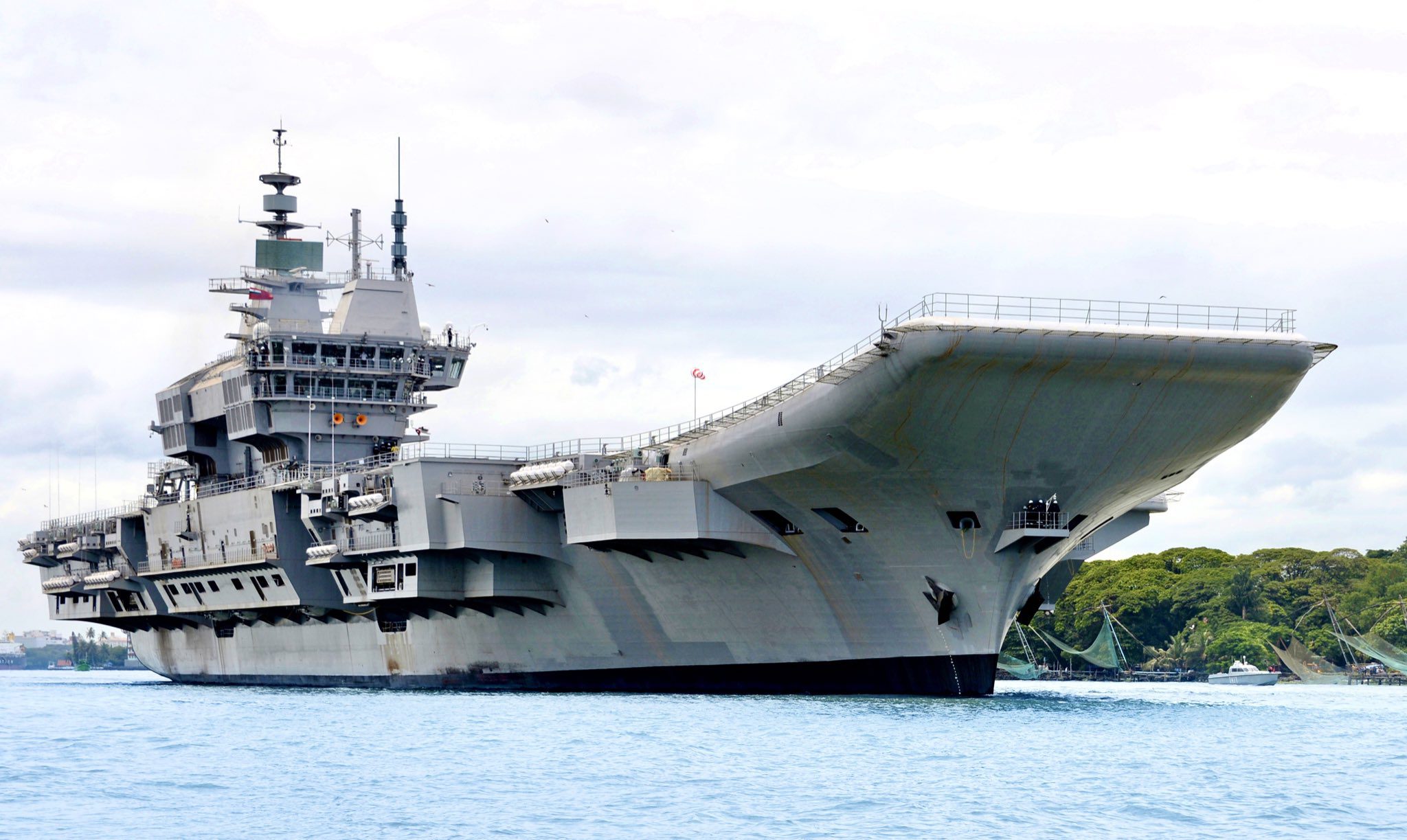
Most comparisons between INS Vikrant and Liaoning stop at displacement, aircraft count, or deck length. That makes for neat graphics—but it tells you very little about what actually matters in 2026.

These are not rival gladiators meeting in open water. They are instruments embedded in a live Indo-Pacific power transition shaped by Taiwan tensions, Indian Ocean chokepoints, submarine expansion, missile proliferation, and coalition politics.

To understand them, you have to stop asking which carrier is “better” and start asking: what strategic problem was each built to solve?

The Baseline: Similar Architecture, Different Context

Both carriers operate under STOBAR configuration. Both rely on ski-jump launches. Both are, in structural terms, transitional designs in an era increasingly dominated by catapult systems.

A narrow technical snapshot looks like this:

Category

INS Vikrant

Liaoning

Strategic Reading

Displacement

~45,000 tons
~60,000 tons
Liaoning carries more aviation mass

Launch System

STOBAR
STOBAR
Shared performance constraints

Air Wing (max theoretical)

~30 aircraft
40+ aircraft
Sortie density matters more than raw count

Primary Fighter

MiG-29K
J-15
Both payload-limited under ski-jump

Core Theater

Indian Ocean
Western Pacific
Geography defines survivability

Institutional Role

Industrial sovereignty milestone
Doctrinal bridge to blue-water navy
Different trajectories

On paper, Liaoning enjoys a modest edge in scale. In practice, the difference narrows quickly once you account for STOBAR physics.

Ski-jump carriers cannot launch fighters at maximum fuel and maximum payload simultaneously. That means constrained strike radius, reduced heavy missile carriage, and tighter sortie economics.

Neither ship can deploy fixed-wing airborne early warning aircraft. Both depend on rotary-wing AEW platforms with shorter radar horizons. In the missile age, that detection gap matters more than tonnage.

So yes, Liaoning is larger. But neither is designed for sustained, catapult-enabled high-intensity strike warfare. They are bridges—stepping stones in larger naval evolution.

The Taiwan Shadow Over Liaoning

You cannot evaluate Liaoning in 2026 without placing it in the Taiwan equation.

Liaoning is no longer China’s most advanced carrier. But that misses the point. Its relevance lies in function, not primacy.

In a Taiwan contingency, it serves as a secondary carrier in multi-carrier operations. It helps normalize PLA Navy carrier presence east of Taiwan. It complicates U.S. carrier positioning. It acts as a training platform for high-tempo deck cycles that would matter in crisis.

It is not the tip of the spear. It is part of a layered structure.

In other words, Liaoning’s geopolitical value is inseparable from Eastern Theater Command planning.

Vikrant operates in a different strategic universe.

The Indian Ocean: Geography as Leverage

The Indian Ocean is not an auxiliary theater. It is the energy artery of Asia.

Oil and LNG flows from the Gulf pass through the Arabian Sea and the Malacca Strait. Both India and China depend heavily on those routes.

In a Taiwan crisis that escalates, the contest does not remain confined to the Western Pacific. It bleeds outward.

Here, Vikrant operates inside interior lines of communication. It benefits from proximity to mainland support, layered ISR, and deep familiarity with IOR operating conditions. Its purpose is not expeditionary conquest; it is sea control and denial.

Now reverse the scenario. Imagine Liaoning operating deep in the Indian Ocean during a crisis. Extended logistics chains. Submarine exposure. Chokepoint vulnerability. Escalation risk.

The geometry shifts decisively.

Each carrier is strongest within its native maritime space. Cross-theater deployment increases friction and vulnerability.

This is not symmetrical rivalry. It is asymmetric maritime geometry.

Coalition Politics: The Missing Layer in Simplistic Comparisons

The Indo-Pacific balance is not bilateral.

Any Taiwan crisis inherently involves the United States, Japan’s expanding defense posture, and Australia’s AUKUS submarine trajectory. India is not formally allied—but it is not strategically isolated either.

In a high-intensity Western Pacific crisis, India’s most probable role would not be sending Vikrant eastward. It would be tightening maritime posture in the Indian Ocean, creating strategic dilemmas for China’s energy lifelines.

That changes the logic of comparison entirely.

Liaoning operates inside a centralized command structure focused on layered expansion. Vikrant operates within a looser coalition geometry where India retains autonomy but benefits indirectly from alignment.

One navy scales outward. The other consolidates inward.

Submarines and the Missile Age: The Real Equalizer

Modern naval warfare is unforgiving to large surface combatants.

Long-range anti-ship ballistic missiles, hypersonic glide vehicles, submarine-launched cruise missiles, and space-enabled targeting have compressed reaction times dramatically.

In such an environment, carrier survivability depends less on displacement and more on:

  • Escort integration

  • Submarine screening

  • Emission control discipline

  • Electronic warfare resilience

Submarines, not carriers, often determine outcomes.

India’s diesel-electric submarine familiarity in IOR waters provides localized advantage. China’s expanding nuclear submarine fleet offers blue-water depth.

This undersea contest may ultimately shape how confidently carriers operate in crisis.

Grey-Zone Competition: When Carriers Are Too Loud

Much of today’s maritime competition occurs below the threshold of open conflict. Coast guards, maritime militia, ISR shadowing, and cable monitoring define daily friction.

Carriers are blunt instruments in grey-zone environments. Deploying one signals escalation. It raises the political temperature instantly.

That duality is central.

In peacetime, carriers reassure partners and project resolve. In wartime, they become prestige targets whose loss would trigger strategic shock.

They deter and destabilize at the same time.

Industrial Trajectories Toward 2035

The comparison becomes even more interesting when projected forward.

Liaoning is unlikely to remain central to China’s frontline capability by 2035. It becomes doctrinal scaffolding—a training and secondary deployment platform in a fleet increasingly centered around catapult-equipped carriers.

China’s shipbuilding throughput suggests continued scaling.

India’s path is less predetermined. It must decide whether to transition toward CATOBAR architecture and expand beyond a two-carrier rotation model, or consolidate regional dominance while prioritizing submarines and land-based deterrence.

That decision is fiscal, political, and doctrinal—not purely technological.

The future balance will not hinge on Vikrant versus Liaoning.

It will hinge on whether India chooses regional optimization or blue-water scaling, and whether China can sustain expansion under economic and coalition pressure.

The Real Strategic Divide

Strip away the imagery and the symbolism, and the divide becomes clearer.

Liaoning represents expansion: China pushing outward from its near seas into layered blue-water capability.

Vikrant represents consolidation: India securing its maritime core and leveraging geography.

Both are transitional carriers constrained by STOBAR design. Neither defines the Indo-Pacific balance alone.

What will define it are trajectories:

Industrial scaling speed, coalition resilience, submarine superiority, economic endurance under crisis strain, and the political appetite for risk.

By 2035, the conversation will no longer be about which carrier carried more aircraft.

It will be about which maritime architecture proved more sustainable in a region defined by chokepoints, alliances, energy dependence, and escalating technological disruption.

In the Indo-Pacific contest, geometry and trajectory outweigh tonnage every time.

Tags: Trending
Previous Post

Debt and Deterrence: The Economics Behind Pakistan’s Defence Posture

Next Post

China’s Hypersonic Missile Arsenal and the Question of Indian Air Defense Resilience

IndoAsia Defense

IndoAsia Defense

IndoAsia Defense Team is a specialist research and analysis group focused on India’s military modernization and Indo-Pacific strategic dynamics. The platform delivers structured, data-driven insights on doctrine, force posture, defense technology, and regional power balance.

Next Post
China’s Hypersonic Missile Arsenal and the Question of Indian Air Defense Resilience

China’s Hypersonic Missile Arsenal and the Question of Indian Air Defense Resilience

Leave a Reply Cancel reply

Login with your Social ID

Your email address will not be published. Required fields are marked *

Category

  • Air
  • Global
  • Indo-Pacific
  • Industry
  • Joint
  • Land
  • Navy
  • Tech

Defence Capabilities

  • Air Defence
  • Drones
  • Fighters
  • ISR & Mobility
  • China Military
  • Emerging Tech
  • Regional Trends
  • U.S. Posture

Strategy

  • 2035 Outlook
  • China Strategy
  • India Strategy
  • Pakistan Outlook
  • Budget
  • Exports
  • Make in India
  • Supply Chains

Operations

  • Integrated Ops
  • Procurement Reform
  • Theater Commands
  • Armour & Artillery
  • China Front
  • Future Combat
  • Pakistan Front
  • Fleet Expansion

Resources

  • India vs China Military Balance
  • Indo-Pacific Military Power Map
  • Global Military Balance Dashboard
  • Global Weapons Systems Database
  • Global Missile Systems Database
  • Indo-Pacific Defense Timeline
  • India Military Capability Index
  • About
  • Contact
  • Privacy & Policy
  • Editorial Policy
  • Cookie Policy
  • Disclaimer
  • Terms And Conditions
Facebook Linkedin X-twitter
© 2026 IndoAsia Defense. All Rights Reserved.
No Result
View All Result
  • Home
  • Air
    • Air Defence
    • Drones
    • Fighters
    • ISR & Mobility
  • Land
    • Armour & Artillery
    • China Front
    • Future Combat
    • Pakistan Front
  • Navy
    • Fleet Expansion
    • Indian Ocean
    • Maritime Security
    • Submarines
  • Indo-Pacific
    • 2035 Outlook
    • China Strategy
    • India Strategy
    • Pakistan Outlook
  • Joint
    • Integrated Ops
    • Procurement Reform
    • Theater Commands
  • Tech
    • AI & Autonomous Systems
    • Cyber
    • Electronic Warfare
    • Space
  • Industry
    • Budget
    • Exports
    • Make in India
    • Supply Chains
  • Global
    • China-Pak
    • Emerging Tech
    • Regional Trends
    • US-India