




























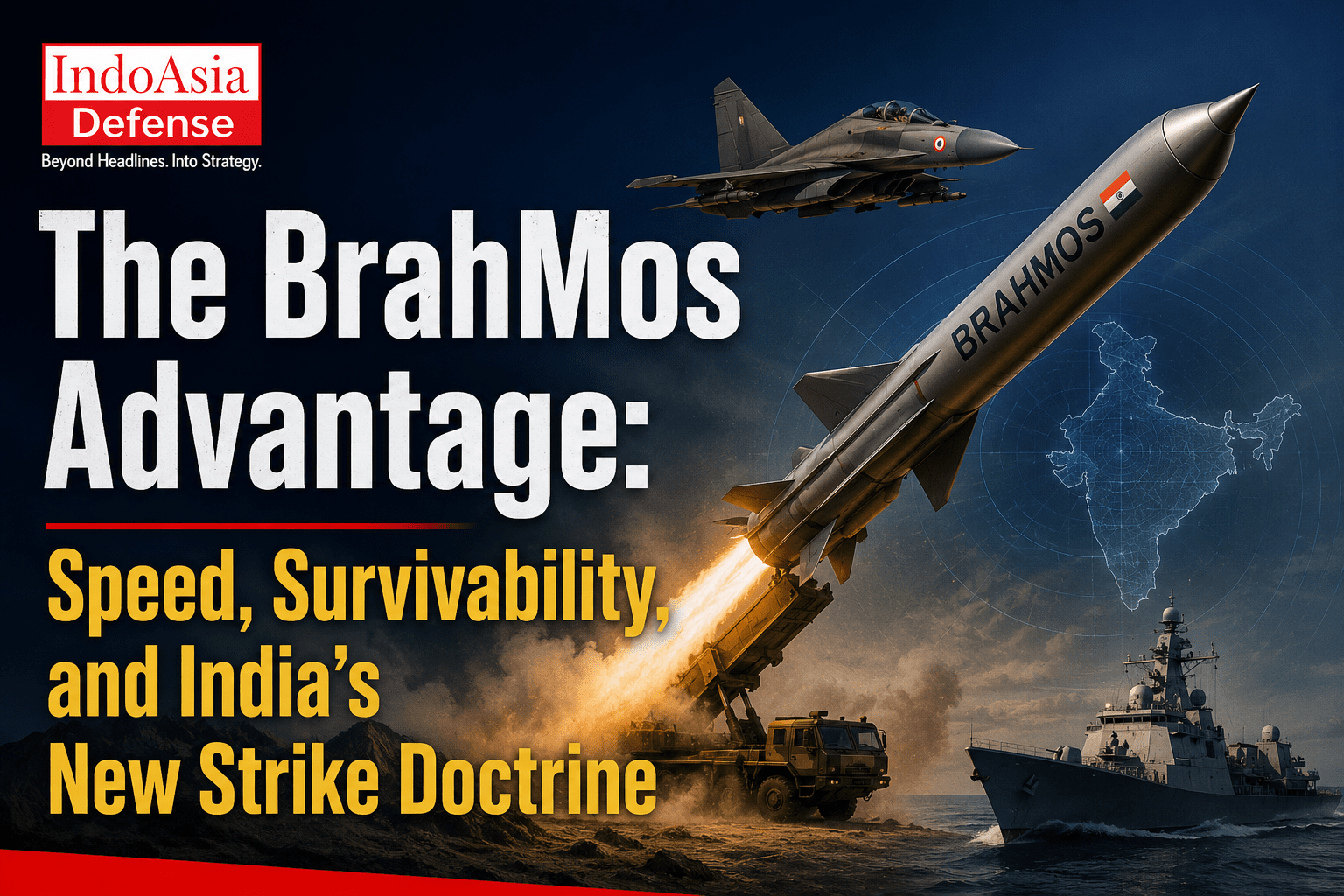
Modern military operations increasingly depend on the ability to strike targets without exposing platforms to enemy defenses.
This concept, known as stand-off strike, allows aircraft, ships, or ground forces to engage adversary infrastructure from distances that reduce risk to pilots and crews. For India, one of the most important enablers of this capability is the BrahMos cruise missile.
The BrahMos system represents one of the most significant technological achievements of India’s missile development program.
Developed through a joint venture between India and Russia, the missile combines high speed, precision guidance, and multi-platform launch capability.
These characteristics make it a central element of India’s evolving precision strike doctrine.
Understanding how BrahMos enables stand-off strike requires examining the operational logic behind cruise missiles, the technological features of the system itself, and the broader military ecosystem that supports its deployment.
The Concept of Stand-Off Strike
Stand-off strike refers to the ability to attack targets from distances that place the launching platform outside the most dangerous layers of enemy air defense.
In earlier eras of warfare, aircraft often had to fly directly over enemy territory to deliver bombs or rockets. This approach exposed them to anti-aircraft guns, surface-to-air missiles, and fighter interceptors.
Precision-guided stand-off weapons fundamentally change this equation. Aircraft can now release missiles hundreds of kilometers away from the target while remaining outside the engagement envelope of many defensive systems.
For India, stand-off strike capabilities are particularly valuable because both China and Pakistan operate sophisticated air defense networks.
These systems include radar-guided missiles, integrated command systems, and fighter aircraft designed to intercept attacking platforms.
Stand-off weapons allow Indian forces to bypass many of these defenses by engaging targets from safer distances.
Instead of risking aircraft in heavily defended airspace, strike platforms can launch missiles that complete the mission independently.
The Speed Advantage of BrahMos
One of the defining features of the BrahMos missile is its speed.
Unlike many cruise missiles that travel at subsonic velocities, BrahMos is capable of flying at speeds close to Mach 3. This makes it significantly faster than most comparable systems.
Speed provides several operational advantages.
First, it reduces the time available for defenders to react. Once the missile is detected by radar, air defense operators have only a limited window to identify the threat, track its trajectory, and launch interceptors.
Second, high speed complicates interception.
Surface-to-air missiles must maneuver rapidly to engage a target moving at several times the speed of sound. Even advanced air defense systems may struggle to intercept such a fast-moving object.
Third, speed increases the missile’s kinetic impact. When a supersonic missile strikes its target, the combination of explosive warhead and kinetic energy can cause significant structural damage.
These characteristics make BrahMos particularly effective against high-value targets such as command centers, naval vessels, and hardened infrastructure.
Multi-Platform Launch Capability
Another key strength of the BrahMos system is its flexibility. The missile can be launched from a variety of platforms across different branches of the Indian armed forces.
The Indian Navy deploys ship-based BrahMos launchers on several classes of destroyers and frigates.
These missiles provide powerful anti-ship capabilities while also allowing vessels to strike land targets along hostile coastlines.
The Indian Air Force operates an air-launched variant integrated with the Su-30MKI fighter aircraft.
This configuration significantly extends the missile’s operational range because the aircraft itself can travel hundreds of kilometers before launching the weapon.
Ground-based launchers operated by the Indian Army further expand the missile’s role.
These mobile systems can be deployed in forward areas to engage enemy infrastructure or military formations.
The ability to deploy the same missile across multiple platforms simplifies logistics while allowing coordinated strikes from different directions. This flexibility is particularly valuable in complex operational environments.
Precision Guidance and Targeting
Stand-off strike capability depends not only on range and speed but also on accuracy. A missile that misses its target cannot achieve its intended strategic effect.
BrahMos uses a combination of inertial navigation and satellite guidance during the initial phases of flight.
As the missile approaches its target area, onboard radar seekers take over to ensure precise engagement.
This guidance system allows the missile to maintain accuracy even at very high speeds. The ability to strike within a small margin of error is essential when targeting specific military facilities such as radar stations or missile launch sites.
Precision guidance also reduces the number of missiles required to neutralize a target. Instead of relying on large salvos to compensate for inaccuracy, a smaller number of well-placed strikes can achieve the same objective.
Integration with India’s Surveillance Network
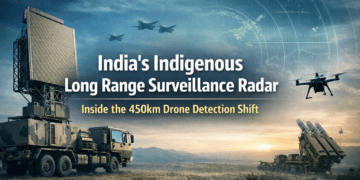
The effectiveness of BrahMos missiles depends heavily on the intelligence and targeting information available to commanders. Identifying enemy targets quickly and accurately requires a wide range of surveillance systems.
India has invested heavily in building this network.
Satellites provide strategic reconnaissance across large geographic areas. Maritime patrol aircraft monitor naval activity in the Indian Ocean. Unmanned aerial vehicles conduct persistent surveillance along sensitive borders.
These systems feed data into command networks that analyze and prioritize potential targets. Once a target is confirmed, BrahMos-equipped platforms can launch missiles to engage it.
This integration between surveillance assets and strike platforms creates a rapid kill chain. The shorter the time between target detection and missile launch, the harder it becomes for adversaries to relocate or conceal their assets.
Maritime Implications in the Indian Ocean
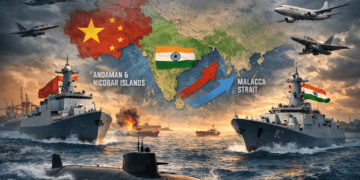
BrahMos missiles have particularly significant implications for naval warfare. In maritime environments, stand-off strike capabilities can alter the balance of power by threatening enemy vessels from long distances.
Indian warships equipped with BrahMos missiles can engage hostile naval formations well before those formations approach critical sea lanes or coastal infrastructure.
This capability enhances India’s ability to maintain maritime dominance in the Indian Ocean region.
Anti-ship cruise missiles are especially dangerous because they can travel at low altitudes, making radar detection difficult.
Combined with supersonic speed, this profile increases the likelihood of successful strikes against enemy vessels.
For a country whose economic security depends heavily on maritime trade routes, the ability to deter hostile naval activity is strategically important.
The Future of the BrahMos Program
The BrahMos program continues to evolve as new variants and technologies are developed. Efforts are underway to extend the missile’s range and improve its guidance systems.
Future developments may also include integration with additional aircraft platforms and possibly submarine launch capabilities. These upgrades would further expand the missile’s operational flexibility.
As India continues to refine its precision strike doctrine, systems like BrahMos will remain central to its ability to conduct stand-off operations across multiple domains.

