













IndoAsia Defense
  • Home
  • Air
    • All
    • Air Defence
    • Drones
    • Fighters
    • ISR & Mobility
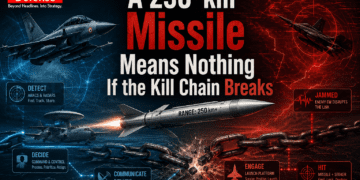
    A 250-km Missile Means Nothing If the Kill Chain Breaks

    India’s 250-km Missile Debate Is Not About Outmatching the PL-15

    Rafale F5 vs AMCA

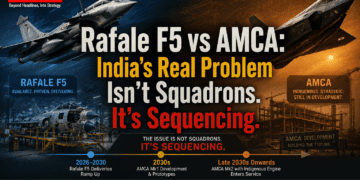
    Rafale F5 vs AMCA: If India Buys Rafale F5, What Happens to AMCA?

    BrahMos Advantage

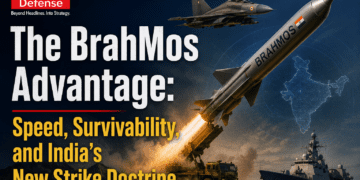
    BrahMos Missile Explained: The Missile That Enables India’s Stand-Off Strike Strategy

    Ghatak UCAV stealth, autonomy, integration

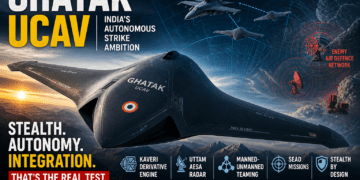
    Inside India’s Ghatak UCAV Program: Stealth, Autonomy, and the Integration Gap

    The F414 engine co-production agreement between Hindustan Aeronautics Limited and GE Aerospace

    India-US F414 Engine Deal Explained: Technology Transfer, Tejas Mk2, and AMCA

    What is the Su-57M1 India deal

    Su-57M1 for India: A Fifth-Generation Shortcut or a Strategic Dependency Trap?

    India indigenous long range surveillance radar with X-band drone detection capability

    450km Eyes, Machine-Speed Decisions: How India’s Indigenous Long Range Surveillance Radar Is Rewriting Air Defence

    Why Software Defined Radios Are the IAF’s Most Consequential Upgrade

    IAF Signs BEL Deal for Software Defined Radios: Rewiring India’s Air Combat Network

    How the Ghatak UCAV Stealth Design Redefines India’s Drone Warfare Doctrine

    Ghatak UCAV: India’s Carbon Composite Stealth Strategy Dissected

  • Land
    • All
    • Armour & Artillery
    • China Front
    • Future Combat
    • Pakistan Front
    Rafale F5 vs AMCA

    Rafale F5 vs AMCA: If India Buys Rafale F5, What Happens to AMCA?

    Missiles and Manufacturing Why Production Depth Defines India’s Strike Power

    Why Missile Production Depth Matters More Than Range for India

    The Indo-Pacific Is Fragmenting, Not Uniting Against China

    Why the Indo-Pacific Will Not Unite Against China

    The India-South Korea defence deal

    The India-South Korea Defence Deal Through China’s Operational Lens

    Railways as War Arteries Can India Match China’s Military Mobility Before the Next Crisis

    Railways as War Arteries: Can India Match China’s Military Mobility Before the Next Crisis?

    China maritime front in Indian Ocean

    What If China Opens a Maritime Front in the Indian Ocean During a LAC Conflict?

    What is Indian military modernization strategy in 2026?

    Indian Military Modernization: Systems, Doctrine, and Capability Architecture (2026-27)

    Tank launching loitering munition in battle

    From Smoke to Strike: India’s Indigenous Loitering Munitions for T-72, T-90, and Arjun Tanks

    How China Mobilizes Forces Along the LAC Speed, Systems, and Strategic Control

    How China Mobilizes Forces Along the LAC: Systems, Speed, and Strategic Signaling

  • Navy
    • All
    • Fleet Expansion
    • Indian Ocean
    • Maritime Security
    • Submarines
    Japan Mogami-class frigate deal overview

    Japan’s Mogami-Class Frigate Offer to India: What the Transfer Terms Reveal About Tokyo’s Indo-Pacific Calculus

    China maritime front in Indian Ocean

    What If China Opens a Maritime Front in the Indian Ocean During a LAC Conflict?

    The Strait of Hormuz Crisis

    India’s Oil Artery Under Threat: Strategic Implications of a Hormuz Crisis

    India’s VL-Shtil Missile Deal with Russia

    India’s VL-Shtil Missile Deal with Russia: Strengthening Naval Air Defense in the Indo-Pacific

    Andaman & Nicobar Command Sleeping Giant of India’s Maritime Strategy

    Andaman & Nicobar Command: Sleeping Giant of India’s Maritime Strategy

    Maritime Surveillance 2.0: Why EO/IR Modernisation Matters for India’s Ocean Security

    Maritime Surveillance 2.0: Why EO/IR Modernisation Matters for India’s Ocean Security

    2030 Will Decide the India ASEAN Maritime Equation

    2030 Will Decide the India ASEAN Maritime Equation

    India Military Transformation Series — Part 3: Maritime Power and the Indian Ocean Imperative

    India Military Transformation Series — Part 3: Maritime Power and the Indian Ocean Imperative

    Indian Navy TEDBF PPP Model: China Factor and 2030–2040 Carrier Strategy

    Indian Navy TEDBF PPP Model: China Factor and 2030–2040 Carrier Strategy

  • Indo-Pacific
    • All
    • 2035 Outlook
    • China Strategy
    • India Strategy
    • Pakistan Outlook
    The Sindoor Dividend 2.0: How India’s $93.5 Billion Defence Budget Is Rewiring Military Power for 2030

    The Sindoor Dividend 2.0: How India’s $93.5 Billion Defence Budget Is Rewiring Military Power for 2030

    Rafale F5 vs AMCA

    Rafale F5 vs AMCA: If India Buys Rafale F5, What Happens to AMCA?

    Why Operation Sindoor's Victory Raises Harder Questions Than It Answers

    Operation Sindoor: The Uncomfortable Questions India Hasn’t Answered

    DRDO-developed Guided Pinaka

    At ₹70 Lakh Per Rocket, DRDO-developed Guided Pinaka May Represent India’s Shift Toward Scalable Precision Warfare

    The Indo-Pacific Is Fragmenting, Not Uniting Against China

    Why the Indo-Pacific Will Not Unite Against China

    Japan Mogami-class frigate deal overview

    Japan’s Mogami-Class Frigate Offer to India: What the Transfer Terms Reveal About Tokyo’s Indo-Pacific Calculus

    The India-South Korea defence deal

    The India-South Korea Defence Deal Through China’s Operational Lens

    Railways as War Arteries Can India Match China’s Military Mobility Before the Next Crisis

    Railways as War Arteries: Can India Match China’s Military Mobility Before the Next Crisis?

    india military integration gap

    Is India Building Military Power Faster Than It Can Integrate It?

  • Joint
    • All
    • Integrated Ops
    • Procurement Reform
    • Theater Commands
    India's strategic challenge sustainability first

    India Can Strike in 22 Minutes. Can It Sustain for 22 Weeks?

    Ballistic Missile Defense system intercepting incoming missile during midcourse phase

    How Ballistic Missile Defense Works: Inside Modern Missile Interception Systems

    India defence proposals Rs 2.38 trillion showing S-400 system, strike drones, fighter jets and military architecture shift

    India Defence Proposals Rs 2.38 Trillion: Why This Approval Changes How India Will Fight, Not Just What It Buys

    DAP 2026 India’s Quiet Revolution in Defence Procurement

    DAP 2026: India’s Quiet Revolution in Defence Procurement

    Integrated Battle Groups vs China’s Western Theater Command

    Integrated Battle Groups vs China’s Western Theater Command: Can Doctrine Survive the Himalayan Reality?

    Andaman & Nicobar Command Sleeping Giant of India’s Maritime Strategy

    Andaman & Nicobar Command: Sleeping Giant of India’s Maritime Strategy

    India Military Transformation Series — Part 2: The Theatre Command Reckoning

    India Military Transformation Series — Part 2: The Theatre Command Reckoning

    India AI C4ISR modernization

    India Military Transformation Series — Part 1: India AI C4ISR Modernization

    India’s Two-Front Theatre Command: Preparing for Simultaneous Conflict

    India’s Two-Front Theatre Command: Preparing for Simultaneous Conflict

  • Tech
    • All
    • AI & Autonomous Systems
    • Cyber
    • Electronic Warfare
    • Space
    Why Software Defined Radios Are the IAF’s Most Consequential Upgrade

    IAF Signs BEL Deal for Software Defined Radios: Rewiring India’s Air Combat Network

    Source Code or ICD India’s Source Code Negotiation Explained

    Source Code or ICD: India’s Source Code Negotiation Explained

    Supply Chain Weaponization

    Supply Chain Weaponization: Strategic Autonomy Meets Semiconductor Reality

    AI-driven battlefield in India's military

    The Algorithm of Borders: What India’s Military AI Push Actually Looks Like on the Ground

    India AI C4ISR modernization

    India Military Transformation Series — Part 1: India AI C4ISR Modernization

    PRAHAR Explained India Counter Terror Policy Prahaar

    PRAHAAR Explained: Why ‘PRAHAAR’ India’s National Counter-terrorism Doctrine, Signals the End of Traditional Warfare

    The Weapons Making the AMCA Unbeatable

    The Weapons Making the AMCA Unbeatable

    India’s Aerospace Ecosystem After Rafale: The 2026–2030 Industrial Test

    India’s Aerospace Ecosystem After Rafale: The 2026–2030 Industrial Test

    PLA’s Cyber Warfare Units and the Question of Indian Critical Infrastructure Resilience

    PLA’s Cyber Warfare Units and the Question of Indian Critical Infrastructure Resilience

  • Industry
    • All
    • Budget
    • Exports
    • Make in India
    • Supply Chains
    The Sindoor Dividend 2.0: How India’s $93.5 Billion Defence Budget Is Rewiring Military Power for 2030

    The Sindoor Dividend 2.0: How India’s $93.5 Billion Defence Budget Is Rewiring Military Power for 2030

    Rafale F5 vs AMCA

    Rafale F5 vs AMCA: If India Buys Rafale F5, What Happens to AMCA?

    BrahMos Advantage

    BrahMos Missile Explained: The Missile That Enables India’s Stand-Off Strike Strategy

    Missiles and Manufacturing Why Production Depth Defines India’s Strike Power

    Why Missile Production Depth Matters More Than Range for India

    India’s Defence Budget Crisis

    India Is Trying To Fund Two Different Militaries At The Same Time

    India’s Defence MSME Blind Spot Could Become a Wartime Liability

    India’s Defence MSME Blind Spot Could Become a Wartime Liability

    India's strategic challenge sustainability first

    India Can Strike in 22 Minutes. Can It Sustain for 22 Weeks?

    India-UAE defence pact and Gulf strategy

    India-UAE Defence Pact: Why Abu Dhabi Is Becoming India’s Western Strategic Depth

    Ghatak UCAV stealth, autonomy, integration

    Inside India’s Ghatak UCAV Program: Stealth, Autonomy, and the Integration Gap

  • Global
    • All
    • China-Pak
    • Emerging Tech
    • Middle Eeast
    • Regional Trends
    • US-India
    • US-Israel
    Rafale F5 vs AMCA

    Rafale F5 vs AMCA: If India Buys Rafale F5, What Happens to AMCA?

    India-UAE defence pact and Gulf strategy

    India-UAE Defence Pact: Why Abu Dhabi Is Becoming India’s Western Strategic Depth

    The Indo-Pacific Is Fragmenting, Not Uniting Against China

    Why the Indo-Pacific Will Not Unite Against China

    Ghatak UCAV stealth, autonomy, integration

    Inside India’s Ghatak UCAV Program: Stealth, Autonomy, and the Integration Gap

    The F414 engine co-production agreement between Hindustan Aeronautics Limited and GE Aerospace

    India-US F414 Engine Deal Explained: Technology Transfer, Tejas Mk2, and AMCA

    india military integration gap

    Is India Building Military Power Faster Than It Can Integrate It?

    India indigenous long range surveillance radar with X-band drone detection capability

    450km Eyes, Machine-Speed Decisions: How India’s Indigenous Long Range Surveillance Radar Is Rewriting Air Defence

    What is Indian military modernization strategy in 2026?

    Indian Military Modernization: Systems, Doctrine, and Capability Architecture (2026-27)

    India defence proposals Rs 2.38 trillion showing S-400 system, strike drones, fighter jets and military architecture shift

    India Defence Proposals Rs 2.38 Trillion: Why This Approval Changes How India Will Fight, Not Just What It Buys

  • Resources
    • India Military Capability Index
    • India vs China Military Balance
    • China Western Theater Command Guide
    • Pakistan Military Tracker 2026-27
    • India’s Military Doctrine Library
    • India vs China vs Pakistan Missile Arsenal Comparison
    • India’s Missile List
    • India Missile Range Map
    • Indo-Pacific Military Power Map
    • Indo-Pacific Defense Timeline
    • Global Military Balance Dashboard
    • Global Weapons Systems Database
    • Global Missile Systems Database
  • What If
    • China India Naval Conflict
No Result
View All Result
  • Home
  • Air
    • All
    • Air Defence
    • Drones
    • Fighters
    • ISR & Mobility
    A 250-km Missile Means Nothing If the Kill Chain Breaks

    India’s 250-km Missile Debate Is Not About Outmatching the PL-15

    Rafale F5 vs AMCA

    Rafale F5 vs AMCA: If India Buys Rafale F5, What Happens to AMCA?

    BrahMos Advantage

    BrahMos Missile Explained: The Missile That Enables India’s Stand-Off Strike Strategy

    Ghatak UCAV stealth, autonomy, integration

    Inside India’s Ghatak UCAV Program: Stealth, Autonomy, and the Integration Gap

    The F414 engine co-production agreement between Hindustan Aeronautics Limited and GE Aerospace

    India-US F414 Engine Deal Explained: Technology Transfer, Tejas Mk2, and AMCA

    What is the Su-57M1 India deal

    Su-57M1 for India: A Fifth-Generation Shortcut or a Strategic Dependency Trap?

    India indigenous long range surveillance radar with X-band drone detection capability

    450km Eyes, Machine-Speed Decisions: How India’s Indigenous Long Range Surveillance Radar Is Rewriting Air Defence

    Why Software Defined Radios Are the IAF’s Most Consequential Upgrade

    IAF Signs BEL Deal for Software Defined Radios: Rewiring India’s Air Combat Network

    How the Ghatak UCAV Stealth Design Redefines India’s Drone Warfare Doctrine

    Ghatak UCAV: India’s Carbon Composite Stealth Strategy Dissected

  • Land
    • All
    • Armour & Artillery
    • China Front
    • Future Combat
    • Pakistan Front
    Rafale F5 vs AMCA

    Rafale F5 vs AMCA: If India Buys Rafale F5, What Happens to AMCA?

    Missiles and Manufacturing Why Production Depth Defines India’s Strike Power

    Why Missile Production Depth Matters More Than Range for India

    The Indo-Pacific Is Fragmenting, Not Uniting Against China

    Why the Indo-Pacific Will Not Unite Against China

    The India-South Korea defence deal

    The India-South Korea Defence Deal Through China’s Operational Lens

    Railways as War Arteries Can India Match China’s Military Mobility Before the Next Crisis

    Railways as War Arteries: Can India Match China’s Military Mobility Before the Next Crisis?

    China maritime front in Indian Ocean

    What If China Opens a Maritime Front in the Indian Ocean During a LAC Conflict?

    What is Indian military modernization strategy in 2026?

    Indian Military Modernization: Systems, Doctrine, and Capability Architecture (2026-27)

    Tank launching loitering munition in battle

    From Smoke to Strike: India’s Indigenous Loitering Munitions for T-72, T-90, and Arjun Tanks

    How China Mobilizes Forces Along the LAC Speed, Systems, and Strategic Control

    How China Mobilizes Forces Along the LAC: Systems, Speed, and Strategic Signaling

  • Navy
    • All
    • Fleet Expansion
    • Indian Ocean
    • Maritime Security
    • Submarines
    Japan Mogami-class frigate deal overview

    Japan’s Mogami-Class Frigate Offer to India: What the Transfer Terms Reveal About Tokyo’s Indo-Pacific Calculus

    China maritime front in Indian Ocean

    What If China Opens a Maritime Front in the Indian Ocean During a LAC Conflict?

    The Strait of Hormuz Crisis

    India’s Oil Artery Under Threat: Strategic Implications of a Hormuz Crisis

    India’s VL-Shtil Missile Deal with Russia

    India’s VL-Shtil Missile Deal with Russia: Strengthening Naval Air Defense in the Indo-Pacific

    Andaman & Nicobar Command Sleeping Giant of India’s Maritime Strategy

    Andaman & Nicobar Command: Sleeping Giant of India’s Maritime Strategy

    Maritime Surveillance 2.0: Why EO/IR Modernisation Matters for India’s Ocean Security

    Maritime Surveillance 2.0: Why EO/IR Modernisation Matters for India’s Ocean Security

    2030 Will Decide the India ASEAN Maritime Equation

    2030 Will Decide the India ASEAN Maritime Equation

    India Military Transformation Series — Part 3: Maritime Power and the Indian Ocean Imperative

    India Military Transformation Series — Part 3: Maritime Power and the Indian Ocean Imperative

    Indian Navy TEDBF PPP Model: China Factor and 2030–2040 Carrier Strategy

    Indian Navy TEDBF PPP Model: China Factor and 2030–2040 Carrier Strategy

  • Indo-Pacific
    • All
    • 2035 Outlook
    • China Strategy
    • India Strategy
    • Pakistan Outlook
    The Sindoor Dividend 2.0: How India’s $93.5 Billion Defence Budget Is Rewiring Military Power for 2030

    The Sindoor Dividend 2.0: How India’s $93.5 Billion Defence Budget Is Rewiring Military Power for 2030

    Rafale F5 vs AMCA

    Rafale F5 vs AMCA: If India Buys Rafale F5, What Happens to AMCA?

    Why Operation Sindoor's Victory Raises Harder Questions Than It Answers

    Operation Sindoor: The Uncomfortable Questions India Hasn’t Answered

    DRDO-developed Guided Pinaka

    At ₹70 Lakh Per Rocket, DRDO-developed Guided Pinaka May Represent India’s Shift Toward Scalable Precision Warfare

    The Indo-Pacific Is Fragmenting, Not Uniting Against China

    Why the Indo-Pacific Will Not Unite Against China

    Japan Mogami-class frigate deal overview

    Japan’s Mogami-Class Frigate Offer to India: What the Transfer Terms Reveal About Tokyo’s Indo-Pacific Calculus

    The India-South Korea defence deal

    The India-South Korea Defence Deal Through China’s Operational Lens

    Railways as War Arteries Can India Match China’s Military Mobility Before the Next Crisis

    Railways as War Arteries: Can India Match China’s Military Mobility Before the Next Crisis?

    india military integration gap

    Is India Building Military Power Faster Than It Can Integrate It?

  • Joint
    • All
    • Integrated Ops
    • Procurement Reform
    • Theater Commands
    India's strategic challenge sustainability first

    India Can Strike in 22 Minutes. Can It Sustain for 22 Weeks?

    Ballistic Missile Defense system intercepting incoming missile during midcourse phase

    How Ballistic Missile Defense Works: Inside Modern Missile Interception Systems

    India defence proposals Rs 2.38 trillion showing S-400 system, strike drones, fighter jets and military architecture shift

    India Defence Proposals Rs 2.38 Trillion: Why This Approval Changes How India Will Fight, Not Just What It Buys

    DAP 2026 India’s Quiet Revolution in Defence Procurement

    DAP 2026: India’s Quiet Revolution in Defence Procurement

    Integrated Battle Groups vs China’s Western Theater Command

    Integrated Battle Groups vs China’s Western Theater Command: Can Doctrine Survive the Himalayan Reality?

    Andaman & Nicobar Command Sleeping Giant of India’s Maritime Strategy

    Andaman & Nicobar Command: Sleeping Giant of India’s Maritime Strategy

    India Military Transformation Series — Part 2: The Theatre Command Reckoning

    India Military Transformation Series — Part 2: The Theatre Command Reckoning

    India AI C4ISR modernization

    India Military Transformation Series — Part 1: India AI C4ISR Modernization

    India’s Two-Front Theatre Command: Preparing for Simultaneous Conflict

    India’s Two-Front Theatre Command: Preparing for Simultaneous Conflict

  • Tech
    • All
    • AI & Autonomous Systems
    • Cyber
    • Electronic Warfare
    • Space
    Why Software Defined Radios Are the IAF’s Most Consequential Upgrade

    IAF Signs BEL Deal for Software Defined Radios: Rewiring India’s Air Combat Network

    Source Code or ICD India’s Source Code Negotiation Explained

    Source Code or ICD: India’s Source Code Negotiation Explained

    Supply Chain Weaponization

    Supply Chain Weaponization: Strategic Autonomy Meets Semiconductor Reality

    AI-driven battlefield in India's military

    The Algorithm of Borders: What India’s Military AI Push Actually Looks Like on the Ground

    India AI C4ISR modernization

    India Military Transformation Series — Part 1: India AI C4ISR Modernization

    PRAHAR Explained India Counter Terror Policy Prahaar

    PRAHAAR Explained: Why ‘PRAHAAR’ India’s National Counter-terrorism Doctrine, Signals the End of Traditional Warfare

    The Weapons Making the AMCA Unbeatable

    The Weapons Making the AMCA Unbeatable

    India’s Aerospace Ecosystem After Rafale: The 2026–2030 Industrial Test

    India’s Aerospace Ecosystem After Rafale: The 2026–2030 Industrial Test

    PLA’s Cyber Warfare Units and the Question of Indian Critical Infrastructure Resilience

    PLA’s Cyber Warfare Units and the Question of Indian Critical Infrastructure Resilience

  • Industry
    • All
    • Budget
    • Exports
    • Make in India
    • Supply Chains
    The Sindoor Dividend 2.0: How India’s $93.5 Billion Defence Budget Is Rewiring Military Power for 2030

    The Sindoor Dividend 2.0: How India’s $93.5 Billion Defence Budget Is Rewiring Military Power for 2030

    Rafale F5 vs AMCA

    Rafale F5 vs AMCA: If India Buys Rafale F5, What Happens to AMCA?

    BrahMos Advantage

    BrahMos Missile Explained: The Missile That Enables India’s Stand-Off Strike Strategy

    Missiles and Manufacturing Why Production Depth Defines India’s Strike Power

    Why Missile Production Depth Matters More Than Range for India

    India’s Defence Budget Crisis

    India Is Trying To Fund Two Different Militaries At The Same Time

    India’s Defence MSME Blind Spot Could Become a Wartime Liability

    India’s Defence MSME Blind Spot Could Become a Wartime Liability

    India's strategic challenge sustainability first

    India Can Strike in 22 Minutes. Can It Sustain for 22 Weeks?

    India-UAE defence pact and Gulf strategy

    India-UAE Defence Pact: Why Abu Dhabi Is Becoming India’s Western Strategic Depth

    Ghatak UCAV stealth, autonomy, integration

    Inside India’s Ghatak UCAV Program: Stealth, Autonomy, and the Integration Gap

  • Global
    • All
    • China-Pak
    • Emerging Tech
    • Middle Eeast
    • Regional Trends
    • US-India
    • US-Israel
    Rafale F5 vs AMCA

    Rafale F5 vs AMCA: If India Buys Rafale F5, What Happens to AMCA?

    India-UAE defence pact and Gulf strategy

    India-UAE Defence Pact: Why Abu Dhabi Is Becoming India’s Western Strategic Depth

    The Indo-Pacific Is Fragmenting, Not Uniting Against China

    Why the Indo-Pacific Will Not Unite Against China

    Ghatak UCAV stealth, autonomy, integration

    Inside India’s Ghatak UCAV Program: Stealth, Autonomy, and the Integration Gap

    The F414 engine co-production agreement between Hindustan Aeronautics Limited and GE Aerospace

    India-US F414 Engine Deal Explained: Technology Transfer, Tejas Mk2, and AMCA

    india military integration gap

    Is India Building Military Power Faster Than It Can Integrate It?

    India indigenous long range surveillance radar with X-band drone detection capability

    450km Eyes, Machine-Speed Decisions: How India’s Indigenous Long Range Surveillance Radar Is Rewriting Air Defence

    What is Indian military modernization strategy in 2026?

    Indian Military Modernization: Systems, Doctrine, and Capability Architecture (2026-27)

    India defence proposals Rs 2.38 trillion showing S-400 system, strike drones, fighter jets and military architecture shift

    India Defence Proposals Rs 2.38 Trillion: Why This Approval Changes How India Will Fight, Not Just What It Buys

  • Resources
    • India Military Capability Index
    • India vs China Military Balance
    • China Western Theater Command Guide
    • Pakistan Military Tracker 2026-27
    • India’s Military Doctrine Library
    • India vs China vs Pakistan Missile Arsenal Comparison
    • India’s Missile List
    • India Missile Range Map
    • Indo-Pacific Military Power Map
    • Indo-Pacific Defense Timeline
    • Global Military Balance Dashboard
    • Global Weapons Systems Database
    • Global Missile Systems Database
  • What If
    • China India Naval Conflict
No Result
View All Result
IndoAsia Defense
No Result
View All Result
Home Air

India’s 250-km Missile Debate Is Not About Outmatching the PL-15

India’s debate over a 250-km class air-to-air missile is not just about matching China’s PL-15. The real issue is whether the Indian Air Force can build the kill chain depth, tanker fleet, electronic warfare resilience, and networked combat ecosystem needed to make that reach meaningful in a future Indo-Pacific air war.

IndoAsia Defense by IndoAsia Defense
May 28, 2026
in Fighters
0
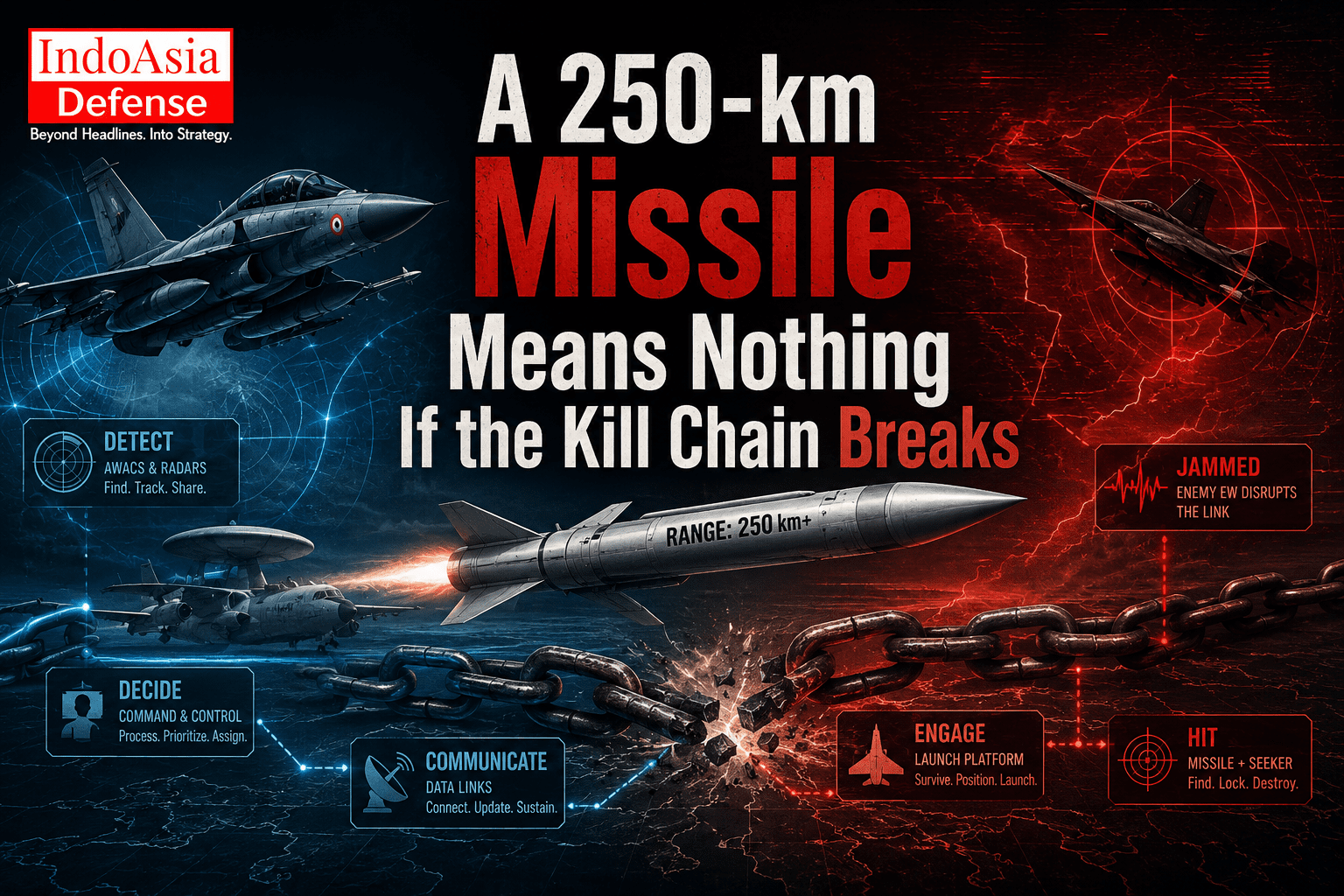
A 250-km Missile Means Nothing If the Kill Chain Breaks

A 250-km Missile Means Nothing If the Kill Chain Breaks

0
SHARES
2
VIEWS
Share on LinkedinShare on FacebookShare on Twitter

A simple sentence has shaped most Indian commentary on long-range air combat. China has the PL-15. Pakistan now flies the PL-15E. India must answer.

That is where the conversation usually begins. It is also where it usually ends.

But the question of a 250-km class air-to-air missile, the one media shorthand keeps calling “Sky Sting,” is not really a procurement question. It is a confession.

The geometry of air combat over Asia has moved. And India is being forced to admit it cannot fight the next air war inside the envelope it built for the last one.

This is not a missile story. It is a story about how far Indian airpower can reach, and how much of that reach is real.

The Gap Is Not Range. It Is Depth.

The most consequential change in Asian air warfare over the past decade was not stealth. People expected stealth to be the headline. It was not.

The real shift was quieter. Extended-range missiles. Networked launch platforms. Combat that survives in a jammed electromagnetic environment.

The PL-15 mattered for that reason. Not because of an advertised number, but because of what sat behind it.

Think of the missile as the last link in a chain. Ahead of it sit AESA-equipped fighters, datalinks that hold under pressure, AWACS aircraft feeding targets from behind, electronic warfare cover, and ISR redundancy. The missile only finishes what the system starts.

India’s side of that picture is uneven, and worth stating plainly rather than gently. The Su-30MKI fleet is large but sensor-mixed.

The Tejas Mk1A brings an AESA radar, but squadron numbers stay thin. Indigenous AEW&C coverage is growing, not abundant. Electronic warfare integration is progressing. It is not yet dominant.

In that setting, the BVR asymmetry is not a chart in a presentation. It shapes what an Indian formation can and cannot attempt on a given morning.

And in air combat, geometry is power.

Range Is a Marketing Word

A 250-km missile does not fly 250 km and kill something. It never has. That figure is a launch-condition fantasy, true only on a slide.

Effective range depends on launch altitude and speed.

On whether the target is turning.

On mid-course guidance updates.

On whether the seeker can resist jamming.

On how much energy the missile keeps in the final seconds, when it matters most.

This is why modern long-range missiles rely on a few hard things.

Dual or triple-pulse motors, to hold terminal energy.

Active radar seekers built to survive electronic countermeasures.

Two-way datalinks for correction in flight. Lofted trajectories that buy kinematic reach.

The PL-15 is consequential for energy retention and seeker survivability inside contested airspace. Not for raw distance. The distance is the brochure. The survivability is the weapon.

So if India inducts a comparable missile, the decisive question is not whether it flies farther. It is this. Can the IAF hold an uninterrupted track and protect the datalink when the air is thick with jamming?

If it cannot, the range collapses back into theory. The number on the box stays the same. The kill does not happen.

Ladakh, 2028

Picture the northern theater. The scenario is plausible, not predictive.

Chinese fighters fly air dominance patrols out of Tibetan bases. AWACS aircraft orbit well behind them, comfortable, distant. Tankers keep the whole package airborne at depth.

Under today’s geometry, the Indian problem is geometric. To contest that airspace, Indian fighters have to push into adversary missile envelopes.

The high-value Chinese assets, the eyes and the fuel, sit in relative safety. They watch. They are not watched back.

Now place a credible 250-km class missile in Indian hands. Watch what moves.

The AWACS has to orbit farther back. The tankers reposition deeper. Fighter formations stretch thinner to shield the assets that were previously safe. Engagement timelines compress.

Here is the part most discussions miss. No missile has to be fired for this to work.

The credible presence of reach is enough to reorganize the adversary’s entire plan. Deterrence in modern air combat is partly a thing that happens in the other commander’s head.

That cognitive shift is the actual product. Not the warhead.

There is a catch, though, and it sits on the ground rather than in the air.

A long-range missile only matters if the aircraft carrying it survive to launch it. In the East, that is not a safe assumption.

Hasimara, Tezpur, Chabua: the forward airfields sit close to the LAC and well inside the reach of the PLA Rocket Force.

A salvo of ballistic and cruise missiles aimed at runways and parking aprons does not need to win a dogfight. It only needs to catch aircraft on the ground, or crater the strips they take off from.

So the reach you buy in the air can be undone on the tarmac.

Hardened shelters, runway redundancy, rapid repair, dispersal to secondary fields: these are the unglamorous half of the equation, and Indian commentary almost never mentions them.

A 250-km missile on an aircraft that never gets airborne is just expensive metal in a burning revetment.

China Sets the Problem. Pakistan Is the Smaller Layer.

Against Pakistan alone, the Astra Mk2 likely closes most of the gap. The math there is manageable.

China is the reason the conversation exists at all.

The PLAAF brings scale that India does not match line for line. More AWACS. More electronic warfare platforms. Deeper network redundancy.

Higher sortie sustainability over a long fight. This is not alarmism. It is force structure, and it deserves to be respected rather than waved away.

A 250-km class missile lets India threaten the parts of that machine that usually feel safe.

The early-warning aircraft. The tankers. The stand-off ISR.

Put those nodes at risk and the whole air architecture above them starts to wobble.

Air superiority was never only about shooting down fighters. It is about shrinking the space in which the other side can operate in comfort. Compress that space and you have done something real, even on a day when nothing is shot down at all.

The Numbers Behind the Asymmetry

Strip the argument down to airframes and the picture gets uncomfortable, but it also gets honest.

Start with the eyes.

The PLAAF flies four KJ-2000 Mainring aircraft, the big Il-76-based platforms, and a steadily growing fleet of KJ-500s.

A Pentagon report to Congress describes KJ-500 production and deliveries continuing at a rapid pace.

Add the naval KJ-500H variants and China operates well over twenty modern AEW&C aircraft across its services. The number keeps climbing, because the production line is open and running.

India, by contrast, fields a handful of platforms: three Phalcon AWACS on the Il-76, with two more cleared, and a small number of indigenous Netra aircraft on the Embraer regional jet. The Netra Mk1A and larger Mk2 are coming. They are not here in numbers.

This matters more than a raw count suggests, because of what those Chinese aircraft are for. US Pacific Air Forces has explicitly identified the KJ-500 as an enabler for China’s long-range air-to-air missiles.

The AWACS is not a passive radar picket. It is the front half of the kill chain that makes the PL-15 dangerous at distance. So the gap is not just in numbers of aircraft. It is in numbers of the exact node a 250-km missile is meant to threaten.

Now the unglamorous half. Tankers. And here the comparison stops being about China at all.

The IAF has flown the same six Il-78 tankers since 2003 and 2004. Six.

For a combat fleet of several hundred Rafales, Su-30MKIs, Mirages, MiG-29s, Jaguars, and Tejas, plus the AWACS that themselves need refuelling to stay on station.

The IAF concluded as early as 2006 that six tankers were grossly insufficient, and issued its first request for more that year, beginning a twenty-year saga of cancellations and restarts.

Five attempts have failed. A fresh clearance came only in January 2026.

Meanwhile the existing fleet has been so unreliable that India has resorted to leasing tankers from France and a private contractor to cover the gap.

Between 2010 and 2016 the Il-78 availability rate averaged around 49 percent, far below the IAF’s own target.

Read that against the missile debate and something clicks. A long-range missile extends the distance at which an Indian fighter can kill. But a fighter’s reach is set by its fuel, and fuel at depth comes from tankers.

India is contemplating a missile that rewards deep, sustained presence over the battlespace while flying half the tanker fleet it admitted it needed two decades ago.

That tanker shortfall has nothing to do with Beijing.

No Chinese action caused it. It is a wholly internal failure of procurement, sustained across governments, services, and five separate attempts.

Which is the point worth sitting with. The most serious constraint on Indian long-range airpower is not the missile India lacks. It is the enabling fleet India keeps failing to buy.

Now Imagine Beijing on Day Two

Here is where most Indian war-gaming quietly cheats. It moves Indian pieces across the board and leaves the Chinese pieces frozen. China does not freeze.

Put a credible long-range threat over the LAC and the PLAAF has answers, none of them exotic. The first is escort. High-value assets stop flying naked.

They get fighter screens pushed forward, and the AWACS that used to orbit in comfort now travels with a bodyguard.

That costs sorties and ties up airframes, which is itself a gain for India. But it does not hand India the kill.

The second answer is decoys and drones. The PLAAF has invested heavily in loyal-wingman concepts and expendable platforms precisely to soak up the first wave of long-range shots.

A missile that costs a great deal kills a drone that costs little. Run that exchange enough times and India’s magazine empties faster than China’s wallet.

This is the attrition arithmetic that gets ignored when people celebrate reach.

The third, and most serious, is the J-20. Beijing can push a stealth fighter forward as a hunter, slipping inside the geometry to threaten the very AWACS and tankers that India relies on to feed its own long-range shots.

The counter to India’s reach is not a longer Chinese missile.

It is a Chinese platform that gets close enough to break India’s kill chain at the source.

None of this means the 250-km missile is pointless.

It means the missile starts a contest rather than ending one. India buys reach, China buys ways to degrade that reach, and the advantage flows to whoever can sustain the exchange longer.

That is an industrial question and a stockpiling question, not a missile-spec question. Which leads to the uncomfortable part.

Sovereignty Against the Clock

India has put serious money and serious years into the Astra program. The indigenous path is not a slogan here. It is a sunk commitment.

Buying a foreign 250-km missile says something uncomfortable about that commitment. It says urgency, right now, outweighs the purity of the industrial timeline.

That admission is not a betrayal of self-reliance, though. Handled with some discipline, the acquisition can earn its keep beyond the obvious. It buys immediate deterrence credibility.

It exposes, in real flight, the integration problems that show up only at extended range. It feeds Astra Mk3.

It is worth naming where the difficulty actually lives, because the announcements never do.

The hard part of a long-range missile is not the airframe. India can build airframes. The hard part is two components, and India has struggled with both.

The first is the motor.

A missile that reaches far has to keep energy late, which means a dual-pulse or staged rocket motor that fires once to climb and accelerate, then waits, then fires again in the terminal phase.

Designing a propellant grain that does this reliably, and qualifying it, is slow work.

The Astra Mk2 has been wrestling with exactly this maturation. The timeline keeps moving right.

The second is the seeker.

An active radar seeker that can find and hold a maneuvering target through heavy jamming, at the very end of a long flight when there is no energy to spare, is among the most demanding things in the business.

This is where foreign dependence has been hardest to shake. It is also, quietly, the real reason a foreign 250-km buy is even on the table. Not range envy. Seeker confidence.

So the foreign missile, used well, is not a surrender. It is a teacher. Flying it at extended range surfaces the integration and seeker problems in conditions a test range cannot fully fake.

That feedback, if DRDO is allowed to absorb it rather than be embarrassed by it, is worth more than the missiles themselves.

The real danger sits somewhere else. Supply chains in a long war.

If India goes ahead, war-reserve stockpiling and sustainment have to be settled before the first delivery, not after. A deterrent you cannot resupply is a deterrent that belongs to someone else.

That is the line that must not be crossed for convenience.

The Electromagnetic Fight Comes First

Any serious India–China air conflict will be electromagnetic before it is kinetic. The first shots will not be missiles. They will be efforts to blind, confuse, and cut.

China will reach for the obvious tools. Datalink disruption. Radar jamming. Decoy saturation. Degraded GPS. None of this is exotic. All of it is doctrine.

Field a long-range missile without hardened communications and ISR redundancy, and the effective range shrinks under that pressure. Sometimes sharply.

The 250-km weapon starts behaving like a much shorter one, precisely when you need the reach.

Which means the missile debate is, underneath, a network debate wearing a missile costume.

A missile without electromagnetic resilience is a symbol. A missile sitting on a hardened network is a weapon. The difference is not visible at an induction ceremony.

It is visible only on the worst day, which is the only day that counts.

What This Actually Means

For the reader who follows this seriously, the takeaway is narrow and worth holding onto.

India is entering a phase where air dominance cannot be bought through platforms alone. Counting fighters was always a comforting habit. It is now a misleading one. The honest measure is kill-chain depth.

How far you can see, how fast you can network, how long you can resist jamming, how deep you can strike without tripping an escalation wire.

A 250-km missile does not magically beat the PL-15. Say that plainly, because the opposite is what people want to hear. What it does is smaller and more useful.

It denies China a long-range monopoly in Indian airspace.

It widens the engagement geometry. It restores some symmetry. And it buys time for the deeper transformation that platforms alone will never deliver.

The choice underneath all of this is simple to state and hard to make.

Treat the missile as a bridge, wired into Tejas Mk2, AMCA, a larger AEW&C fleet, hardened datalinks, and Astra Mk3, and it becomes a catalyst.

Treat it as a standalone buy, and it becomes a patch.

A patch holds until the pressure rises. Then it does not.

So the question is not whether India can match China’s reach in the air. India probably can, in pieces, on paper.

The question is whether New Delhi treats this missile as the first move in building a networked air force, or as the last move in pretending it already has one.

That answer will not show up in a press release. It will show up in the next budget, in the next jamming exercise, in whether the war reserve gets funded when something else looks more urgent.

It will show up, above all, in whether the tankers finally arrive after twenty years, because a long-range missile on a short-legged air force is a contradiction nobody at the induction ceremony will mention.

The 250 kilometers were never the point. What gets built behind them is.

Tags: In Spotlight
Previous Post

Rafale F5 vs AMCA: If India Buys Rafale F5, What Happens to AMCA?

Next Post

The Sindoor Dividend 2.0: How India’s $93.5 Billion Defence Budget Is Rewiring Military Power for 2030

IndoAsia Defense

IndoAsia Defense

IndoAsia Defense Team is a specialist research and analysis group focused on India’s military modernization and Indo-Pacific strategic dynamics. The platform delivers structured, data-driven insights on doctrine, force posture, defense technology, and regional power balance.

Next Post
The Sindoor Dividend 2.0: How India’s $93.5 Billion Defence Budget Is Rewiring Military Power for 2030

The Sindoor Dividend 2.0: How India’s $93.5 Billion Defence Budget Is Rewiring Military Power for 2030

Leave a Reply Cancel reply

Your email address will not be published. Required fields are marked *

Category

  • Air
  • Global
  • Indo-Pacific
  • Industry
  • Joint
  • Land
  • Navy
  • Tech

Defence Capabilities

  • Air Defence
  • Drones
  • Fighters
  • ISR & Mobility
  • China Military
  • Emerging Tech
  • Regional Trends
  • U.S. Posture

Strategy

  • 2035 Outlook
  • China Strategy
  • India Strategy
  • Pakistan Outlook
  • Budget
  • Exports
  • Make in India
  • Supply Chains

Operations

  • Integrated Ops
  • Procurement Reform
  • Theater Commands
  • Armour & Artillery
  • China Front
  • Future Combat
  • Pakistan Front
  • Fleet Expansion

Resources

  • India vs China Military Balance
  • Indo-Pacific Military Power Map
  • Global Military Balance Dashboard
  • Global Weapons Systems Database
  • Global Missile Systems Database
  • Indo-Pacific Defense Timeline
  • India Military Capability Index
  • About
  • Contact
  • Privacy & Policy
  • Editorial Policy
  • Cookie Policy
  • Disclaimer
  • Terms And Conditions
Facebook Linkedin X-twitter
© 2026 IndoAsia Defense. All Rights Reserved.
No Result
View All Result
  • Home
  • Air
    • Air Defence
    • Drones
    • Fighters
    • ISR & Mobility
  • Land
    • Armour & Artillery
    • China Front
    • Future Combat
    • Pakistan Front
  • Navy
    • Fleet Expansion
    • Indian Ocean
    • Maritime Security
    • Submarines
  • Indo-Pacific
    • 2035 Outlook
    • China Strategy
    • India Strategy
    • Pakistan Outlook
  • Joint
    • Integrated Ops
    • Procurement Reform
    • Theater Commands
  • Tech
    • AI & Autonomous Systems
    • Cyber
    • Electronic Warfare
    • Space
  • Industry
    • Budget
    • Exports
    • Make in India
    • Supply Chains
  • Global
    • China-Pak
    • Emerging Tech
    • Regional Trends
    • US-India