


IndoAsia Defense
  • Home
  • Air
    • All
    • Air Defence
    • Drones
    • Fighters
    • ISR & Mobility
    Ghatak UCAV stealth, autonomy, integration

    Inside India’s Ghatak UCAV Program: Stealth, Autonomy, and the Integration Gap

    The F414 engine co-production agreement between Hindustan Aeronautics Limited and GE Aerospace

    India-US F414 Engine Deal Explained: Technology Transfer, Tejas Mk2, and AMCA

    What is the Su-57M1 India deal

    Su-57M1 for India: A Fifth-Generation Shortcut or a Strategic Dependency Trap?

    India indigenous long range surveillance radar with X-band drone detection capability

    450km Eyes, Machine-Speed Decisions: How India’s Indigenous Long Range Surveillance Radar Is Rewriting Air Defence

    Why Software Defined Radios Are the IAF’s Most Consequential Upgrade

    IAF Signs BEL Deal for Software Defined Radios: Rewiring India’s Air Combat Network

    How the Ghatak UCAV Stealth Design Redefines India’s Drone Warfare Doctrine

    Ghatak UCAV: India’s Carbon Composite Stealth Strategy Dissected

    Ballistic Missile Defense system intercepting incoming missile during midcourse phase

    How Ballistic Missile Defense Works: Inside Modern Missile Interception Systems

    Swarm logistics drones delivering military supplies in high-altitude Himalayan terrain with Indian Army presence

    Swarm Logistics Drones in Himalayan Warfare: Can India Close the Supply Gap with China?

    India’s 6th-Gen Fighter Strategy FCAS vs GCAP Explained

    India’s 6th-Gen Fighter Strategy: FCAS vs GCAP Explained

  • Land
    • All
    • Armour & Artillery
    • China Front
    • Future Combat
    • Pakistan Front
    The India-South Korea defence deal

    The India-South Korea Defence Deal Through China’s Operational Lens

    Railways as War Arteries Can India Match China’s Military Mobility Before the Next Crisis

    Railways as War Arteries: Can India Match China’s Military Mobility Before the Next Crisis?

    China maritime front in Indian Ocean

    What If China Opens a Maritime Front in the Indian Ocean During a LAC Conflict?

    What is Indian military modernization strategy in 2026?

    Indian Military Modernization: Systems, Doctrine, and Capability Architecture (2026-27)

    Tank launching loitering munition in battle

    From Smoke to Strike: India’s Indigenous Loitering Munitions for T-72, T-90, and Arjun Tanks

    How China Mobilizes Forces Along the LAC Speed, Systems, and Strategic Control

    How China Mobilizes Forces Along the LAC: Systems, Speed, and Strategic Signaling

    Ballistic Missile Defense system intercepting incoming missile during midcourse phase

    How Ballistic Missile Defense Works: Inside Modern Missile Interception Systems

    Swarm logistics drones delivering military supplies in high-altitude Himalayan terrain with Indian Army presence

    Swarm Logistics Drones in Himalayan Warfare: Can India Close the Supply Gap with China?

    India defence proposals Rs 2.38 trillion showing S-400 system, strike drones, fighter jets and military architecture shift

    India Defence Proposals Rs 2.38 Trillion: Why This Approval Changes How India Will Fight, Not Just What It Buys

  • Navy
    • All
    • Fleet Expansion
    • Indian Ocean
    • Maritime Security
    • Submarines
    China maritime front in Indian Ocean

    What If China Opens a Maritime Front in the Indian Ocean During a LAC Conflict?

    The Strait of Hormuz Crisis

    India’s Oil Artery Under Threat: Strategic Implications of a Hormuz Crisis

    India’s VL-Shtil Missile Deal with Russia

    India’s VL-Shtil Missile Deal with Russia: Strengthening Naval Air Defense in the Indo-Pacific

    Andaman & Nicobar Command Sleeping Giant of India’s Maritime Strategy

    Andaman & Nicobar Command: Sleeping Giant of India’s Maritime Strategy

    Maritime Surveillance 2.0: Why EO/IR Modernisation Matters for India’s Ocean Security

    Maritime Surveillance 2.0: Why EO/IR Modernisation Matters for India’s Ocean Security

    2030 Will Decide the India ASEAN Maritime Equation

    2030 Will Decide the India ASEAN Maritime Equation

    India Military Transformation Series — Part 3: Maritime Power and the Indian Ocean Imperative

    India Military Transformation Series — Part 3: Maritime Power and the Indian Ocean Imperative

    Indian Navy TEDBF PPP Model: China Factor and 2030–2040 Carrier Strategy

    Indian Navy TEDBF PPP Model: China Factor and 2030–2040 Carrier Strategy

    India’s Maritime Strategy: India’s Blue-Water Ambition in a Contested Indo-Pacific

    India’s Maritime Strategy: India’s Blue-Water Ambition in a Contested Indo-Pacific

  • Indo-Pacific
    • All
    • 2035 Outlook
    • China Strategy
    • India Strategy
    • Pakistan Outlook
    The India-South Korea defence deal

    The India-South Korea Defence Deal Through China’s Operational Lens

    Railways as War Arteries Can India Match China’s Military Mobility Before the Next Crisis

    Railways as War Arteries: Can India Match China’s Military Mobility Before the Next Crisis?

    india military integration gap

    Is India Building Military Power Faster Than It Can Integrate It?

    China maritime front in Indian Ocean

    What If China Opens a Maritime Front in the Indian Ocean During a LAC Conflict?

    Can India Fight Beyond 30 Days? Inside India’s War Sustainment Reality

    Can India Fight Beyond 30 Days? Inside India’s War Sustainment Reality

    What is Indian military modernization strategy in 2026?

    Indian Military Modernization: Systems, Doctrine, and Capability Architecture (2026-27)

    The end of Naxalism in India

    End of Naxalism in India: Inside the Fall of the Red Corridor

    Ballistic Missile Defense system intercepting incoming missile during midcourse phase

    How Ballistic Missile Defense Works: Inside Modern Missile Interception Systems

    Swarm logistics drones delivering military supplies in high-altitude Himalayan terrain with Indian Army presence

    Swarm Logistics Drones in Himalayan Warfare: Can India Close the Supply Gap with China?

  • Joint
    • All
    • Integrated Ops
    • Procurement Reform
    • Theater Commands
    Ballistic Missile Defense system intercepting incoming missile during midcourse phase

    How Ballistic Missile Defense Works: Inside Modern Missile Interception Systems

    India defence proposals Rs 2.38 trillion showing S-400 system, strike drones, fighter jets and military architecture shift

    India Defence Proposals Rs 2.38 Trillion: Why This Approval Changes How India Will Fight, Not Just What It Buys

    DAP 2026 India’s Quiet Revolution in Defence Procurement

    DAP 2026: India’s Quiet Revolution in Defence Procurement

    Integrated Battle Groups vs China’s Western Theater Command

    Integrated Battle Groups vs China’s Western Theater Command: Can Doctrine Survive the Himalayan Reality?

    Andaman & Nicobar Command Sleeping Giant of India’s Maritime Strategy

    Andaman & Nicobar Command: Sleeping Giant of India’s Maritime Strategy

    India Military Transformation Series — Part 2: The Theatre Command Reckoning

    India Military Transformation Series — Part 2: The Theatre Command Reckoning

    India AI C4ISR modernization

    India Military Transformation Series — Part 1: India AI C4ISR Modernization

    India’s Two-Front Theatre Command: Preparing for Simultaneous Conflict

    India’s Two-Front Theatre Command: Preparing for Simultaneous Conflict

    The Networked Force: India’s Transition to Integrated Warfare Systems

    The Networked Force: India’s Transition to Integrated Warfare Systems

  • Tech
    • All
    • AI & Autonomous Systems
    • Cyber
    • Electronic Warfare
    • Space
    Why Software Defined Radios Are the IAF’s Most Consequential Upgrade

    IAF Signs BEL Deal for Software Defined Radios: Rewiring India’s Air Combat Network

    Source Code or ICD India’s Source Code Negotiation Explained

    Source Code or ICD: India’s Source Code Negotiation Explained

    Supply Chain Weaponization

    Supply Chain Weaponization: Strategic Autonomy Meets Semiconductor Reality

    AI-driven battlefield in India's military

    The Algorithm of Borders: What India’s Military AI Push Actually Looks Like on the Ground

    India AI C4ISR modernization

    India Military Transformation Series — Part 1: India AI C4ISR Modernization

    PRAHAR Explained India Counter Terror Policy Prahaar

    PRAHAAR Explained: Why ‘PRAHAAR’ India’s National Counter-terrorism Doctrine, Signals the End of Traditional Warfare

    The Weapons Making the AMCA Unbeatable

    The Weapons Making the AMCA Unbeatable

    India’s Aerospace Ecosystem After Rafale: The 2026–2030 Industrial Test

    India’s Aerospace Ecosystem After Rafale: The 2026–2030 Industrial Test

    PLA’s Cyber Warfare Units and the Question of Indian Critical Infrastructure Resilience

    PLA’s Cyber Warfare Units and the Question of Indian Critical Infrastructure Resilience

  • Industry
    • All
    • Budget
    • Exports
    • Make in India
    • Supply Chains
    Ghatak UCAV stealth, autonomy, integration

    Inside India’s Ghatak UCAV Program: Stealth, Autonomy, and the Integration Gap

    The India-South Korea defence deal

    The India-South Korea Defence Deal Through China’s Operational Lens

    The F414 engine co-production agreement between Hindustan Aeronautics Limited and GE Aerospace

    India-US F414 Engine Deal Explained: Technology Transfer, Tejas Mk2, and AMCA

    Why Software Defined Radios Are the IAF’s Most Consequential Upgrade

    IAF Signs BEL Deal for Software Defined Radios: Rewiring India’s Air Combat Network

    How the Ghatak UCAV Stealth Design Redefines India’s Drone Warfare Doctrine

    Ghatak UCAV: India’s Carbon Composite Stealth Strategy Dissected

    Swarm logistics drones delivering military supplies in high-altitude Himalayan terrain with Indian Army presence

    Swarm Logistics Drones in Himalayan Warfare: Can India Close the Supply Gap with China?

    India defence proposals Rs 2.38 trillion showing S-400 system, strike drones, fighter jets and military architecture shift

    India Defence Proposals Rs 2.38 Trillion: Why This Approval Changes How India Will Fight, Not Just What It Buys

    Helicopter-Mounted Counter-Drone Systems

    Helicopter-Mounted Counter-Drone Systems: The Indian Army’s Answer to Kamikaze Drone Warfare

    India vs China Defence Industrial Base Explained

    India vs China Defence Industrial Base: Scale vs Strategic Depth

  • Global
    • All
    • China-Pak
    • Emerging Tech
    • Middle Eeast
    • Regional Trends
    • US-India
    • US-Israel
    Ghatak UCAV stealth, autonomy, integration

    Inside India’s Ghatak UCAV Program: Stealth, Autonomy, and the Integration Gap

    The F414 engine co-production agreement between Hindustan Aeronautics Limited and GE Aerospace

    India-US F414 Engine Deal Explained: Technology Transfer, Tejas Mk2, and AMCA

    india military integration gap

    Is India Building Military Power Faster Than It Can Integrate It?

    India indigenous long range surveillance radar with X-band drone detection capability

    450km Eyes, Machine-Speed Decisions: How India’s Indigenous Long Range Surveillance Radar Is Rewriting Air Defence

    What is Indian military modernization strategy in 2026?

    Indian Military Modernization: Systems, Doctrine, and Capability Architecture (2026-27)

    India defence proposals Rs 2.38 trillion showing S-400 system, strike drones, fighter jets and military architecture shift

    India Defence Proposals Rs 2.38 Trillion: Why This Approval Changes How India Will Fight, Not Just What It Buys

    India’s 6th-Gen Fighter Strategy FCAS vs GCAP Explained

    India’s 6th-Gen Fighter Strategy: FCAS vs GCAP Explained

    India’s Two-Front War Doctrine When and Why It Emerged

    When India’s Two-Front War Doctrine Emerged

    From Non-Alignment to Multi-Alignment India’s New Strategy

    Is India Quietly Shifting from Non-Alignment to Multi-Alignment 2.0?

  • Resources
    • India Military Capability Index
    • India vs China Military Balance
    • China Western Theater Command Guide
    • Pakistan Military Tracker 2026-27
    • India’s Military Doctrine Library
    • India vs China vs Pakistan Missile Arsenal Comparison
    • India’s Missile List
    • India Missile Range Map
    • Indo-Pacific Military Power Map
    • Indo-Pacific Defense Timeline
    • Global Military Balance Dashboard
    • Global Weapons Systems Database
    • Global Missile Systems Database
  • What If
    • China India Naval Conflict
No Result
View All Result
  • Home
  • Air
    • All
    • Air Defence
    • Drones
    • Fighters
    • ISR & Mobility
    Ghatak UCAV stealth, autonomy, integration

    Inside India’s Ghatak UCAV Program: Stealth, Autonomy, and the Integration Gap

    The F414 engine co-production agreement between Hindustan Aeronautics Limited and GE Aerospace

    India-US F414 Engine Deal Explained: Technology Transfer, Tejas Mk2, and AMCA

    What is the Su-57M1 India deal

    Su-57M1 for India: A Fifth-Generation Shortcut or a Strategic Dependency Trap?

    India indigenous long range surveillance radar with X-band drone detection capability

    450km Eyes, Machine-Speed Decisions: How India’s Indigenous Long Range Surveillance Radar Is Rewriting Air Defence

    Why Software Defined Radios Are the IAF’s Most Consequential Upgrade

    IAF Signs BEL Deal for Software Defined Radios: Rewiring India’s Air Combat Network

    How the Ghatak UCAV Stealth Design Redefines India’s Drone Warfare Doctrine

    Ghatak UCAV: India’s Carbon Composite Stealth Strategy Dissected

    Ballistic Missile Defense system intercepting incoming missile during midcourse phase

    How Ballistic Missile Defense Works: Inside Modern Missile Interception Systems

    Swarm logistics drones delivering military supplies in high-altitude Himalayan terrain with Indian Army presence

    Swarm Logistics Drones in Himalayan Warfare: Can India Close the Supply Gap with China?

    India’s 6th-Gen Fighter Strategy FCAS vs GCAP Explained

    India’s 6th-Gen Fighter Strategy: FCAS vs GCAP Explained

  • Land
    • All
    • Armour & Artillery
    • China Front
    • Future Combat
    • Pakistan Front
    The India-South Korea defence deal

    The India-South Korea Defence Deal Through China’s Operational Lens

    Railways as War Arteries Can India Match China’s Military Mobility Before the Next Crisis

    Railways as War Arteries: Can India Match China’s Military Mobility Before the Next Crisis?

    China maritime front in Indian Ocean

    What If China Opens a Maritime Front in the Indian Ocean During a LAC Conflict?

    What is Indian military modernization strategy in 2026?

    Indian Military Modernization: Systems, Doctrine, and Capability Architecture (2026-27)

    Tank launching loitering munition in battle

    From Smoke to Strike: India’s Indigenous Loitering Munitions for T-72, T-90, and Arjun Tanks

    How China Mobilizes Forces Along the LAC Speed, Systems, and Strategic Control

    How China Mobilizes Forces Along the LAC: Systems, Speed, and Strategic Signaling

    Ballistic Missile Defense system intercepting incoming missile during midcourse phase

    How Ballistic Missile Defense Works: Inside Modern Missile Interception Systems

    Swarm logistics drones delivering military supplies in high-altitude Himalayan terrain with Indian Army presence

    Swarm Logistics Drones in Himalayan Warfare: Can India Close the Supply Gap with China?

    India defence proposals Rs 2.38 trillion showing S-400 system, strike drones, fighter jets and military architecture shift

    India Defence Proposals Rs 2.38 Trillion: Why This Approval Changes How India Will Fight, Not Just What It Buys

  • Navy
    • All
    • Fleet Expansion
    • Indian Ocean
    • Maritime Security
    • Submarines
    China maritime front in Indian Ocean

    What If China Opens a Maritime Front in the Indian Ocean During a LAC Conflict?

    The Strait of Hormuz Crisis

    India’s Oil Artery Under Threat: Strategic Implications of a Hormuz Crisis

    India’s VL-Shtil Missile Deal with Russia

    India’s VL-Shtil Missile Deal with Russia: Strengthening Naval Air Defense in the Indo-Pacific

    Andaman & Nicobar Command Sleeping Giant of India’s Maritime Strategy

    Andaman & Nicobar Command: Sleeping Giant of India’s Maritime Strategy

    Maritime Surveillance 2.0: Why EO/IR Modernisation Matters for India’s Ocean Security

    Maritime Surveillance 2.0: Why EO/IR Modernisation Matters for India’s Ocean Security

    2030 Will Decide the India ASEAN Maritime Equation

    2030 Will Decide the India ASEAN Maritime Equation

    India Military Transformation Series — Part 3: Maritime Power and the Indian Ocean Imperative

    India Military Transformation Series — Part 3: Maritime Power and the Indian Ocean Imperative

    Indian Navy TEDBF PPP Model: China Factor and 2030–2040 Carrier Strategy

    Indian Navy TEDBF PPP Model: China Factor and 2030–2040 Carrier Strategy

    India’s Maritime Strategy: India’s Blue-Water Ambition in a Contested Indo-Pacific

    India’s Maritime Strategy: India’s Blue-Water Ambition in a Contested Indo-Pacific

  • Indo-Pacific
    • All
    • 2035 Outlook
    • China Strategy
    • India Strategy
    • Pakistan Outlook
    The India-South Korea defence deal

    The India-South Korea Defence Deal Through China’s Operational Lens

    Railways as War Arteries Can India Match China’s Military Mobility Before the Next Crisis

    Railways as War Arteries: Can India Match China’s Military Mobility Before the Next Crisis?

    india military integration gap

    Is India Building Military Power Faster Than It Can Integrate It?

    China maritime front in Indian Ocean

    What If China Opens a Maritime Front in the Indian Ocean During a LAC Conflict?

    Can India Fight Beyond 30 Days? Inside India’s War Sustainment Reality

    Can India Fight Beyond 30 Days? Inside India’s War Sustainment Reality

    What is Indian military modernization strategy in 2026?

    Indian Military Modernization: Systems, Doctrine, and Capability Architecture (2026-27)

    The end of Naxalism in India

    End of Naxalism in India: Inside the Fall of the Red Corridor

    Ballistic Missile Defense system intercepting incoming missile during midcourse phase

    How Ballistic Missile Defense Works: Inside Modern Missile Interception Systems

    Swarm logistics drones delivering military supplies in high-altitude Himalayan terrain with Indian Army presence

    Swarm Logistics Drones in Himalayan Warfare: Can India Close the Supply Gap with China?

  • Joint
    • All
    • Integrated Ops
    • Procurement Reform
    • Theater Commands
    Ballistic Missile Defense system intercepting incoming missile during midcourse phase

    How Ballistic Missile Defense Works: Inside Modern Missile Interception Systems

    India defence proposals Rs 2.38 trillion showing S-400 system, strike drones, fighter jets and military architecture shift

    India Defence Proposals Rs 2.38 Trillion: Why This Approval Changes How India Will Fight, Not Just What It Buys

    DAP 2026 India’s Quiet Revolution in Defence Procurement

    DAP 2026: India’s Quiet Revolution in Defence Procurement

    Integrated Battle Groups vs China’s Western Theater Command

    Integrated Battle Groups vs China’s Western Theater Command: Can Doctrine Survive the Himalayan Reality?

    Andaman & Nicobar Command Sleeping Giant of India’s Maritime Strategy

    Andaman & Nicobar Command: Sleeping Giant of India’s Maritime Strategy

    India Military Transformation Series — Part 2: The Theatre Command Reckoning

    India Military Transformation Series — Part 2: The Theatre Command Reckoning

    India AI C4ISR modernization

    India Military Transformation Series — Part 1: India AI C4ISR Modernization

    India’s Two-Front Theatre Command: Preparing for Simultaneous Conflict

    India’s Two-Front Theatre Command: Preparing for Simultaneous Conflict

    The Networked Force: India’s Transition to Integrated Warfare Systems

    The Networked Force: India’s Transition to Integrated Warfare Systems

  • Tech
    • All
    • AI & Autonomous Systems
    • Cyber
    • Electronic Warfare
    • Space
    Why Software Defined Radios Are the IAF’s Most Consequential Upgrade

    IAF Signs BEL Deal for Software Defined Radios: Rewiring India’s Air Combat Network

    Source Code or ICD India’s Source Code Negotiation Explained

    Source Code or ICD: India’s Source Code Negotiation Explained

    Supply Chain Weaponization

    Supply Chain Weaponization: Strategic Autonomy Meets Semiconductor Reality

    AI-driven battlefield in India's military

    The Algorithm of Borders: What India’s Military AI Push Actually Looks Like on the Ground

    India AI C4ISR modernization

    India Military Transformation Series — Part 1: India AI C4ISR Modernization

    PRAHAR Explained India Counter Terror Policy Prahaar

    PRAHAAR Explained: Why ‘PRAHAAR’ India’s National Counter-terrorism Doctrine, Signals the End of Traditional Warfare

    The Weapons Making the AMCA Unbeatable

    The Weapons Making the AMCA Unbeatable

    India’s Aerospace Ecosystem After Rafale: The 2026–2030 Industrial Test

    India’s Aerospace Ecosystem After Rafale: The 2026–2030 Industrial Test

    PLA’s Cyber Warfare Units and the Question of Indian Critical Infrastructure Resilience

    PLA’s Cyber Warfare Units and the Question of Indian Critical Infrastructure Resilience

  • Industry
    • All
    • Budget
    • Exports
    • Make in India
    • Supply Chains
    Ghatak UCAV stealth, autonomy, integration

    Inside India’s Ghatak UCAV Program: Stealth, Autonomy, and the Integration Gap

    The India-South Korea defence deal

    The India-South Korea Defence Deal Through China’s Operational Lens

    The F414 engine co-production agreement between Hindustan Aeronautics Limited and GE Aerospace

    India-US F414 Engine Deal Explained: Technology Transfer, Tejas Mk2, and AMCA

    Why Software Defined Radios Are the IAF’s Most Consequential Upgrade

    IAF Signs BEL Deal for Software Defined Radios: Rewiring India’s Air Combat Network

    How the Ghatak UCAV Stealth Design Redefines India’s Drone Warfare Doctrine

    Ghatak UCAV: India’s Carbon Composite Stealth Strategy Dissected

    Swarm logistics drones delivering military supplies in high-altitude Himalayan terrain with Indian Army presence

    Swarm Logistics Drones in Himalayan Warfare: Can India Close the Supply Gap with China?

    India defence proposals Rs 2.38 trillion showing S-400 system, strike drones, fighter jets and military architecture shift

    India Defence Proposals Rs 2.38 Trillion: Why This Approval Changes How India Will Fight, Not Just What It Buys

    Helicopter-Mounted Counter-Drone Systems

    Helicopter-Mounted Counter-Drone Systems: The Indian Army’s Answer to Kamikaze Drone Warfare

    India vs China Defence Industrial Base Explained

    India vs China Defence Industrial Base: Scale vs Strategic Depth

  • Global
    • All
    • China-Pak
    • Emerging Tech
    • Middle Eeast
    • Regional Trends
    • US-India
    • US-Israel
    Ghatak UCAV stealth, autonomy, integration

    Inside India’s Ghatak UCAV Program: Stealth, Autonomy, and the Integration Gap

    The F414 engine co-production agreement between Hindustan Aeronautics Limited and GE Aerospace

    India-US F414 Engine Deal Explained: Technology Transfer, Tejas Mk2, and AMCA

    india military integration gap

    Is India Building Military Power Faster Than It Can Integrate It?

    India indigenous long range surveillance radar with X-band drone detection capability

    450km Eyes, Machine-Speed Decisions: How India’s Indigenous Long Range Surveillance Radar Is Rewriting Air Defence

    What is Indian military modernization strategy in 2026?

    Indian Military Modernization: Systems, Doctrine, and Capability Architecture (2026-27)

    India defence proposals Rs 2.38 trillion showing S-400 system, strike drones, fighter jets and military architecture shift

    India Defence Proposals Rs 2.38 Trillion: Why This Approval Changes How India Will Fight, Not Just What It Buys

    India’s 6th-Gen Fighter Strategy FCAS vs GCAP Explained

    India’s 6th-Gen Fighter Strategy: FCAS vs GCAP Explained

    India’s Two-Front War Doctrine When and Why It Emerged

    When India’s Two-Front War Doctrine Emerged

    From Non-Alignment to Multi-Alignment India’s New Strategy

    Is India Quietly Shifting from Non-Alignment to Multi-Alignment 2.0?

  • Resources
    • India Military Capability Index
    • India vs China Military Balance
    • China Western Theater Command Guide
    • Pakistan Military Tracker 2026-27
    • India’s Military Doctrine Library
    • India vs China vs Pakistan Missile Arsenal Comparison
    • India’s Missile List
    • India Missile Range Map
    • Indo-Pacific Military Power Map
    • Indo-Pacific Defense Timeline
    • Global Military Balance Dashboard
    • Global Weapons Systems Database
    • Global Missile Systems Database
  • What If
    • China India Naval Conflict
No Result
View All Result
IndoAsia Defense
No Result
View All Result
Home Land Pakistan Front

Pakistan–Afghanistan Conflict: The War That Isn’t Declared but Never Ends

IndoAsia Defense by IndoAsia Defense
March 13, 2026
in China-Pak, Pakistan Outlook
0
Pakistan–Afghanistan Conflict: The War That Isn’t Declared but Never Ends
0
SHARES
9
VIEWS
Share on LinkedinShare on FacebookShare on Twitter

When people say “Pakistan–Afghanistan war,” they usually mean something conventional — tanks, airstrikes, a declaration, maybe a UN emergency session. That war doesn’t exist.

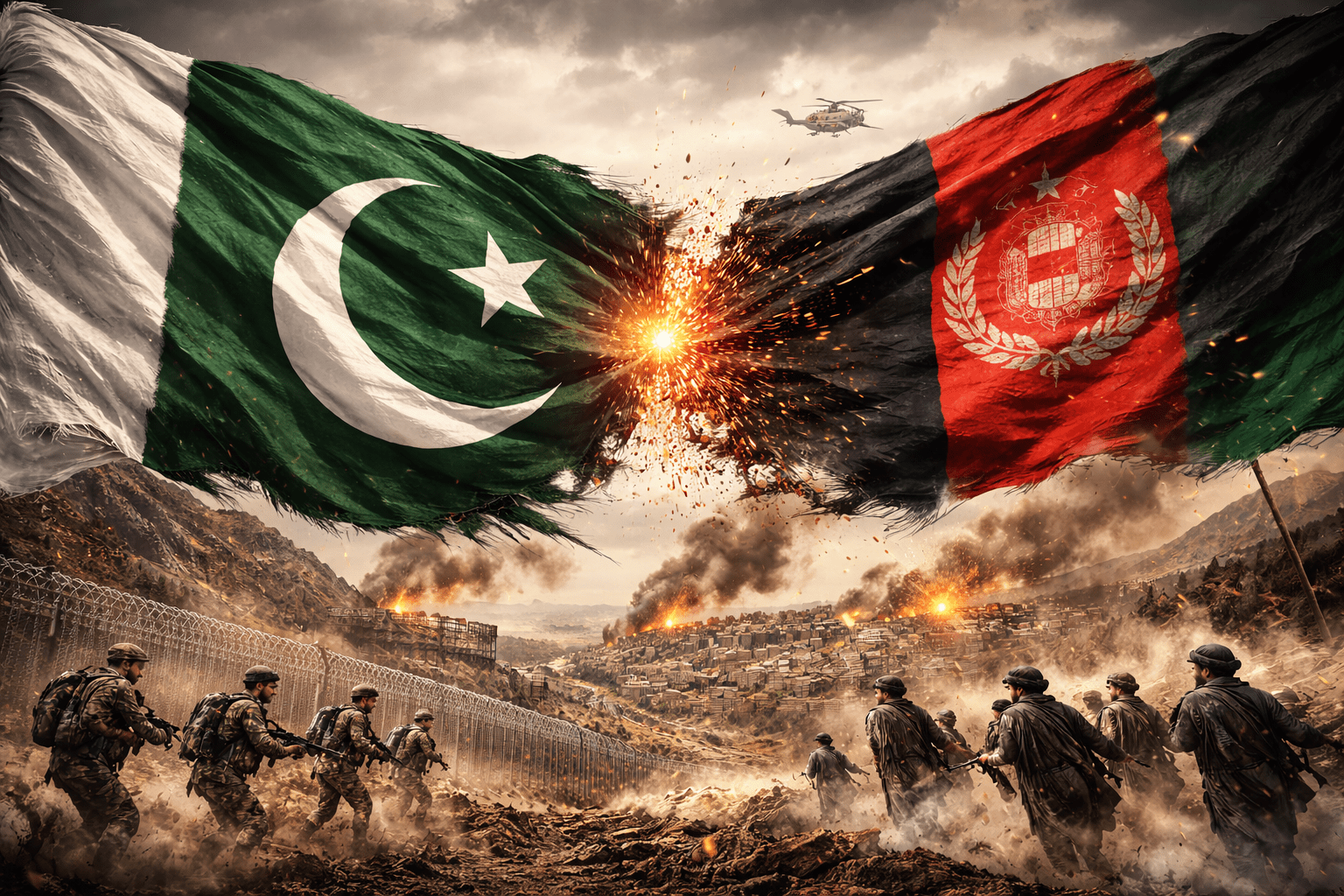
What does exist is something structurally more dangerous: a sustained, low-intensity, cross-border conflict ecosystem stretching from the tribal belts of Pakistan to Taliban-run Afghanistan, operating below formal war thresholds but above normal hostility.

This is not a border dispute. It is a sovereignty crisis wrapped in ideology, insurgency logistics, and regime survival.

Let’s unpack what is actually happening — strategically, not rhetorically.

The Durand Line: A Border That Exists on Maps, Not in Minds

The 2,600-km Durand Line has always been contested politically, but today it is militarily weaponized. Islamabad has fenced most of it at significant financial cost, attempting to convert a historically fluid frontier into a controlled boundary.

The Taliban regime in Kabul rejects the fence outright. For them, accepting the Durand Line is a legitimacy trap. For Pakistan, abandoning it is a security catastrophe.

This is the core contradiction:

  • Pakistan needs a hardened border to contain insurgency.

  • The Taliban need a porous frontier to maintain ideological continuity with Pashtun nationalism.

Neither can concede without undermining its own narrative.

The result is not open war — it is calibrated friction: border closures at Torkham, artillery exchanges, sniper fire, and sudden flare-ups that look tactical but are politically symbolic.

The TTP Factor: The Real Center of Gravity

The actual engine of this conflict is not Kabul. It is the Tehrik-e-Taliban Pakistan (TTP).

Since the Taliban takeover of Kabul in August 2021, the TTP has reconstituted operational sanctuaries across eastern Afghanistan. Attacks inside Pakistan — particularly in Khyber Pakhtunkhwa and Balochistan — have risen in tempo and sophistication.

Islamabad’s strategic dilemma is stark:

  1. It cannot afford full-scale war with the Taliban regime.

  2. It cannot tolerate cross-border militant sanctuaries.

  3. It lacks reliable leverage over Kabul.

Airstrikes inside Afghan territory have occurred — but they are punitive, not decisive. They signal resolve, not dominance.

The uncomfortable truth: Pakistan once used strategic depth as doctrine. Today, that same geography is strategic vulnerability.

The Taliban’s Calculus: Between Ideology and Survival

The regime in Kabul faces its own structural tension.

The Taliban government needs:

  • Economic access through Pakistan

  • Trade routes to Karachi

  • Diplomatic breathing room

But it also depends on ideological cohesion — and that includes sympathy for the TTP.

Cracking down too hard on the TTP risks internal fracture within Taliban ranks. Doing nothing risks Pakistani retaliation.

So Kabul performs a balancing act:
Public denials. Private tolerance. Occasional token arrests.

This is not incompetence. It is regime management under ideological constraint.

Pakistan’s Strategic Reassessment

Inside Pakistan, the policy debate has shifted from “how to manage Afghanistan” to “how to contain Afghanistan.”

The Pakistani military establishment now confronts three simultaneous stressors:

  • TTP resurgence in the northwest

  • Baloch insurgency intensifying in the southwest

  • Economic fragility limiting sustained military escalation

The old assumption — that a friendly Taliban government would neutralize western border threats — has collapsed.

Now Islamabad faces a paradox: The regime it quietly facilitated is the regime it cannot fully control.

Why This Is Not Just a Bilateral Issue

The Pakistan–Afghanistan conflict sits at the intersection of larger geopolitical currents.

China worries about instability affecting CPEC routes.
Iran monitors Sunni militant spillover.
Central Asia fears ideological contagion.
The United States, though militarily withdrawn, still watches from an over-the-horizon posture.

But none of these actors are willing to underwrite stability on the ground.

Which means the conflict is structurally self-contained — volatile but locally managed.

The Economic Weaponization of Borders

One under-discussed dimension is economic coercion.

Pakistan has repeatedly shut border crossings, deported undocumented Afghan refugees, and used trade restrictions as leverage. Kabul, in response, threatens transit disruption and nationalist rhetoric.

The border is no longer just security infrastructure. It is economic pressure architecture.

Yet coercion has diminishing returns.
Afghanistan’s economy is already fragile. Pakistan’s economy is strained.

You cannot economically strangle a neighbor when you yourself are short of oxygen.

Is This Pakistan Afghanistan conflict Moving Toward Open War?

Unlikely — for now.

Full-scale war would:

  • Overextend Pakistan militarily and economically.

  • Risk Taliban regime fragmentation.

  • Invite regional intervention.

  • Destabilize nuclear-armed Pakistan at a time of domestic volatility.

What we are witnessing instead is structured hostility — calibrated, episodic, politically constrained.

Think less “war declaration,” more “permanent instability equilibrium.”

The Missing Dimension: Internal Political Fragility

One aspect often overlooked is domestic political legitimacy on both sides.

Pakistan’s civil-military imbalance and political volatility reduce strategic coherence. Decision-making oscillates between tactical retaliation and cautious restraint.

Afghanistan’s Taliban regime faces non-recognition, economic isolation, and factional pressures.

When both states suffer legitimacy deficits, escalation control becomes unpredictable. Not because leaders want war — but because neither has unlimited political capital to absorb perceived humiliation.

That increases miscalculation risk amid ongoign Pakistan Afghanistan conflict.

The Deeper Strategic Reality

The Pakistan–Afghanistan conflict is not about territory. It is about sovereignty narratives colliding with militant ecosystems.

Pakistan wants a controlled periphery. The Taliban want ideological continuity across borders.

The TTP exploits both.

This is a triangular conflict disguised as a bilateral one.

Unless one of three things changes —

  1. The Taliban decisively dismantle TTP infrastructure,

  2. Pakistan fundamentally alters its Afghan doctrine, or

  3. A regional security framework emerges —

the status quo will persist: Low-grade conflict, periodic escalation, strategic distrust.

What This Development Actually Signifies

This is the death of “strategic depth” as a viable doctrine.

It also marks the transformation of Afghanistan from buffer state to pressure amplifier.

Pakistan’s western frontier is no longer a passive security zone. It is an active theater.

And for the region, this means something consequential: instability is no longer episodic — it is structural.

The war isn’t declared. But the Pakistan Afghanistan conflict is permanent.

Tags: Explainer
Previous Post

The Strategic Logic of an Israel–US Attack on Iran

Next Post

Why India Needs an Integrated ISR Grid — Now!

IndoAsia Defense

IndoAsia Defense

IndoAsia Defense Team is a specialist research and analysis group focused on India’s military modernization and Indo-Pacific strategic dynamics. The platform delivers structured, data-driven insights on doctrine, force posture, defense technology, and regional power balance.

Next Post
Why India Needs an Integrated ISR Grid

Why India Needs an Integrated ISR Grid — Now!

Leave a Reply Cancel reply

Login with your Social ID

Your email address will not be published. Required fields are marked *

Category

  • Air
  • Global
  • Indo-Pacific
  • Industry
  • Joint
  • Land
  • Navy
  • Tech

Defence Capabilities

  • Air Defence
  • Drones
  • Fighters
  • ISR & Mobility
  • China Military
  • Emerging Tech
  • Regional Trends
  • U.S. Posture

Strategy

  • 2035 Outlook
  • China Strategy
  • India Strategy
  • Pakistan Outlook
  • Budget
  • Exports
  • Make in India
  • Supply Chains

Operations

  • Integrated Ops
  • Procurement Reform
  • Theater Commands
  • Armour & Artillery
  • China Front
  • Future Combat
  • Pakistan Front
  • Fleet Expansion

Resources

  • India vs China Military Balance
  • Indo-Pacific Military Power Map
  • Global Military Balance Dashboard
  • Global Weapons Systems Database
  • Global Missile Systems Database
  • Indo-Pacific Defense Timeline
  • India Military Capability Index
  • About
  • Contact
  • Privacy & Policy
  • Editorial Policy
  • Cookie Policy
  • Disclaimer
  • Terms And Conditions
Facebook Linkedin X-twitter
© 2026 IndoAsia Defense. All Rights Reserved.
No Result
View All Result
  • Home
  • Air
    • Air Defence
    • Drones
    • Fighters
    • ISR & Mobility
  • Land
    • Armour & Artillery
    • China Front
    • Future Combat
    • Pakistan Front
  • Navy
    • Fleet Expansion
    • Indian Ocean
    • Maritime Security
    • Submarines
  • Indo-Pacific
    • 2035 Outlook
    • China Strategy
    • India Strategy
    • Pakistan Outlook
  • Joint
    • Integrated Ops
    • Procurement Reform
    • Theater Commands
  • Tech
    • AI & Autonomous Systems
    • Cyber
    • Electronic Warfare
    • Space
  • Industry
    • Budget
    • Exports
    • Make in India
    • Supply Chains
  • Global
    • China-Pak
    • Emerging Tech
    • Regional Trends
    • US-India