































Extending the Battlespace: Why Project Kusha Air Defence Is About Denial, Not Defence
The Project Kusha Air Defence System is emerging at a moment when India’s air defence thinking is undergoing a structural shift from reactive protection to proactive airspace denial. For decades, India’s air defence posture was designed around point defence and limited area coverage, largely shaped by legacy threats and constrained sensor networks. That model is no longer sufficient in an environment defined by long-range precision strike systems, stealth aircraft, and coordinated multi-domain operations.
The Project Kusha Air Defence System therefore represents a deliberate move toward extending defensive reach into the adversary’s operational envelope.
At its core, the program reflects a recognition that modern conflict begins well before aircraft cross borders. Adversary air campaigns today rely on enablers such as airborne early warning platforms, stand-off munitions, and electronic warfare assets that operate far from the frontline.
By targeting these nodes at extended ranges, India can degrade the coherence of an incoming strike package before it fully materializes. This is where a 350 to 400 kilometer engagement envelope becomes strategically meaningful rather than simply impressive on paper.
The implication is that India is gradually building a denial-based deterrence model in which airspace is not just defended but actively contested at depth. This aligns with broader doctrinal evolution across the services, particularly in the context of integrated theatre commands and multi-domain operations.
👉 Link: https://indoasiadefense.com/relevant-article-slug/
The Real Weapon Is the Network: Inside Project Kusha’s Architecture
The effectiveness of the Project Kusha Air Defence System will depend less on its headline range and more on how it integrates into India’s wider sensor and command architecture. Early program outlines indicate a multi-tier interceptor system designed to engage a spectrum of threats across altitude bands.
This likely includes separate missile variants optimized for long-range high-altitude interception, medium-range engagements, and terminal phase defense against lower-altitude threats such as cruise missiles.
What distinguishes Project Kusha is the emphasis on network-centric integration through India’s Integrated Air Command and Control System. Instead of functioning as isolated batteries, the system is expected to operate within a distributed sensor grid that fuses inputs from ground-based radars, airborne platforms, and potentially space-based assets.
This creates a dynamic engagement environment where target tracking and interceptor allocation can be optimized in real time across multiple sectors.
The strategic implication is that the system transforms from a static defensive layer into a flexible operational tool. A networked architecture allows India to redistribute defensive capacity based on evolving threat axes, reducing the risk of localized saturation.
Most analyses tend to focus on missile performance, but in reality, the decisive factor in modern air defence is the speed and accuracy of the sensor-to-shooter loop.
Beyond S-400: From Buying Capability to Owning the Stack
The comparison between the Project Kusha Air Defence System and the S-400 is often framed in terms of range equivalence, but that framing misses the deeper strategic transition underway.
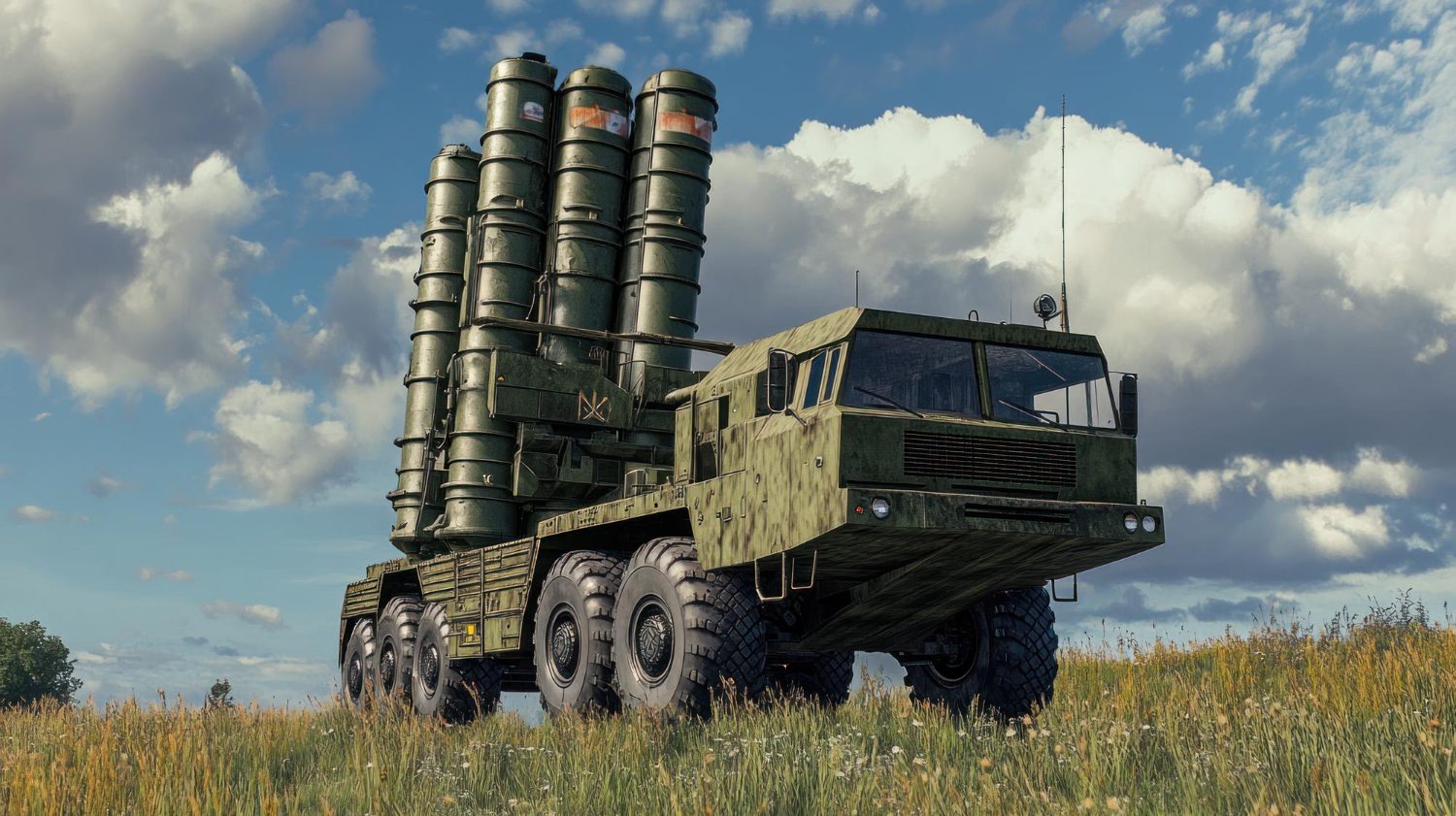
The S-400 provides India with a proven long-range air defence capability, but it remains an externally sourced system with inherent limitations in customization, software access, and long-term upgrade pathways. Project Kusha, by contrast, is designed to place those variables under domestic control.
| Parameter | S-400 Triumf | Project Kusha Air Defence System |
|---|---|---|
| Origin | Russia | India (DRDO) |
| Engagement Range | Up to 400 km | 350–400 km (projected) |
| Software Control | Restricted | Fully indigenous |
| Upgrade Cycle | Supplier dependent | Domestic roadmap |
| Integration Flexibility | Limited | High within IACCS framework |
This distinction becomes critical in prolonged conflict scenarios where adaptability determines survivability. Imported systems, regardless of their capability, operate within the constraints defined by the supplier.
Indigenous systems, even if initially less refined, can evolve in response to operational feedback and emerging threats. This is particularly relevant in countering electronic warfare tactics and developing countermeasures against stealth platforms.
The broader implication is that India is shifting from platform-centric procurement to ecosystem-centric capability development. Project Kusha is not simply intended to replace the S-400 but to ensure that future air defence layers are structurally aligned with India’s own operational doctrine and technological priorities.
👉 Link: https://indoasiadefense.com/relevant-article-slug/
Targeting the Kill Chain: How Kusha Complicates PLA Air Campaigns
The operational relevance of the Project Kusha Air Defence System becomes clearer when viewed against China’s evolving aerospace strategy. The People’s Liberation Army integrates airpower, missile forces, and electronic warfare into coordinated campaigns designed to overwhelm defensive systems through complexity and scale.
Platforms such as the J-20 operate alongside long-range precision strike capabilities and dense ISR networks, creating a layered offensive architecture.
India’s challenge is not simply to defend against individual threats but to disrupt the coherence of such integrated campaigns. By extending interception ranges and improving networked response capabilities, Project Kusha can target high-value enablers that underpin Chinese air operations.
For example, limiting the operational freedom of airborne early warning aircraft reduces the effectiveness of coordinated strike packages, forcing adversaries to operate with degraded situational awareness.
The implication is that air defence begins to function as an instrument of operational disruption rather than passive protection. This allows India to impose friction on adversary planning cycles without necessarily escalating into offensive operations.
In a high-altitude environment like the northern sector, where geography already constrains air operations, even incremental increases in defensive reach can produce disproportionate strategic effects.
Building the Backbone: Industrial Depth Behind the Missile
Project Kusha is also a test of India’s ability to execute complex system-of-systems programs within its domestic industrial ecosystem.
Unlike earlier indigenous efforts that focused on individual platforms, this program requires integration across radar systems, propulsion technologies, guidance mechanisms, and advanced software architectures. This level of complexity forces coordination between multiple agencies and private sector participants.
The program’s structure suggests an attempt to move beyond the traditional model dominated by defence public sector undertakings. By involving private industry in subsystems and integration processes, India is attempting to build a more distributed and resilient defence manufacturing base.
This has implications not just for air defence but for future programs across domains including space, cyber, and autonomous systems.
The second-order effect is particularly significant. Indigenous development of critical components such as seekers and command software reduces external dependencies and enhances export potential. While long-range air defence systems are politically sensitive in export markets, even partial technological success strengthens India’s position as a credible defence technology provider.
A 72-Hour War Lens: Where Project Kusha Air Defence Starts to Matter
A useful way to understand the operational impact of the Project Kusha Air Defence System is to place it within a two-front conflict scenario involving simultaneous pressure from China and Pakistan.
In such a scenario, India would face high-density aerial threats across multiple sectors, requiring rapid allocation of defensive resources. The ability to engage threats at extended ranges becomes critical in preventing saturation of inner defensive layers.
Within the first 72 hours of a high-intensity conflict, adversaries would likely attempt to degrade India’s air defence network through coordinated strikes on radar sites, command centers, and logistics nodes.
Project Kusha, operating as an outer defensive layer, could intercept incoming threats before they reach these critical assets. This creates a buffer that preserves the functionality of deeper defensive systems and allows India to maintain operational continuity.
A compelling visual addition here would be a map illustrating overlapping engagement zones of different air defence systems across India’s northern and western sectors. Such a map would highlight how layered coverage creates defensive depth and reduces vulnerabilities along key axes of advance.
The Hard Truth: Why a 400 km Shield Still Has Gaps
Despite its potential, the Project Kusha Air Defence System does not eliminate the fundamental challenges associated with modern air defence.
Long-range interception capability is only as effective as the underlying detection and tracking systems. Stealth aircraft, low-flying cruise missiles, and hypersonic glide vehicles present challenges that cannot be addressed through range alone.
There is also the issue of saturation. Modern air campaigns are designed to overwhelm defensive systems by combining real threats with decoys and electronic warfare tactics.
Even the most advanced systems can be strained under such conditions if not supported by complementary layers including short-range air defence, electronic countermeasures, and hardened infrastructure.
The implication is that Project Kusha must be integrated into a broader defensive ecosystem rather than viewed as a standalone solution.
Its value lies in extending the defensive envelope and buying time for other systems to respond. Deterrence, in this context, is cumulative and networked rather than dependent on any single capability.
Rewriting India’s Air Defence Equation
The Project Kusha Air Defence System reflects a deeper transformation in how India approaches air defence in an era of multi-domain conflict. It is not simply about achieving a 400 km interception range, but about embedding that capability within a networked, indigenous, and adaptable defence architecture.
By reducing dependence on imported systems and enhancing integration across domains, India is attempting to build a more resilient and responsive air defence posture.
The long-term significance of Project Kusha lies in its potential to redefine deterrence at the operational level. It shifts the focus from static defence to dynamic airspace management, where denial, disruption, and resilience become central objectives.
For the Indo-Pacific security environment, this represents a gradual but meaningful recalibration of the regional air defence balance.
FAQs
What is the Project Kusha Air Defence System?
The Project Kusha Air Defence System is an indigenous long-range surface-to-air missile program developed by DRDO, designed to intercept aerial threats at distances of up to 400 kilometers.
How is Project Kusha different from the S-400?
Project Kusha offers similar range capabilities but provides full domestic control over software, integration, and upgrades, unlike the imported S-400 system.
What types of threats can Project Kusha intercept?
It is designed to intercept aircraft, cruise missiles, and certain ballistic threats within a layered air defence framework.
Will Project Kusha replace existing systems like Akash or S-400?
No, it will complement them as part of a multi-layered air defence architecture rather than replacing any single system.
Why is Project Kusha strategically important for India?
It enhances strategic autonomy, strengthens layered air defence, and improves India’s ability to manage complex aerial threats in a two-front conflict scenario.

