












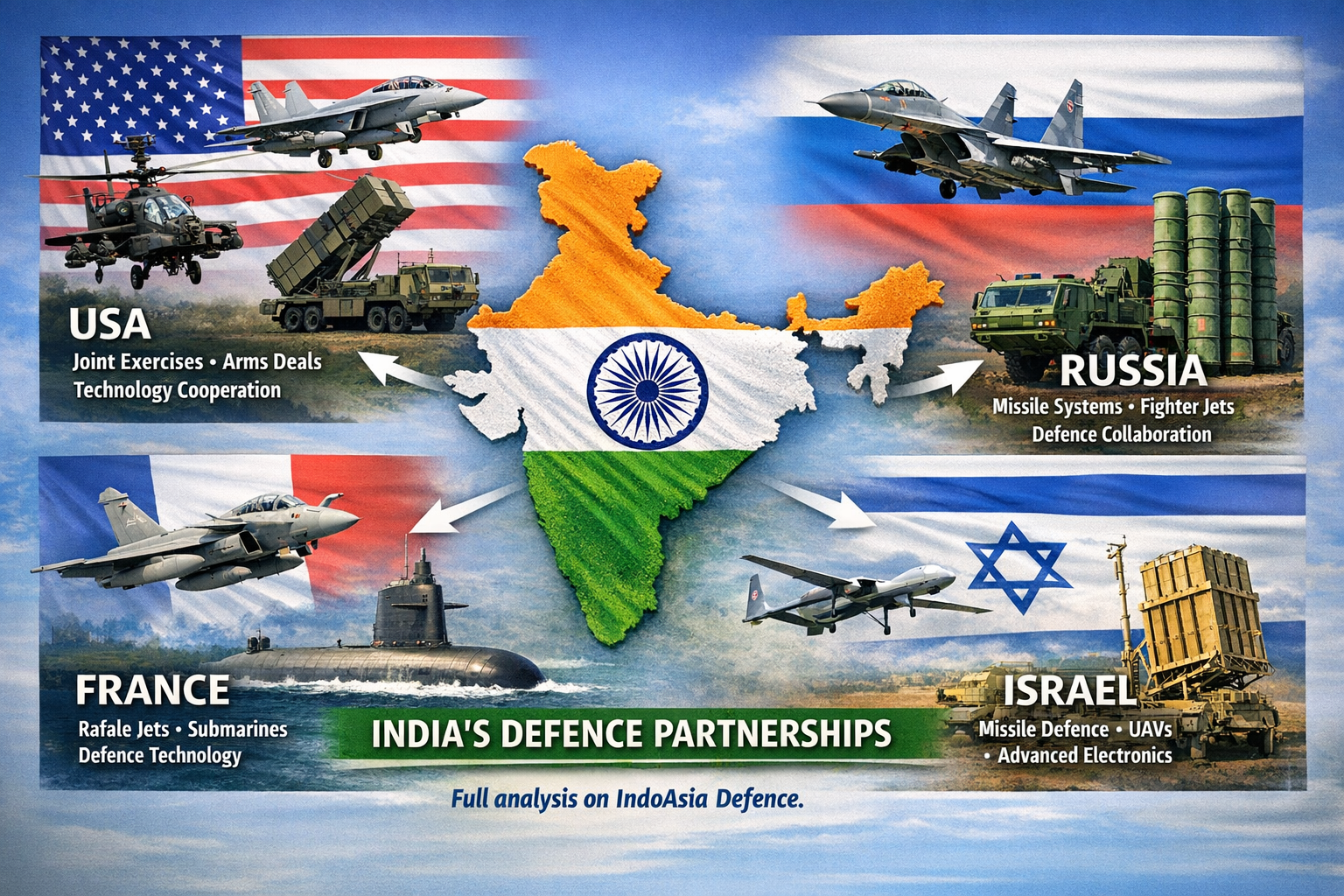
India’s defense diplomacy in 2026 is neither alliance-driven nor transactional in the old sense. It is layered, interest-based, and increasingly technology-focused.
In a world where blocs are hardening but not fully formalized, India’s approach is calibrated: deepen capability through partnerships without surrendering decision-making autonomy.
What has changed over the past few years is the depth of these relationships. They are no longer limited to platform acquisition. They increasingly involve co-production, technology transfer, joint exercises, and supply chain integration.
India–United States: Technology as Strategic Glue
The India–US defense relationship has matured into a structural partnership. The center of gravity today is advanced technology collaboration.
The agreement enabling co-production of the F414 engine by General Electric is more than an aerospace deal. It signals trust in high-end manufacturing integration. Fighter engines represent one of the most tightly controlled technologies globally. Moving production into India alters the long-term trajectory of India’s combat aviation ecosystem.
At the operational level, exercises like Exercise Malabar have evolved into complex interoperability drills involving anti-submarine warfare, carrier operations, and maritime domain awareness integration. These exercises are no longer symbolic. They build habits of coordination.
The broader iCET framework has expanded collaboration into semiconductors, AI, and critical technologies. Defense cooperation is now interlinked with industrial and digital ecosystems. That interconnection strengthens long-term strategic alignment without formal treaty obligations.
Importantly, both countries have managed disagreements pragmatically. Differences over global crises have not derailed defense cooperation. That resilience suggests institutional depth.
India–Russia: Managing Legacy and Adaptation
India’s defense inventory still carries significant Russian origin platforms. The S-400 remains central to India’s layered air defense architecture. Su-30MKI fighters continue to form the backbone of combat squadrons. The relationship is historically deep.
However, 2026 realities are complex. Western sanctions on Russia have complicated payment mechanisms and supply chains. Spare parts management has required creative financial channels. India has responded by accelerating indigenization of components and diversifying suppliers where feasible.
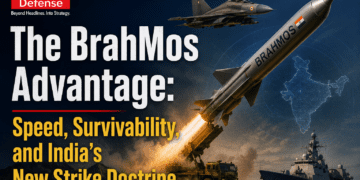
The BrahMos program remains a model of successful joint development. Its export success reinforces India’s image as an emerging defense exporter. Yet even here, future variants increasingly emphasize Indian manufacturing depth.
India’s approach toward Russia is pragmatic rather than ideological. It seeks continuity where strategically beneficial while gradually reducing overdependence. The balance is delicate but intentional.
India–Israel: Precision and Niche Capability
If the US partnership represents scale and Russia represents legacy depth, Israel represents agility.
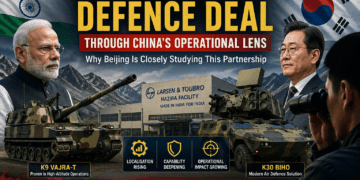
Israeli firms such as Rafael have provided advanced missile systems, surveillance technologies, and UAV capabilities that integrate effectively into Indian force structures. The Barak-8 air defense system exemplifies collaborative development rather than off-the-shelf procurement.
In 2026, UAV technology and counter-drone systems remain high-priority areas. Israel’s operational experience in contested environments offers practical insight. The cooperation is often low-profile but high-impact.
Unlike larger geopolitical relationships, the India–Israel defense partnership is largely insulated from broader political fluctuations. It is capability-driven and results-oriented.
France and the Indo-Pacific Convergence
France deserves specific attention in 2026. As a resident Indo-Pacific power with territories in the region, it shares maritime stability concerns with India. Defense cooperation spans submarines, fighter aircraft, and naval exercises.
French industry participation in India’s defense modernization fits well within New Delhi’s diversification strategy. It adds European technological depth without alliance rigidity.
The India–France relationship is increasingly maritime-centric. Indo-Pacific deployments, coordinated exercises, and industrial collaboration reflect shared strategic geography.
Multi-Alignment in Practice
India’s diplomacy today is best described as structured multi-alignment. It does not hedge passively; it engages actively across poles of power.
The United States offers advanced technology and maritime synergy. Russia provides legacy continuity and missile collaboration. Israel delivers niche innovation. France contributes Indo-Pacific convergence. Emerging ties with Japan and Australia reinforce regional balance.
The key is integration. Partnerships must feed into domestic capability building rather than create fragmented dependence. India’s policy emphasis on co-development and local manufacturing reflects that understanding.
The Strategic Logic Behind Diversification
Why maintain such a diversified network? Because the global order remains fluid.
The Ukraine conflict demonstrated how quickly supply chains can fracture. West Asian instability showed how rapidly maritime trade can be disrupted. US-China competition continues to intensify in technology and trade.
In such an environment, relying excessively on any single partner introduces strategic risk. Diversification spreads exposure and increases bargaining leverage.
However, diversification must not become diffusion. India’s challenge is to ensure that systems acquired from different partners integrate seamlessly. Air defense grids, naval communication systems, and ISR platforms must operate in unified architectures.
Diplomacy as Capability Multiplier
Defense partnerships are not merely about hardware. They are about signaling. Joint exercises deter by demonstrating coordination. Co-production signals long-term trust. Export collaboration enhances diplomatic influence.
India’s growing defense exports add a new dimension. Supplying friendly nations with missiles or patrol vessels transforms India from buyer to provider. That shift enhances regional standing.
In 2026, India’s defense diplomacy reflects maturity. It is no longer reactive or opportunistic. It is strategic and layered.
The objective is not alignment for its own sake. It is capability expansion without constraint.
In a fragmented world, flexibility is power. India’s partnerships are designed to preserve that flexibility while steadily strengthening deterrence.

