









The Moment Behind the Decision
When the Indian Air Force fell below 30 active fighter squadrons, the number itself became symbolic. It was no longer just an operational metric; it was a signal of structural imbalance. For over a decade, the retirement of legacy fleets moved faster than induction pipelines. The result was a widening delta between sanctioned strength and actual availability — and in airpower calculus, gaps invite risk.
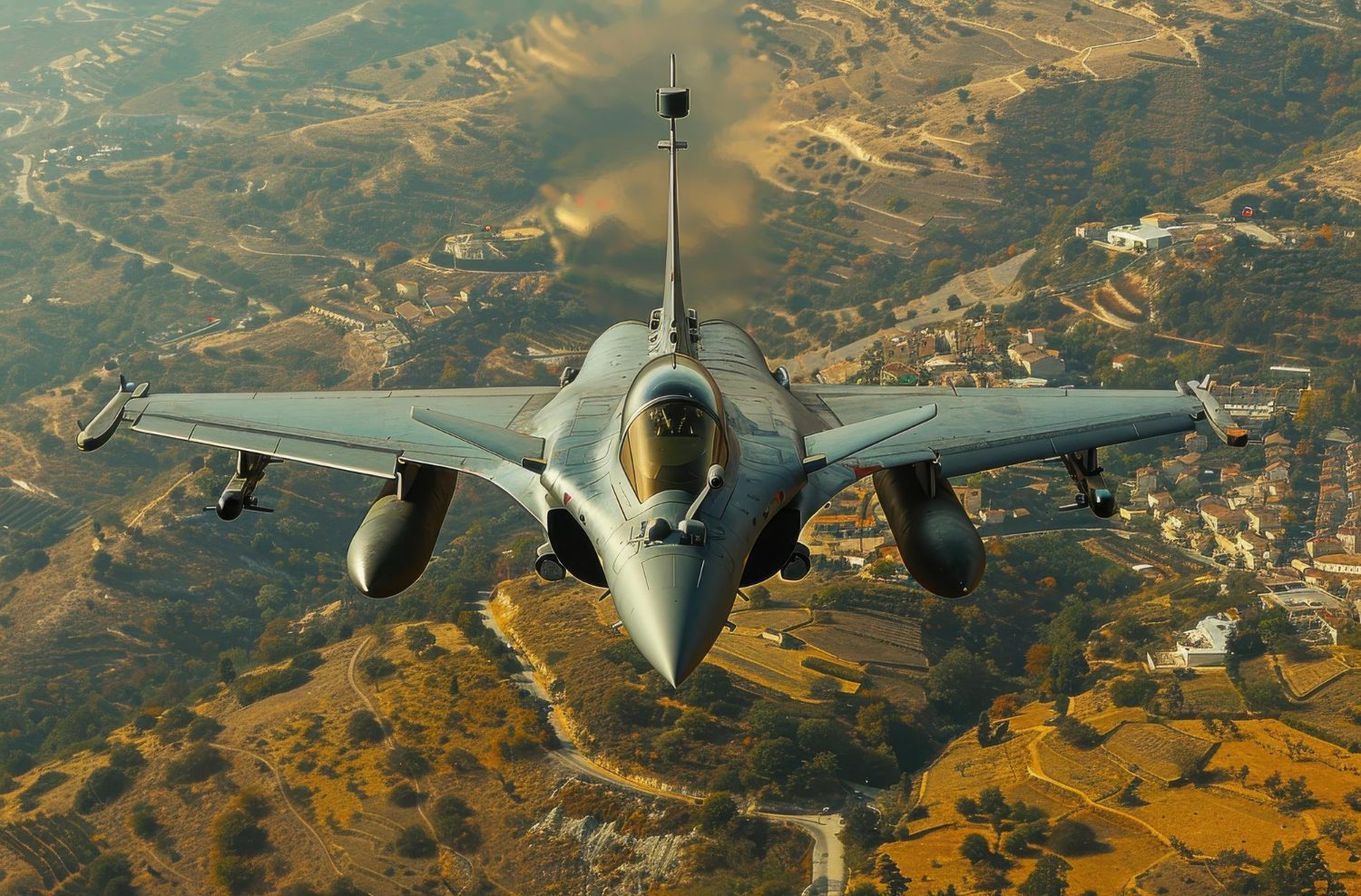
The decision to pursue 114 additional Rafales from Dassault Aviation must be viewed against that background. This is not opportunistic procurement. It is a corrective action.
Yet the deeper question is not whether India needs the aircraft. It clearly does. The more important question is what this deal fundamentally changes — in doctrine, in diplomacy, and in industrial strategy.
A Squadron Crisis That Became Strategic
Airpower planning is not about raw numbers; it is about sustained combat generation. India’s strategic environment demands readiness across two theatres, and readiness in this context means depth. Aircraft must be rotated, maintained, upgraded, and sustained over protracted contingencies.
The Rafale platform already operates within the IAF ecosystem. That familiarity matters more than is often acknowledged. Training pipelines are established. Maintenance infrastructure exists. Weapons integration is underway. Expanding an existing fleet produces exponential operational efficiency compared to inducting an entirely new type.
This is why the 114-aircraft decision has strategic weight. It is not additive; it is multiplicative.
With sufficient numbers, Rafale becomes not a premium strike asset but a doctrinal backbone — capable of air dominance, deep strike, electronic warfare escort, and precision engagement within a unified network.
Why the Government-to-Government Route Matters
The choice of a sovereign-level agreement with France signals urgency and trust. Competitive tenders serve transparency, but they also stretch timelines into years, sometimes decades. India has lived through that cycle before.
This time, New Delhi appears to have prioritised predictability over procedural theatre.
France occupies a unique position in India’s defence diplomacy. It has historically demonstrated willingness to engage without overt political conditionalities and has shown openness to deeper industrial collaboration. That matters in an era where technology control regimes, sanctions frameworks, and shifting geopolitical alignments complicate procurement decisions.
The Rafale expansion therefore doubles as diplomatic architecture. It embeds airpower within a broader strategic partnership rather than isolating it as a transactional purchase.
The Industrial Question: Assembly Line or Aerospace Transformation?
The most consequential dimension of the 114-aircraft plan lies not in the aircraft themselves, but in where and how they will be built.
Nagpur’s existing aerospace facility has the potential to evolve into a true manufacturing hub. If this programme crosses the threshold from assembly to systems-level integration, India could embed itself into the high-value layers of the fighter supply chain.
The distinction is crucial. Assembly generates employment. Systems integration generates knowledge.
Composite fabrication techniques, avionics integration processes, radar module assembly, and engine maintenance ecosystems are the true strategic prizes. Exposure to these domains does not merely support Rafale production; it fertilises future indigenous platforms.
The long-term ambition must be to absorb capability, not merely absorb aircraft.
Engines: The Technological Crown Jewel
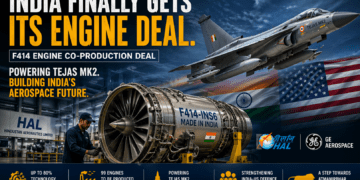
In every advanced combat aircraft programme, the engine remains the hardest domain. Materials science, high-temperature tolerances, turbine blade metallurgy — these are not easily replicated competencies.
If the Rafale deal deepens cooperation in engine assembly, overhaul, and eventually partial manufacturing, the strategic payoff extends far beyond this platform. Indigenous engine development efforts have struggled precisely because of limited exposure to mature production ecosystems.
An engine assembly line in India would not automatically translate into sovereign design capability, but it would accelerate learning curves and reduce lifecycle dependence.
That is where this deal either becomes transformative — or remains expensive.
Regional Deterrence: Beyond Platform Comparison
Much commentary reduces the Rafale debate to comparisons with Chinese or Pakistani aircraft. That framing is too narrow.
Airpower is not merely aircraft versus aircraft. It is an aircraft integrated into sensors, data links, electronic warfare suites, and precision munitions networks.
Expanding the Rafale fleet enhances India’s ability to sustain long-range precision engagement and contested airspace operations. Even without stealth characteristics, advanced electronic warfare capabilities and long-range missile envelopes maintain deterrence credibility.
Quantity amplifies that effect. A small fleet signals capability. A large fleet signals commitment.
The AMCA Dilemma: Bridge or Bottleneck?
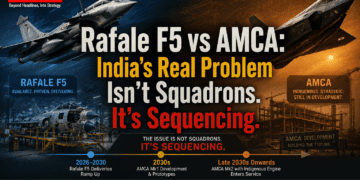
India’s Advanced Medium Combat Aircraft (AMCA) programme represents the country’s aspiration for fifth-generation sovereignty. The concern inevitably arises: does investing heavily in Rafale dilute momentum for AMCA?
The answer depends on sequencing discipline.
If Rafale stabilises the force structure, AMCA development gains breathing room. Engineers are not pressured to rush timelines to plug operational gaps. However, if budgetary gravity begins to starve indigenous R&D allocations, the opposite occurs.
There is also a subtler dynamic. Exposure to advanced mission systems integration and manufacturing ecosystems can indirectly benefit AMCA engineers. Knowledge transfer does not require blueprints; it requires immersion in the process.
The strategic design challenge is ensuring Rafale strengthens, rather than substitutes, indigenous ambition.
Technology Depth: The Invisible Benchmark
The true metric of success will not be aircraft count or delivery timeline. It will be software authority and systems autonomy.
- Can India modify mission systems independently?
- Can indigenous weapons be integrated without external veto?
- Can electronic warfare libraries be maintained sovereignly?
These questions determine whether India remains an operator or becomes an integrator.
Autonomy in modern combat aviation resides in code as much as in metal.
Fiscal Gravity and Strategic Discipline
A programme valued in the trillions of rupees exerts gravitational pull on defence budgets. Multi-year fiscal planning must protect parallel priorities — naval modernisation, missile programmes, indigenous fighter development.
However, localisation moderates some fiscal outflow. Money spent within domestic production ecosystems circulates internally, building industrial capital.
The strategic aim should be partial economic recirculation, not one-way expenditure.
A Shift in Doctrine?
There is a deeper doctrinal evolution embedded in this decision. India appears to be consolidating around a high-quality multirole core rather than maintaining fragmented fleets. Standardisation enhances sustainment efficiency and network integration.
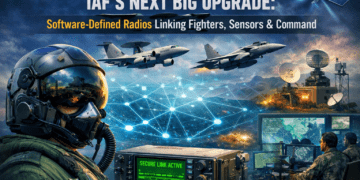
But true doctrinal evolution will depend on whether India builds sovereign data links, battle management software, and electronic warfare systems around these aircraft.
If those layers remain externally dependent, doctrinal autonomy remains constrained.
Insurance, Inflection, or Both?
The 114 Rafale acquisition unquestionably functions as airpower insurance. It addresses a real and measurable operational vulnerability.
But it can also be something more profound — an inflection point in India’s aerospace journey.
If localisation deepens into technological participation, if engine ecosystems mature domestically, and if systems-level autonomy expands, this deal becomes a stepping stone toward aerospace sovereignty.
If those dimensions remain shallow, the aircraft will still fly, but the opportunity will have passed.
For IndoAsia Defense, the real story is not how many Rafales India buys. It is how much capability India absorbs.

