
















IndoAsia Defense
  • Home
  • Air
    • All
    • Air Defence
    • Drones
    • Fighters
    • ISR & Mobility
    Ghatak UCAV stealth, autonomy, integration

    Inside India’s Ghatak UCAV Program: Stealth, Autonomy, and the Integration Gap

    The F414 engine co-production agreement between Hindustan Aeronautics Limited and GE Aerospace

    India-US F414 Engine Deal Explained: Technology Transfer, Tejas Mk2, and AMCA

    What is the Su-57M1 India deal

    Su-57M1 for India: A Fifth-Generation Shortcut or a Strategic Dependency Trap?

    India indigenous long range surveillance radar with X-band drone detection capability

    450km Eyes, Machine-Speed Decisions: How India’s Indigenous Long Range Surveillance Radar Is Rewriting Air Defence

    Why Software Defined Radios Are the IAF’s Most Consequential Upgrade

    IAF Signs BEL Deal for Software Defined Radios: Rewiring India’s Air Combat Network

    How the Ghatak UCAV Stealth Design Redefines India’s Drone Warfare Doctrine

    Ghatak UCAV: India’s Carbon Composite Stealth Strategy Dissected

    Ballistic Missile Defense system intercepting incoming missile during midcourse phase

    How Ballistic Missile Defense Works: Inside Modern Missile Interception Systems

    Swarm logistics drones delivering military supplies in high-altitude Himalayan terrain with Indian Army presence

    Swarm Logistics Drones in Himalayan Warfare: Can India Close the Supply Gap with China?

    India’s 6th-Gen Fighter Strategy FCAS vs GCAP Explained

    India’s 6th-Gen Fighter Strategy: FCAS vs GCAP Explained

  • Land
    • All
    • Armour & Artillery
    • China Front
    • Future Combat
    • Pakistan Front
    The Indo-Pacific Is Fragmenting, Not Uniting Against China

    Why the Indo-Pacific Will Not Unite Against China

    The India-South Korea defence deal

    The India-South Korea Defence Deal Through China’s Operational Lens

    Railways as War Arteries Can India Match China’s Military Mobility Before the Next Crisis

    Railways as War Arteries: Can India Match China’s Military Mobility Before the Next Crisis?

    China maritime front in Indian Ocean

    What If China Opens a Maritime Front in the Indian Ocean During a LAC Conflict?

    What is Indian military modernization strategy in 2026?

    Indian Military Modernization: Systems, Doctrine, and Capability Architecture (2026-27)

    Tank launching loitering munition in battle

    From Smoke to Strike: India’s Indigenous Loitering Munitions for T-72, T-90, and Arjun Tanks

    How China Mobilizes Forces Along the LAC Speed, Systems, and Strategic Control

    How China Mobilizes Forces Along the LAC: Systems, Speed, and Strategic Signaling

    Ballistic Missile Defense system intercepting incoming missile during midcourse phase

    How Ballistic Missile Defense Works: Inside Modern Missile Interception Systems

    Swarm logistics drones delivering military supplies in high-altitude Himalayan terrain with Indian Army presence

    Swarm Logistics Drones in Himalayan Warfare: Can India Close the Supply Gap with China?

  • Navy
    • All
    • Fleet Expansion
    • Indian Ocean
    • Maritime Security
    • Submarines
    Mogami-class frigate deal overview

    Japan’s Mogami-Class Frigate Offer to India: What the Transfer Terms Reveal About Tokyo’s Indo-Pacific Calculus

    China maritime front in Indian Ocean

    What If China Opens a Maritime Front in the Indian Ocean During a LAC Conflict?

    The Strait of Hormuz Crisis

    India’s Oil Artery Under Threat: Strategic Implications of a Hormuz Crisis

    India’s VL-Shtil Missile Deal with Russia

    India’s VL-Shtil Missile Deal with Russia: Strengthening Naval Air Defense in the Indo-Pacific

    Andaman & Nicobar Command Sleeping Giant of India’s Maritime Strategy

    Andaman & Nicobar Command: Sleeping Giant of India’s Maritime Strategy

    Maritime Surveillance 2.0: Why EO/IR Modernisation Matters for India’s Ocean Security

    Maritime Surveillance 2.0: Why EO/IR Modernisation Matters for India’s Ocean Security

    2030 Will Decide the India ASEAN Maritime Equation

    2030 Will Decide the India ASEAN Maritime Equation

    India Military Transformation Series — Part 3: Maritime Power and the Indian Ocean Imperative

    India Military Transformation Series — Part 3: Maritime Power and the Indian Ocean Imperative

    Indian Navy TEDBF PPP Model: China Factor and 2030–2040 Carrier Strategy

    Indian Navy TEDBF PPP Model: China Factor and 2030–2040 Carrier Strategy

  • Indo-Pacific
    • All
    • 2035 Outlook
    • China Strategy
    • India Strategy
    • Pakistan Outlook
    DRDO-developed Guided Pinaka

    At ₹70 Lakh Per Rocket, DRDO-developed Guided Pinaka May Represent India’s Shift Toward Scalable Precision Warfare

    The Indo-Pacific Is Fragmenting, Not Uniting Against China

    Why the Indo-Pacific Will Not Unite Against China

    Mogami-class frigate deal overview

    Japan’s Mogami-Class Frigate Offer to India: What the Transfer Terms Reveal About Tokyo’s Indo-Pacific Calculus

    The India-South Korea defence deal

    The India-South Korea Defence Deal Through China’s Operational Lens

    Railways as War Arteries Can India Match China’s Military Mobility Before the Next Crisis

    Railways as War Arteries: Can India Match China’s Military Mobility Before the Next Crisis?

    india military integration gap

    Is India Building Military Power Faster Than It Can Integrate It?

    China maritime front in Indian Ocean

    What If China Opens a Maritime Front in the Indian Ocean During a LAC Conflict?

    Can India Fight Beyond 30 Days? Inside India’s War Sustainment Reality

    Can India Fight Beyond 30 Days? Inside India’s War Sustainment Reality

    What is Indian military modernization strategy in 2026?

    Indian Military Modernization: Systems, Doctrine, and Capability Architecture (2026-27)

  • Joint
    • All
    • Integrated Ops
    • Procurement Reform
    • Theater Commands
    India's strategic challenge sustainability first

    India Can Strike in 22 Minutes. Can It Sustain for 22 Weeks?

    Ballistic Missile Defense system intercepting incoming missile during midcourse phase

    How Ballistic Missile Defense Works: Inside Modern Missile Interception Systems

    India defence proposals Rs 2.38 trillion showing S-400 system, strike drones, fighter jets and military architecture shift

    India Defence Proposals Rs 2.38 Trillion: Why This Approval Changes How India Will Fight, Not Just What It Buys

    DAP 2026 India’s Quiet Revolution in Defence Procurement

    DAP 2026: India’s Quiet Revolution in Defence Procurement

    Integrated Battle Groups vs China’s Western Theater Command

    Integrated Battle Groups vs China’s Western Theater Command: Can Doctrine Survive the Himalayan Reality?

    Andaman & Nicobar Command Sleeping Giant of India’s Maritime Strategy

    Andaman & Nicobar Command: Sleeping Giant of India’s Maritime Strategy

    India Military Transformation Series — Part 2: The Theatre Command Reckoning

    India Military Transformation Series — Part 2: The Theatre Command Reckoning

    India AI C4ISR modernization

    India Military Transformation Series — Part 1: India AI C4ISR Modernization

    India’s Two-Front Theatre Command: Preparing for Simultaneous Conflict

    India’s Two-Front Theatre Command: Preparing for Simultaneous Conflict

  • Tech
    • All
    • AI & Autonomous Systems
    • Cyber
    • Electronic Warfare
    • Space
    Why Software Defined Radios Are the IAF’s Most Consequential Upgrade

    IAF Signs BEL Deal for Software Defined Radios: Rewiring India’s Air Combat Network

    Source Code or ICD India’s Source Code Negotiation Explained

    Source Code or ICD: India’s Source Code Negotiation Explained

    Supply Chain Weaponization

    Supply Chain Weaponization: Strategic Autonomy Meets Semiconductor Reality

    AI-driven battlefield in India's military

    The Algorithm of Borders: What India’s Military AI Push Actually Looks Like on the Ground

    India AI C4ISR modernization

    India Military Transformation Series — Part 1: India AI C4ISR Modernization

    PRAHAR Explained India Counter Terror Policy Prahaar

    PRAHAAR Explained: Why ‘PRAHAAR’ India’s National Counter-terrorism Doctrine, Signals the End of Traditional Warfare

    The Weapons Making the AMCA Unbeatable

    The Weapons Making the AMCA Unbeatable

    India’s Aerospace Ecosystem After Rafale: The 2026–2030 Industrial Test

    India’s Aerospace Ecosystem After Rafale: The 2026–2030 Industrial Test

    PLA’s Cyber Warfare Units and the Question of Indian Critical Infrastructure Resilience

    PLA’s Cyber Warfare Units and the Question of Indian Critical Infrastructure Resilience

  • Industry
    • All
    • Budget
    • Exports
    • Make in India
    • Supply Chains
    India's strategic challenge sustainability first

    India Can Strike in 22 Minutes. Can It Sustain for 22 Weeks?

    India-UAE defence pact and Gulf strategy

    India-UAE Defence Pact: Why Abu Dhabi Is Becoming India’s Western Strategic Depth

    Ghatak UCAV stealth, autonomy, integration

    Inside India’s Ghatak UCAV Program: Stealth, Autonomy, and the Integration Gap

    The India-South Korea defence deal

    The India-South Korea Defence Deal Through China’s Operational Lens

    The F414 engine co-production agreement between Hindustan Aeronautics Limited and GE Aerospace

    India-US F414 Engine Deal Explained: Technology Transfer, Tejas Mk2, and AMCA

    Why Software Defined Radios Are the IAF’s Most Consequential Upgrade

    IAF Signs BEL Deal for Software Defined Radios: Rewiring India’s Air Combat Network

    How the Ghatak UCAV Stealth Design Redefines India’s Drone Warfare Doctrine

    Ghatak UCAV: India’s Carbon Composite Stealth Strategy Dissected

    Swarm logistics drones delivering military supplies in high-altitude Himalayan terrain with Indian Army presence

    Swarm Logistics Drones in Himalayan Warfare: Can India Close the Supply Gap with China?

    India defence proposals Rs 2.38 trillion showing S-400 system, strike drones, fighter jets and military architecture shift

    India Defence Proposals Rs 2.38 Trillion: Why This Approval Changes How India Will Fight, Not Just What It Buys

  • Global
    • All
    • China-Pak
    • Emerging Tech
    • Middle Eeast
    • Regional Trends
    • US-India
    • US-Israel
    India-UAE defence pact and Gulf strategy

    India-UAE Defence Pact: Why Abu Dhabi Is Becoming India’s Western Strategic Depth

    The Indo-Pacific Is Fragmenting, Not Uniting Against China

    Why the Indo-Pacific Will Not Unite Against China

    Ghatak UCAV stealth, autonomy, integration

    Inside India’s Ghatak UCAV Program: Stealth, Autonomy, and the Integration Gap

    The F414 engine co-production agreement between Hindustan Aeronautics Limited and GE Aerospace

    India-US F414 Engine Deal Explained: Technology Transfer, Tejas Mk2, and AMCA

    india military integration gap

    Is India Building Military Power Faster Than It Can Integrate It?

    India indigenous long range surveillance radar with X-band drone detection capability

    450km Eyes, Machine-Speed Decisions: How India’s Indigenous Long Range Surveillance Radar Is Rewriting Air Defence

    What is Indian military modernization strategy in 2026?

    Indian Military Modernization: Systems, Doctrine, and Capability Architecture (2026-27)

    India defence proposals Rs 2.38 trillion showing S-400 system, strike drones, fighter jets and military architecture shift

    India Defence Proposals Rs 2.38 Trillion: Why This Approval Changes How India Will Fight, Not Just What It Buys

    India’s 6th-Gen Fighter Strategy FCAS vs GCAP Explained

    India’s 6th-Gen Fighter Strategy: FCAS vs GCAP Explained

  • Resources
    • India Military Capability Index
    • India vs China Military Balance
    • China Western Theater Command Guide
    • Pakistan Military Tracker 2026-27
    • India’s Military Doctrine Library
    • India vs China vs Pakistan Missile Arsenal Comparison
    • India’s Missile List
    • India Missile Range Map
    • Indo-Pacific Military Power Map
    • Indo-Pacific Defense Timeline
    • Global Military Balance Dashboard
    • Global Weapons Systems Database
    • Global Missile Systems Database
  • What If
    • China India Naval Conflict
No Result
View All Result
  • Home
  • Air
    • All
    • Air Defence
    • Drones
    • Fighters
    • ISR & Mobility
    Ghatak UCAV stealth, autonomy, integration

    Inside India’s Ghatak UCAV Program: Stealth, Autonomy, and the Integration Gap

    The F414 engine co-production agreement between Hindustan Aeronautics Limited and GE Aerospace

    India-US F414 Engine Deal Explained: Technology Transfer, Tejas Mk2, and AMCA

    What is the Su-57M1 India deal

    Su-57M1 for India: A Fifth-Generation Shortcut or a Strategic Dependency Trap?

    India indigenous long range surveillance radar with X-band drone detection capability

    450km Eyes, Machine-Speed Decisions: How India’s Indigenous Long Range Surveillance Radar Is Rewriting Air Defence

    Why Software Defined Radios Are the IAF’s Most Consequential Upgrade

    IAF Signs BEL Deal for Software Defined Radios: Rewiring India’s Air Combat Network

    How the Ghatak UCAV Stealth Design Redefines India’s Drone Warfare Doctrine

    Ghatak UCAV: India’s Carbon Composite Stealth Strategy Dissected

    Ballistic Missile Defense system intercepting incoming missile during midcourse phase

    How Ballistic Missile Defense Works: Inside Modern Missile Interception Systems

    Swarm logistics drones delivering military supplies in high-altitude Himalayan terrain with Indian Army presence

    Swarm Logistics Drones in Himalayan Warfare: Can India Close the Supply Gap with China?

    India’s 6th-Gen Fighter Strategy FCAS vs GCAP Explained

    India’s 6th-Gen Fighter Strategy: FCAS vs GCAP Explained

  • Land
    • All
    • Armour & Artillery
    • China Front
    • Future Combat
    • Pakistan Front
    The Indo-Pacific Is Fragmenting, Not Uniting Against China

    Why the Indo-Pacific Will Not Unite Against China

    The India-South Korea defence deal

    The India-South Korea Defence Deal Through China’s Operational Lens

    Railways as War Arteries Can India Match China’s Military Mobility Before the Next Crisis

    Railways as War Arteries: Can India Match China’s Military Mobility Before the Next Crisis?

    China maritime front in Indian Ocean

    What If China Opens a Maritime Front in the Indian Ocean During a LAC Conflict?

    What is Indian military modernization strategy in 2026?

    Indian Military Modernization: Systems, Doctrine, and Capability Architecture (2026-27)

    Tank launching loitering munition in battle

    From Smoke to Strike: India’s Indigenous Loitering Munitions for T-72, T-90, and Arjun Tanks

    How China Mobilizes Forces Along the LAC Speed, Systems, and Strategic Control

    How China Mobilizes Forces Along the LAC: Systems, Speed, and Strategic Signaling

    Ballistic Missile Defense system intercepting incoming missile during midcourse phase

    How Ballistic Missile Defense Works: Inside Modern Missile Interception Systems

    Swarm logistics drones delivering military supplies in high-altitude Himalayan terrain with Indian Army presence

    Swarm Logistics Drones in Himalayan Warfare: Can India Close the Supply Gap with China?

  • Navy
    • All
    • Fleet Expansion
    • Indian Ocean
    • Maritime Security
    • Submarines
    Mogami-class frigate deal overview

    Japan’s Mogami-Class Frigate Offer to India: What the Transfer Terms Reveal About Tokyo’s Indo-Pacific Calculus

    China maritime front in Indian Ocean

    What If China Opens a Maritime Front in the Indian Ocean During a LAC Conflict?

    The Strait of Hormuz Crisis

    India’s Oil Artery Under Threat: Strategic Implications of a Hormuz Crisis

    India’s VL-Shtil Missile Deal with Russia

    India’s VL-Shtil Missile Deal with Russia: Strengthening Naval Air Defense in the Indo-Pacific

    Andaman & Nicobar Command Sleeping Giant of India’s Maritime Strategy

    Andaman & Nicobar Command: Sleeping Giant of India’s Maritime Strategy

    Maritime Surveillance 2.0: Why EO/IR Modernisation Matters for India’s Ocean Security

    Maritime Surveillance 2.0: Why EO/IR Modernisation Matters for India’s Ocean Security

    2030 Will Decide the India ASEAN Maritime Equation

    2030 Will Decide the India ASEAN Maritime Equation

    India Military Transformation Series — Part 3: Maritime Power and the Indian Ocean Imperative

    India Military Transformation Series — Part 3: Maritime Power and the Indian Ocean Imperative

    Indian Navy TEDBF PPP Model: China Factor and 2030–2040 Carrier Strategy

    Indian Navy TEDBF PPP Model: China Factor and 2030–2040 Carrier Strategy

  • Indo-Pacific
    • All
    • 2035 Outlook
    • China Strategy
    • India Strategy
    • Pakistan Outlook
    DRDO-developed Guided Pinaka

    At ₹70 Lakh Per Rocket, DRDO-developed Guided Pinaka May Represent India’s Shift Toward Scalable Precision Warfare

    The Indo-Pacific Is Fragmenting, Not Uniting Against China

    Why the Indo-Pacific Will Not Unite Against China

    Mogami-class frigate deal overview

    Japan’s Mogami-Class Frigate Offer to India: What the Transfer Terms Reveal About Tokyo’s Indo-Pacific Calculus

    The India-South Korea defence deal

    The India-South Korea Defence Deal Through China’s Operational Lens

    Railways as War Arteries Can India Match China’s Military Mobility Before the Next Crisis

    Railways as War Arteries: Can India Match China’s Military Mobility Before the Next Crisis?

    india military integration gap

    Is India Building Military Power Faster Than It Can Integrate It?

    China maritime front in Indian Ocean

    What If China Opens a Maritime Front in the Indian Ocean During a LAC Conflict?

    Can India Fight Beyond 30 Days? Inside India’s War Sustainment Reality

    Can India Fight Beyond 30 Days? Inside India’s War Sustainment Reality

    What is Indian military modernization strategy in 2026?

    Indian Military Modernization: Systems, Doctrine, and Capability Architecture (2026-27)

  • Joint
    • All
    • Integrated Ops
    • Procurement Reform
    • Theater Commands
    India's strategic challenge sustainability first

    India Can Strike in 22 Minutes. Can It Sustain for 22 Weeks?

    Ballistic Missile Defense system intercepting incoming missile during midcourse phase

    How Ballistic Missile Defense Works: Inside Modern Missile Interception Systems

    India defence proposals Rs 2.38 trillion showing S-400 system, strike drones, fighter jets and military architecture shift

    India Defence Proposals Rs 2.38 Trillion: Why This Approval Changes How India Will Fight, Not Just What It Buys

    DAP 2026 India’s Quiet Revolution in Defence Procurement

    DAP 2026: India’s Quiet Revolution in Defence Procurement

    Integrated Battle Groups vs China’s Western Theater Command

    Integrated Battle Groups vs China’s Western Theater Command: Can Doctrine Survive the Himalayan Reality?

    Andaman & Nicobar Command Sleeping Giant of India’s Maritime Strategy

    Andaman & Nicobar Command: Sleeping Giant of India’s Maritime Strategy

    India Military Transformation Series — Part 2: The Theatre Command Reckoning

    India Military Transformation Series — Part 2: The Theatre Command Reckoning

    India AI C4ISR modernization

    India Military Transformation Series — Part 1: India AI C4ISR Modernization

    India’s Two-Front Theatre Command: Preparing for Simultaneous Conflict

    India’s Two-Front Theatre Command: Preparing for Simultaneous Conflict

  • Tech
    • All
    • AI & Autonomous Systems
    • Cyber
    • Electronic Warfare
    • Space
    Why Software Defined Radios Are the IAF’s Most Consequential Upgrade

    IAF Signs BEL Deal for Software Defined Radios: Rewiring India’s Air Combat Network

    Source Code or ICD India’s Source Code Negotiation Explained

    Source Code or ICD: India’s Source Code Negotiation Explained

    Supply Chain Weaponization

    Supply Chain Weaponization: Strategic Autonomy Meets Semiconductor Reality

    AI-driven battlefield in India's military

    The Algorithm of Borders: What India’s Military AI Push Actually Looks Like on the Ground

    India AI C4ISR modernization

    India Military Transformation Series — Part 1: India AI C4ISR Modernization

    PRAHAR Explained India Counter Terror Policy Prahaar

    PRAHAAR Explained: Why ‘PRAHAAR’ India’s National Counter-terrorism Doctrine, Signals the End of Traditional Warfare

    The Weapons Making the AMCA Unbeatable

    The Weapons Making the AMCA Unbeatable

    India’s Aerospace Ecosystem After Rafale: The 2026–2030 Industrial Test

    India’s Aerospace Ecosystem After Rafale: The 2026–2030 Industrial Test

    PLA’s Cyber Warfare Units and the Question of Indian Critical Infrastructure Resilience

    PLA’s Cyber Warfare Units and the Question of Indian Critical Infrastructure Resilience

  • Industry
    • All
    • Budget
    • Exports
    • Make in India
    • Supply Chains
    India's strategic challenge sustainability first

    India Can Strike in 22 Minutes. Can It Sustain for 22 Weeks?

    India-UAE defence pact and Gulf strategy

    India-UAE Defence Pact: Why Abu Dhabi Is Becoming India’s Western Strategic Depth

    Ghatak UCAV stealth, autonomy, integration

    Inside India’s Ghatak UCAV Program: Stealth, Autonomy, and the Integration Gap

    The India-South Korea defence deal

    The India-South Korea Defence Deal Through China’s Operational Lens

    The F414 engine co-production agreement between Hindustan Aeronautics Limited and GE Aerospace

    India-US F414 Engine Deal Explained: Technology Transfer, Tejas Mk2, and AMCA

    Why Software Defined Radios Are the IAF’s Most Consequential Upgrade

    IAF Signs BEL Deal for Software Defined Radios: Rewiring India’s Air Combat Network

    How the Ghatak UCAV Stealth Design Redefines India’s Drone Warfare Doctrine

    Ghatak UCAV: India’s Carbon Composite Stealth Strategy Dissected

    Swarm logistics drones delivering military supplies in high-altitude Himalayan terrain with Indian Army presence

    Swarm Logistics Drones in Himalayan Warfare: Can India Close the Supply Gap with China?

    India defence proposals Rs 2.38 trillion showing S-400 system, strike drones, fighter jets and military architecture shift

    India Defence Proposals Rs 2.38 Trillion: Why This Approval Changes How India Will Fight, Not Just What It Buys

  • Global
    • All
    • China-Pak
    • Emerging Tech
    • Middle Eeast
    • Regional Trends
    • US-India
    • US-Israel
    India-UAE defence pact and Gulf strategy

    India-UAE Defence Pact: Why Abu Dhabi Is Becoming India’s Western Strategic Depth

    The Indo-Pacific Is Fragmenting, Not Uniting Against China

    Why the Indo-Pacific Will Not Unite Against China

    Ghatak UCAV stealth, autonomy, integration

    Inside India’s Ghatak UCAV Program: Stealth, Autonomy, and the Integration Gap

    The F414 engine co-production agreement between Hindustan Aeronautics Limited and GE Aerospace

    India-US F414 Engine Deal Explained: Technology Transfer, Tejas Mk2, and AMCA

    india military integration gap

    Is India Building Military Power Faster Than It Can Integrate It?

    India indigenous long range surveillance radar with X-band drone detection capability

    450km Eyes, Machine-Speed Decisions: How India’s Indigenous Long Range Surveillance Radar Is Rewriting Air Defence

    What is Indian military modernization strategy in 2026?

    Indian Military Modernization: Systems, Doctrine, and Capability Architecture (2026-27)

    India defence proposals Rs 2.38 trillion showing S-400 system, strike drones, fighter jets and military architecture shift

    India Defence Proposals Rs 2.38 Trillion: Why This Approval Changes How India Will Fight, Not Just What It Buys

    India’s 6th-Gen Fighter Strategy FCAS vs GCAP Explained

    India’s 6th-Gen Fighter Strategy: FCAS vs GCAP Explained

  • Resources
    • India Military Capability Index
    • India vs China Military Balance
    • China Western Theater Command Guide
    • Pakistan Military Tracker 2026-27
    • India’s Military Doctrine Library
    • India vs China vs Pakistan Missile Arsenal Comparison
    • India’s Missile List
    • India Missile Range Map
    • Indo-Pacific Military Power Map
    • Indo-Pacific Defense Timeline
    • Global Military Balance Dashboard
    • Global Weapons Systems Database
    • Global Missile Systems Database
  • What If
    • China India Naval Conflict
No Result
View All Result
IndoAsia Defense
No Result
View All Result
Home Air

What Israel’s Golden Horizon Missile Offer Means for India’s Two-Front Strategy

What does the Golden Horizon missile actually change for India? It gives New Delhi a way to strike deep into adversary territory without risking aircraft or triggering nuclear escalation.

IndoAsia Defense by IndoAsia Defense
April 11, 2026
in Air, Air Defence, Armour & Artillery, Emerging Tech, India Strategy, US-Israel
0
What Israel’s Golden Horizon Missile Offer Means for India’s Two-Front Strategy

Golden Horizon Missile India: A New Edge in Two-Front War Strategy?

0
SHARES
29
VIEWS
Share on LinkedinShare on FacebookShare on Twitter

The Missile No Other Country Has Been Offered

Israel’s Golden Horizon missile offer arrives at a moment when India’s strategic problem is no longer about capability gaps in isolation, but about time. The speed at which threats are evolving across both fronts is beginning to outpace the speed at which India can respond through indigenous development cycles.

This is not a procurement story. It is a question of whether India can compress the gap between intent and credible deterrent effect in a two-front scenario where escalation ladders are narrowing and reaction windows are shrinking.

For years, India’s military modernisation has focused on platforms, sensors, and network integration. Yet one structural gap has persisted beneath this progress. India lacks a conventionally deployable deep-strike capability that can reliably hold hardened, high-value targets at risk across both Pakistan and China without triggering nuclear ambiguity.

Israel’s Golden Horizon Missile offer sits precisely in that gap. It is not simply an additional weapon system. It is a potential reconfiguration of how India manages escalation, depth, and risk simultaneously.

The central question is not whether Golden Horizon is useful. It clearly is. The real question is whether it represents a bridge to a layered, sovereign strike architecture, or a shortcut that introduces new dependencies while solving immediate operational problems. The answer depends on how India integrates this system into doctrine, industrial policy, and long-term capability sequencing.

Filling the Strike Layer That India’s Two-Front Posture Has Always Lacked

India’s two-front challenge has shifted from planning abstraction to operational reality. Pakistan’s military posture is no longer defined solely by tactical deterrence. It is increasingly shaped by extended-range engagement capabilities, improved ISR integration, and deeper Chinese technological support. Systems such as long-range surface-to-air missiles and networked radar coverage are designed to complicate Indian air operations rather than simply defend territory.

On the northern front, China’s Western Theatre Command has transformed the operational landscape. Infrastructure development across Tibet has reduced mobilisation timelines and enabled sustained deployment of forces at scale.

Hardened airbases, forward logistics nodes, and long-range rocket forces now form an integrated ecosystem designed to shape the battlespace before traditional air power can be brought to bear. China’s missile forces are not merely adjunct capabilities. They are central to its warfighting doctrine.

The consequence is a compression of strategic depth. Distance is no longer a reliable buffer. Targets that were once considered beyond immediate reach are now within range of adversary systems, while India’s ability to respond at similar depth remains constrained.

Israel’s Golden Horizon Missile offer must be understood as a response to this compression. It offers a way to reintroduce depth into India’s strike calculus without exposing aircraft or crossing into nuclear signalling thresholds.

Air-Launched Ballistic Missiles and the Rewriting of Strike Logic

The significance of the Golden Horizon missile offer lies in the category of capability it represents. Air-launched ballistic missiles combine the mobility of aircraft with the speed and trajectory advantages of ballistic systems. Once released, the missile follows a high-altitude arc, accelerating to hypersonic speeds during terminal descent. This compresses interception windows and complicates defence planning.

For India, this changes three core aspects of strike logic. First, mobility allows launch platforms such as the Su-30MKI to reposition dynamically, reducing predictability and survivability risks. Second, stand-off capability ensures that aircraft can remain outside dense air defence zones while still holding targets at risk. Third, terminal velocity increases the probability of penetration against hardened targets.

This is not simply a technical improvement. It alters the economics of air warfare. The Indian Air Force has long faced a trade-off between risking high-value platforms to deliver relatively low-cost munitions and accepting limited strike depth. Israel’s Golden Horizon Missile offer shifts that balance. The missile becomes the expendable element, not the aircraft.

A conceptual comparison illustrates the shift clearly. Cruise missiles rely on low-altitude penetration and are increasingly vulnerable to modern integrated air defence systems. Surface-launched ballistic missiles provide speed but are tied to fixed or semi-mobile launch platforms and carry nuclear signalling risks. Air-launched ballistic missiles occupy the space in between, offering speed, flexibility, and ambiguity that can be managed at the conventional level.

Operation Sindoor and the Limits of Current Strike Architecture

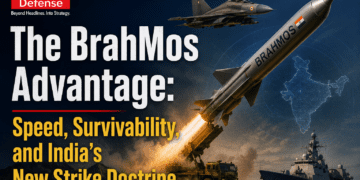
The lessons of Operation Sindoor in May 2025 remain underexamined in public discourse. The operation demonstrated that India can degrade adversary air defence infrastructure using existing stand-off weapons. Strikes on radar installations and airbases confirmed the effectiveness of systems such as BrahMos when used in coordinated operations. Yet the operation also exposed a deeper challenge.

China’s real-time ISR support to Pakistan elevated the quality of battlefield awareness available to Pakistani forces. This was not simply a tactical enhancement. It represented a structural shift in how adversaries can integrate capabilities across theatres.

The implication is clear. Future conflicts will not be confined to bilateral dynamics. They will involve networked support systems that extend well beyond immediate battle zones.

Israel’s Golden Horizon Missile offer directly addresses this emerging reality. It enables India to target not just frontline assets but the deeper infrastructure that supports them. Communication nodes, logistics hubs, and ISR relay points that enable adversary coordination become viable targets. This expands the scope of conventional operations without necessarily escalating to strategic levels.

The key insight here is not about range alone. It is about the ability to disrupt systems rather than simply degrade assets. In a networked battlespace, disabling the nodes that enable coordination can have disproportionate effects. Golden Horizon provides a tool for such disruption.

Pakistan’s Deterrence Model Under Strain

Pakistan’s strategic posture relies on a carefully calibrated balance between conventional capability and nuclear signalling. The objective is to deter large-scale conventional retaliation while maintaining ambiguity around escalation thresholds. This model depends on the assumption that critical assets can be protected through depth, dispersal, and layered defence.

Israel’s Golden Horizon Missile offer introduces pressure into this model. By enabling India to strike high-value targets from stand-off distances, it reduces the perceived safety of rear-area infrastructure. Command nodes, logistics hubs, and hardened facilities become more vulnerable, even if they are located well beyond immediate conflict zones.

Pakistan’s response options are limited and costly. Expanding missile defence capabilities, likely through Chinese systems, requires significant financial investment. Dispersal of assets reduces vulnerability but complicates command and control. Increased reliance on nuclear signalling risks escalation instability. Each option introduces trade-offs that were previously less acute.

Deterrence is not about eliminating capability. It is about shaping perception. The Golden Horizon missile offer shifts the perception of vulnerability in a way that could alter Pakistan’s escalation calculus. The effect may be psychological as much as operational, but in deterrence theory, perception often carries greater weight than numbers.

China’s A2/AD Architecture and the Logic of Counter-Pressure

China’s approach to conflict is built around shaping the battlespace before engagement. Its A2/AD architecture integrates long-range missiles, air defence systems, and ISR networks to restrict adversary movement and impose costs early. India cannot match this architecture quantitatively in the near term. It does not need to.

Israel’s Golden Horizon Missile offer enables a different approach. Instead of attempting to replicate China’s capabilities, India can focus on creating targeted vulnerabilities within China’s operational framework. Air defence nodes, logistics corridors, and staging areas become potential targets that can disrupt operational tempo.

This introduces counter-pressure. By demonstrating the ability to threaten critical infrastructure, India complicates Chinese planning and increases the cost of sustained operations. The objective is not parity but uncertainty. Uncertainty forces caution. Caution shapes behaviour.

A useful visual concept here would map potential launch points within Indian airspace against target envelopes across Tibet and Xinjiang. Such a map would highlight how stand-off capability reshapes engagement zones, turning geography into an advantage rather than a constraint.

Escalation Ambiguity and the Nuclear Signalling Problem

One of the most underexplored risks associated with the Golden Horizon missile offer is escalation ambiguity. Ballistic trajectories are inherently difficult to classify in early-warning systems. Adversaries may struggle to distinguish between conventional and nuclear payloads during the initial detection phase.

This creates a potential for misinterpretation. In a crisis scenario, ambiguity can escalate rapidly if decision-makers assume worst-case outcomes. India’s doctrine of credible minimum deterrence and no-first-use relies on maintaining clarity in signalling. Introducing systems that blur this clarity requires careful doctrinal adaptation.

Operational profiles may need to be designed to reduce ambiguity. Communication channels must be robust enough to prevent misinterpretation. Target selection and timing will also play a role in shaping perception. The challenge is to maintain the advantages of ambiguity without triggering instability.

This is not a technical issue. It is a strategic one. The effectiveness of the Golden Horizon missile offer will depend on how well it is integrated into India’s escalation management framework. Capability without clarity risks unintended consequences.

The Hidden Dependency: ISR, Targeting, and the Illusion of Precision

Another dimension that remains underexamined is the dependency on ISR and targeting networks. Precision strike capability is only as effective as the intelligence that supports it. Identifying, tracking, and validating targets at long range requires robust ISR integration.

China’s demonstrated ability to support Pakistan with real-time ISR raises a critical question. Can India maintain the integrity of its own targeting networks in a contested environment? If adversaries can degrade or disrupt these networks, the effectiveness of systems like Golden Horizon could be significantly reduced.

This introduces a paradox. The more India relies on high-end precision systems, the more it must invest in protecting the networks that enable them. ISR resilience becomes as important as strike capability. Without it, the promise of precision becomes an illusion.

The Golden Horizon missile offer therefore cannot be evaluated in isolation. It must be considered as part of a broader ecosystem that includes sensors, data links, and command networks. The system is only as strong as the architecture that supports it.

Inventory, Cost, and the Limits of High-End Deterrence

High-end systems such as air-launched ballistic missiles are unlikely to be deployed in large numbers. Their cost, complexity, and production constraints limit inventory size. This raises an important question about sustainability.

A small inventory can provide initial deterrence and enable high-impact strikes. But sustained operations require depth. Adversaries can adapt through dispersal, redundancy, and deception. The effectiveness of Golden Horizon will depend on how it is integrated into a layered strike architecture that includes other systems.

Cost-exchange dynamics also matter. If adversaries can counter high-cost missiles with relatively low-cost measures, the balance shifts. This does not negate the value of the system. It highlights the need for complementary capabilities that ensure sustained effectiveness.

The Golden Horizon missile offer should therefore be seen as part of a broader mix rather than a standalone solution. Its value lies in what it enables, not in what it replaces.

Industrial Sovereignty and the Strategic Value of Co-Development

The long-term significance of the Golden Horizon missile offer lies in its industrial dimension. India’s emphasis on self-reliance in defence manufacturing reflects a recognition that technological sovereignty underpins strategic autonomy. The terms of acquisition will determine whether this system contributes to that objective.

A direct import provides immediate capability but limited long-term benefit. Co-production or collaborative development offers the potential to absorb critical technologies and strengthen domestic capabilities. This includes propulsion, materials engineering, guidance systems, and integration expertise.

India’s past experience with partnerships such as Barak-8 demonstrates the value of co-development. The Golden Horizon missile offer could follow a similar trajectory, providing both operational capability and industrial advancement. The alternative is dependency.

The choice is not binary. It is strategic. It will shape India’s ability to develop future systems independently and maintain flexibility in a rapidly evolving technological landscape.

Building a Layered Strike Architecture for 2030

The most coherent way to integrate the Golden Horizon missile offer is within a layered capability framework. In the near term, it enhances stand-off strike capability. In the medium term, it provides operational experience that can inform indigenous development. By 2030, it could form part of a diversified deep-strike ecosystem.

Such an ecosystem would include air-launched ballistic missiles, hypersonic cruise systems, and evolving missile defence layers. The objective is resilience. Multiple layers ensure that capability gaps do not emerge during critical phases of conflict.

Global trends reinforce this approach. Data from the Stockholm International Peace Research Institute indicates sustained growth in missile development and deployment across Asia. This environment favours layered capabilities over single-system solutions.

Israel’s Golden Horizon Missile offer fits into this trajectory as a bridging capability. It allows India to operationalise advanced strike concepts while continuing to invest in long-term development. The challenge lies in sequencing these elements effectively.

What the Israel’s Golden Horizon Missile Offer Ultimately Represents

Israel’s Golden Horizon Missile offer is often framed in terms of speed, range, or technological novelty. These are important but secondary. The primary significance lies in how it reshapes the relationship between time, distance, and escalation.

India is entering a phase where decisions must be made faster, with less margin for error. The ability to respond quickly and credibly across two fronts is becoming central to deterrence. Golden Horizon Missile compresses the timeline between intent and execution, providing a tool that can operate within this compressed environment.

Yet the system itself is neutral. Its impact will depend on how it is integrated into doctrine, industry, and operational planning. If treated as a bridge, it can enable a transition toward a more resilient and flexible strike architecture. If treated as a shortcut, it risks creating new dependencies while addressing immediate needs.

Israel’s Golden Horizon Missile offer is therefore not just about capability. It is about choices. The choices India makes in integrating this system will shape its strategic posture in a decade defined by accelerating competition and narrowing margins for miscalculation.

————————————————————————————————————————–

FAQs

What is the Golden Horizon Missile and why is it important for India?

Golden Horizon is an air-launched ballistic missile designed for long-range precision strikes against hardened targets. It is important for India because it enables deep-strike capability without exposing aircraft to high-risk air defence environments. This strengthens India’s ability to operate across both Pakistan and China simultaneously.

How does the Israel’s Golden Horizon Missile differ from systems like BrahMos?

BrahMos is a supersonic cruise missile that flies at lower altitudes and is optimized for surface targets. Golden Horizon follows a ballistic trajectory and reaches much higher speeds during terminal descent. This makes it more effective against hardened or deeply buried targets and harder to intercept.

Does this system increase the risk of nuclear escalation?

There is a potential risk due to trajectory ambiguity. Ballistic flight paths can be misinterpreted in early-warning systems as nuclear launches. Managing this risk requires clear doctrinal signalling, communication mechanisms, and carefully designed operational profiles.

Is Israel’s Golden Horizon Missile a replacement for India’s hypersonic programs?

No. It is best understood as a bridge capability. Indigenous hypersonic programs are still under development and may take time to mature. Golden Horizon provides immediate operational capability while India continues to invest in long-term technological development.

What role does ISR play in the effectiveness of this system?

ISR is critical because precision strikes depend on accurate and timely targeting data. Without robust and resilient ISR networks, the effectiveness of long-range strike systems is reduced. Protecting these networks is essential for maintaining operational capability.

Will India gain industrial benefits from this acquisition?

That depends on the structure of the deal. Co-production or technology transfer would provide significant long-term benefits by strengthening India’s defence industrial base. A direct import would offer immediate capability but limited industrial advancement.

Tags: Editor’s Pick
Previous Post

Not Just a Rafale Footnote: Why France Looking at Pinaka Signals a Structural Shift

Next Post

PRAHAAR Explained: Why ‘PRAHAAR’ India’s National Counter-terrorism Doctrine, Signals the End of Traditional Warfare

IndoAsia Defense

IndoAsia Defense

IndoAsia Defense Team is a specialist research and analysis group focused on India’s military modernization and Indo-Pacific strategic dynamics. The platform delivers structured, data-driven insights on doctrine, force posture, defense technology, and regional power balance.

Next Post
PRAHAR Explained India Counter Terror Policy Prahaar

PRAHAAR Explained: Why 'PRAHAAR' India's National Counter-terrorism Doctrine, Signals the End of Traditional Warfare

Leave a Reply Cancel reply

Login with your Social ID

Your email address will not be published. Required fields are marked *

Category

  • Air
  • Global
  • Indo-Pacific
  • Industry
  • Joint
  • Land
  • Navy
  • Tech

Defence Capabilities

  • Air Defence
  • Drones
  • Fighters
  • ISR & Mobility
  • China Military
  • Emerging Tech
  • Regional Trends
  • U.S. Posture

Strategy

  • 2035 Outlook
  • China Strategy
  • India Strategy
  • Pakistan Outlook
  • Budget
  • Exports
  • Make in India
  • Supply Chains

Operations

  • Integrated Ops
  • Procurement Reform
  • Theater Commands
  • Armour & Artillery
  • China Front
  • Future Combat
  • Pakistan Front
  • Fleet Expansion

Resources

  • India vs China Military Balance
  • Indo-Pacific Military Power Map
  • Global Military Balance Dashboard
  • Global Weapons Systems Database
  • Global Missile Systems Database
  • Indo-Pacific Defense Timeline
  • India Military Capability Index
  • About
  • Contact
  • Privacy & Policy
  • Editorial Policy
  • Cookie Policy
  • Disclaimer
  • Terms And Conditions
Facebook Linkedin X-twitter
© 2026 IndoAsia Defense. All Rights Reserved.
No Result
View All Result
  • Home
  • Air
    • Air Defence
    • Drones
    • Fighters
    • ISR & Mobility
  • Land
    • Armour & Artillery
    • China Front
    • Future Combat
    • Pakistan Front
  • Navy
    • Fleet Expansion
    • Indian Ocean
    • Maritime Security
    • Submarines
  • Indo-Pacific
    • 2035 Outlook
    • China Strategy
    • India Strategy
    • Pakistan Outlook
  • Joint
    • Integrated Ops
    • Procurement Reform
    • Theater Commands
  • Tech
    • AI & Autonomous Systems
    • Cyber
    • Electronic Warfare
    • Space
  • Industry
    • Budget
    • Exports
    • Make in India
    • Supply Chains
  • Global
    • China-Pak
    • Emerging Tech
    • Regional Trends
    • US-India